
Last updated October 16, 2026
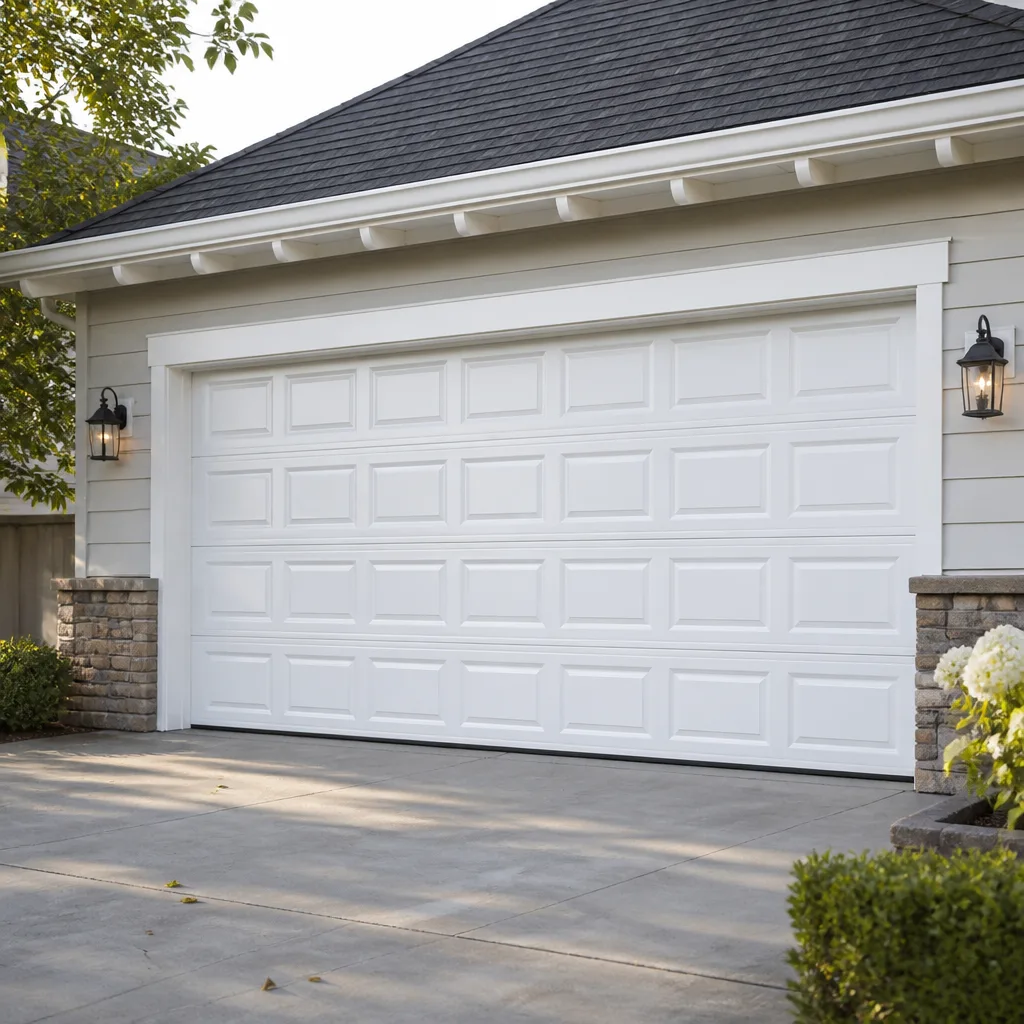 Raised-panel steel
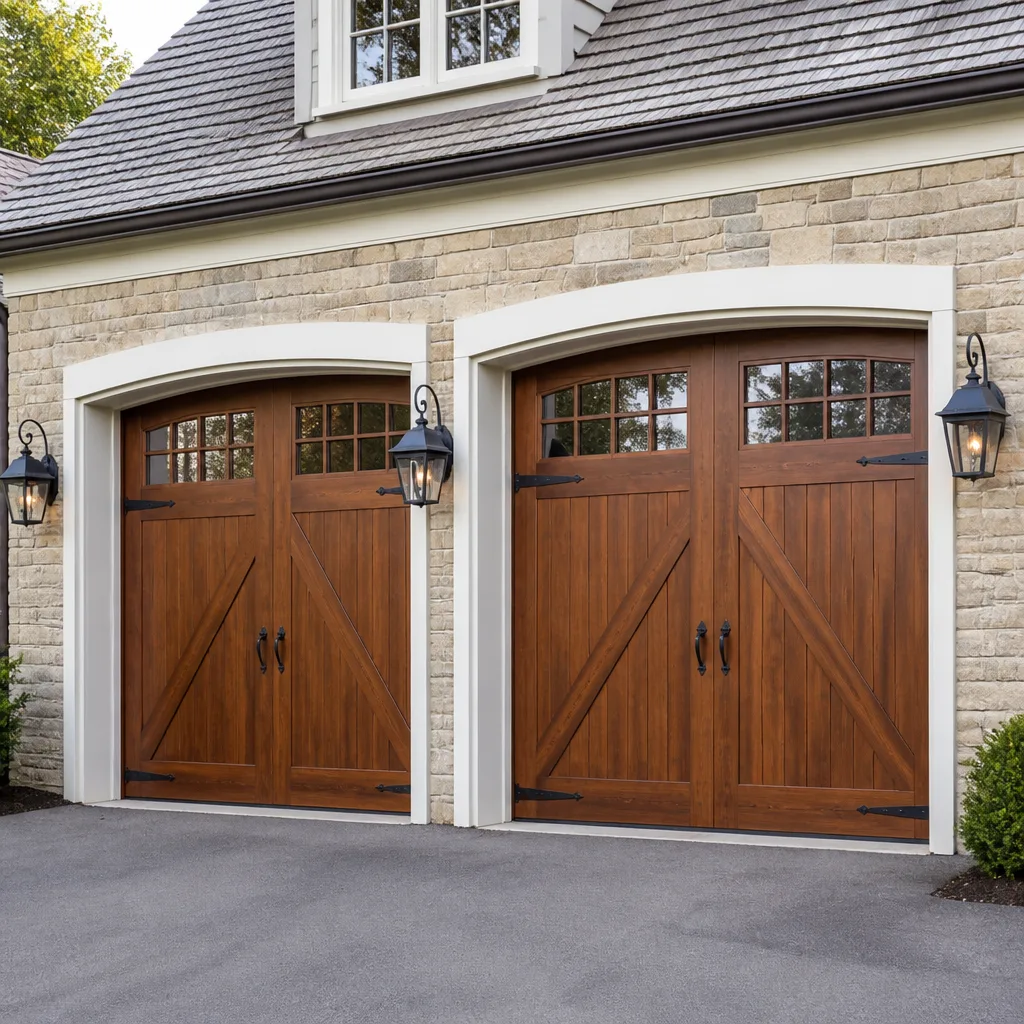 Carriage house
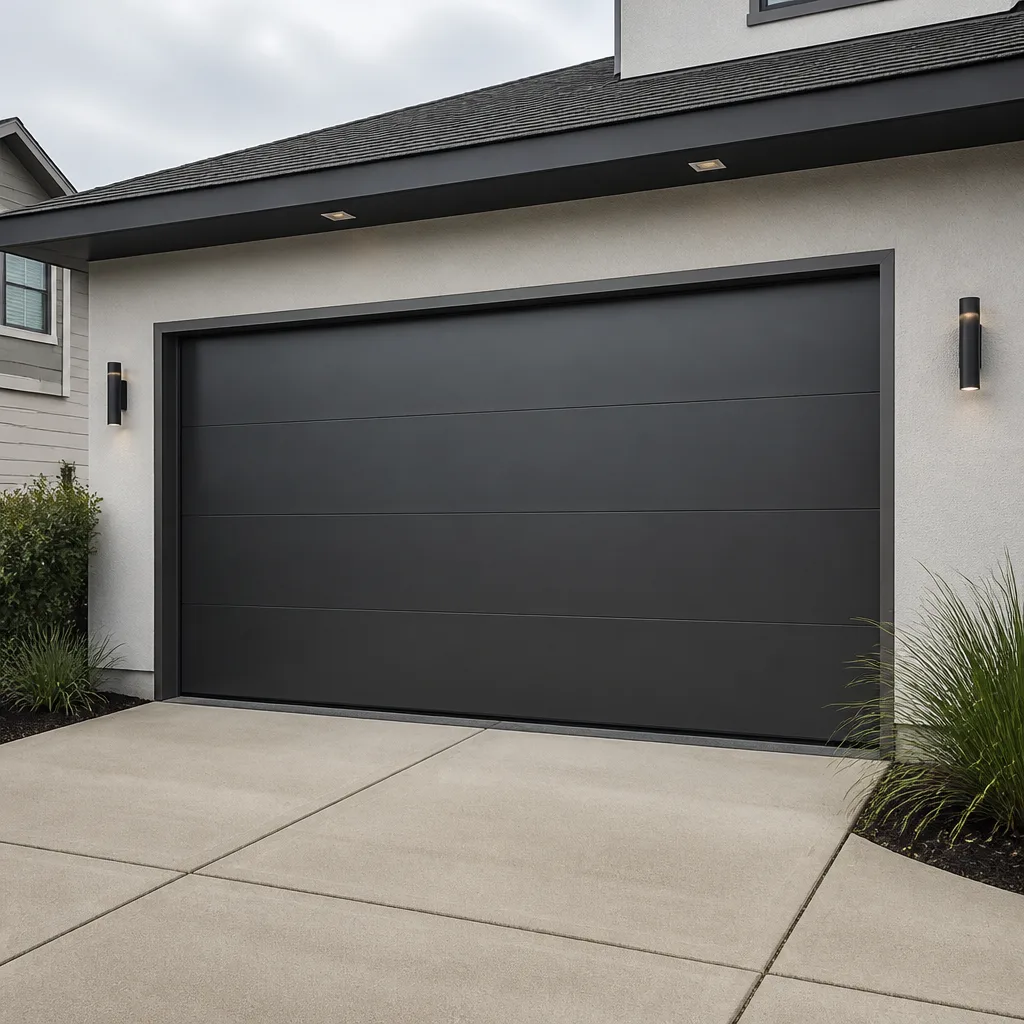 Modern flush
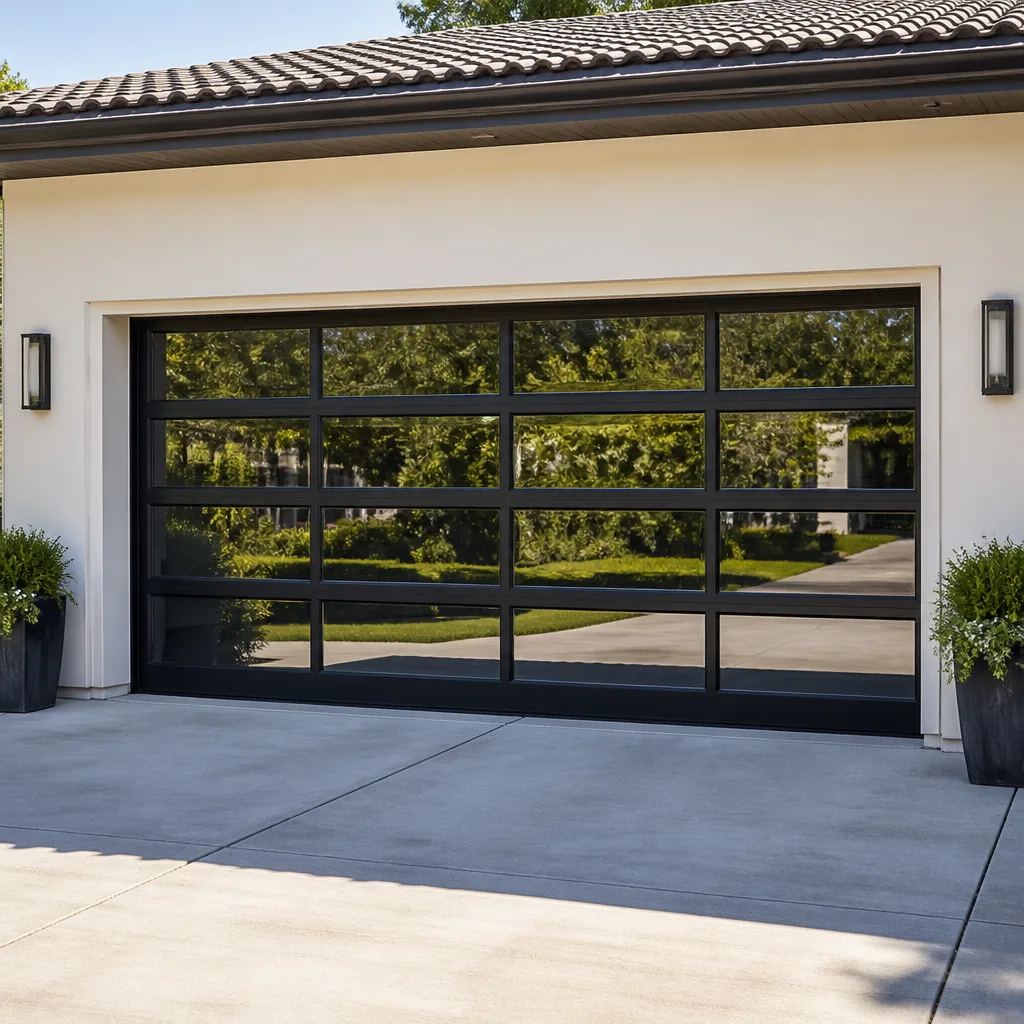 Full-view glass
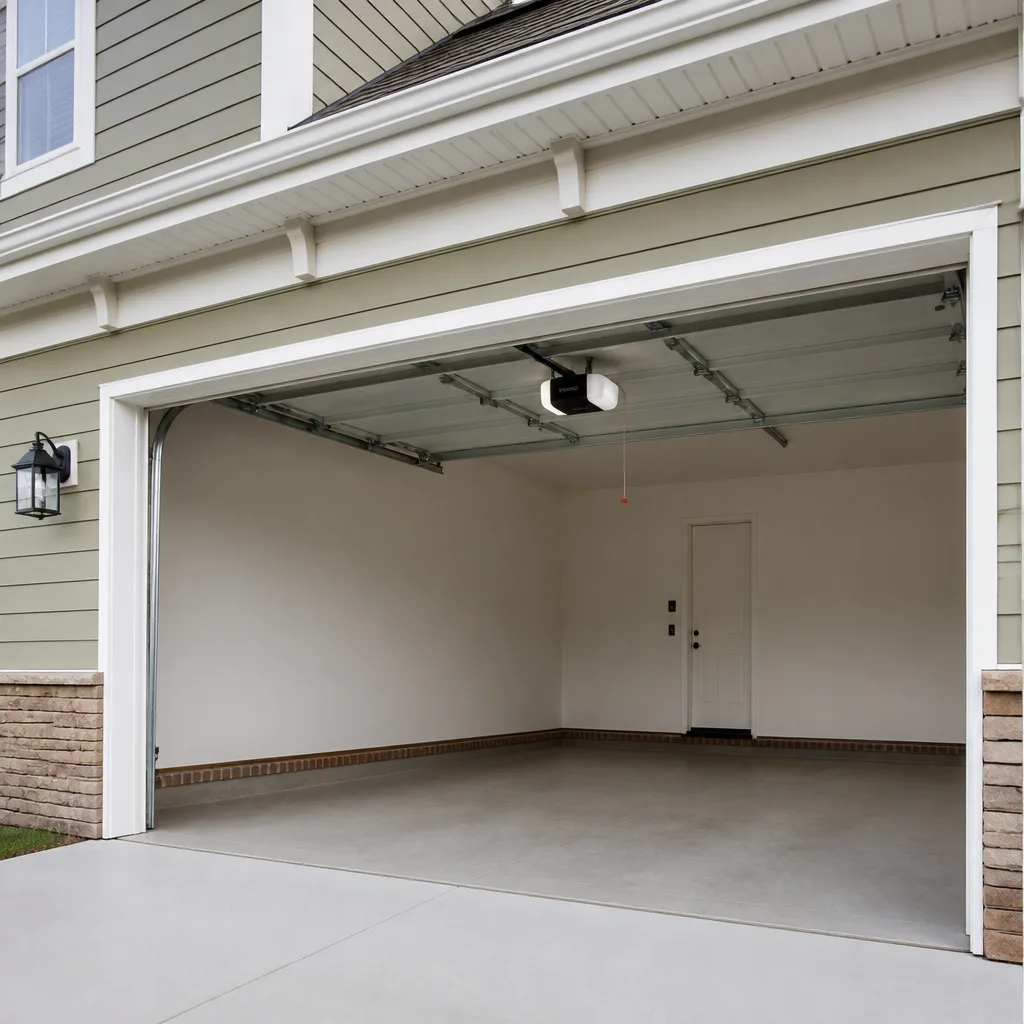 LiftMaster openers
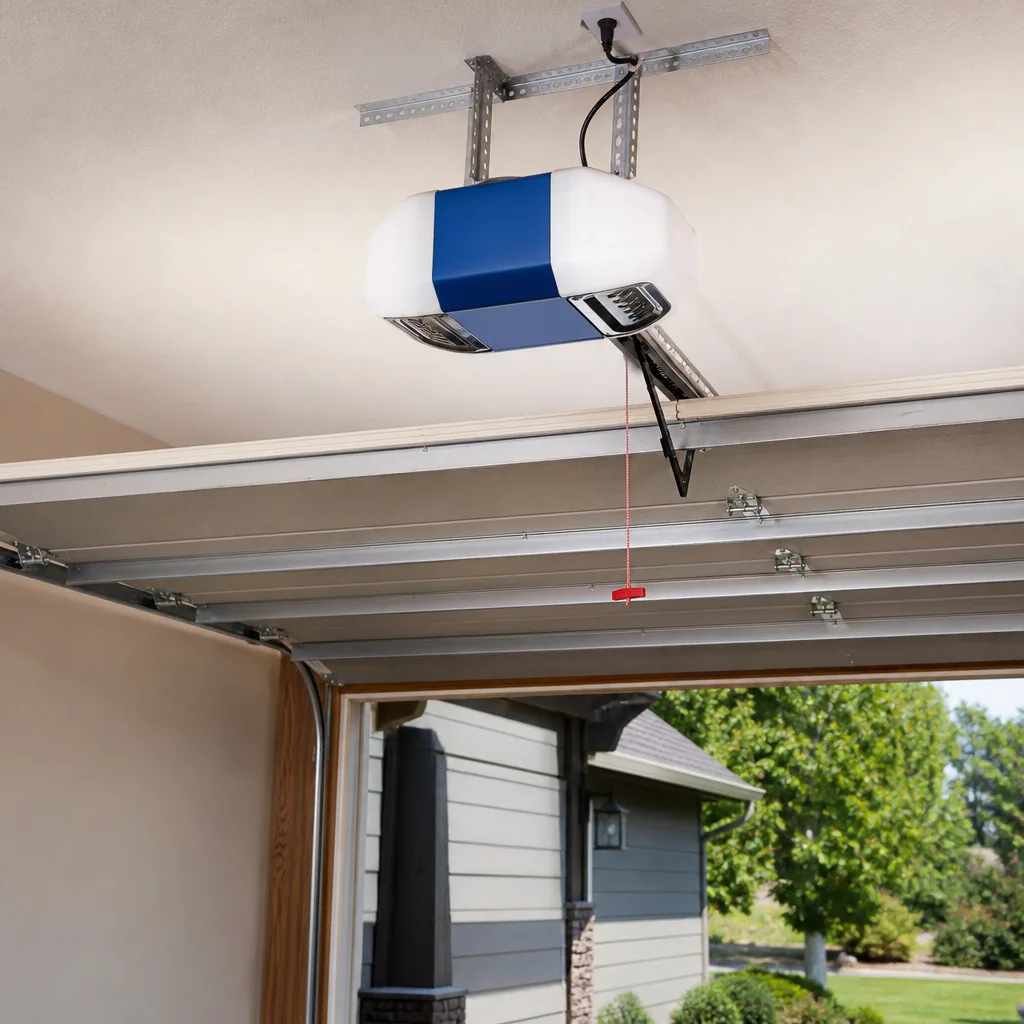 Chamberlain openers
Full 25-point door and opener safety check with every visit - springs, cables, rollers, tracks, and your LiftMaster or Chamberlain opener included
You get a price before we start. It does not change when the truck arrives.
Get your free estimateThe Complete Guide to Garage Door in Austin
Austin permitted more than 14,000 new residential units in 2023 alone, yet most garage door guides still treat every home like a 1990s suburban split-level. That gap costs local homeowners real money, because a garage door on a 1972 ranch in North Loop fails differently than one on a 2021 build in Mueller. This guide maps Austin’s housing stock, soil behavior, climate, and repair economics so you can make decisions that fit your actual door, your actual neighborhood, and the way garages actually break in Central Texas. For more guides & resources, see our blog.
Quick Answer
Garage door repair in Austin typically costs between $125 and $350 for common fixes like spring replacement, cable repair, and track realignment, with most jobs completed the same day a technician is dispatched. The three failures Austin homeowners see most are torsion spring breaks, cable snap-offs, and track misalignment from shifting limestone soil. At Marlow Garage Door Repair Austin, every job starts with a written price before work begins, and every repair carries a 365-Day Done Right Promise.
Styles & brands we work with
Table of Contents
- Why Austin Garage Doors Fail Differently
- Garage Door Types That Actually Work in Austin
- The Torsion Spring, Explained Plainly
- How to Read a Garage Door Service Quote Line-by-Line
- Austin Neighborhood Service Windows: Real Expectations
- DIY vs. Professional Repair: Where the Line Is
- Signs Your Garage Door Needs Attention This Week
- Common Mistakes to Avoid
- When to Call a Professional
- Frequently Asked Questions
Why Austin Garage Doors Fail Differently
Most garage door failure advice online is written for generic American suburbs. Austin is not a generic suburb. Three local factors change how doors break here, and understanding them saves you from paying for the wrong fix.
First, the limestone. Austin sits on the Edwards Plateau, where limestone bedrock sits close to the surface and the soil above it is shallow and reactive. During dry summers, that soil contracts and pulls away from foundations. During wet springs, it swells. The result is a slow, seasonal shifting that most homes absorb without structural damage, but garage door tracks feel it first. Track brackets anchored to the garage wall or ceiling move a fraction of an inch, the track bows, and suddenly the door jerks, scrapes, or binds midway through its travel. In Round Rock or Georgetown, the soil profile is similar but deeper, and the shift is less pronounced. In Austin proper, we see track realignment jobs cluster after every major drought-then-rain cycle.
Second, the heat. Austin averages over 100 days per year at or above 90 degrees Fahrenheit, with garage interiors routinely hitting 120 to 140 degrees in July and August. Torsion springs are rated for a cycle life, usually 10,000 cycles, and heat accelerates metal fatigue. A spring that would last eight years in Minneapolis might last five in Austin. Garage door opener circuit boards, especially older LiftMaster and Chamberlain models mounted near the ceiling, also overheat and fail earlier here.
Third, the housing mix. Austin’s housing stock spans sixty-plus years of building practices. A single service area covers 1970s ranches with wooden doors, 2000s tract homes with steel insulated doors, and new Mueller or Domain-adjacent builds with glass and aluminum. Each one fails differently, which is why a generic “garage door repair” guide is worth about half as much as one that names your situation.
Garage Door Types That Actually Work in Austin
Door material is not an aesthetic decision in Austin. It is a longevity decision. The UV index regularly hits 10+ in summer, and humidity swings from 30 percent in August to 80 percent in May. Here is what that means for each material.
Steel doors are the workhorse in Austin, and for good reason. A 24- or 25-gauge steel door with a polyurethane or polystyrene insulation core handles the heat without warping, resists hail impact better than aluminum, and holds up for twenty years with basic maintenance. The downside is heat transfer through the metal skin, which matters if your garage is attached and you store anything sensitive in it. Insulated steel doors solve most of that problem.
Aluminum doors are lighter and cheaper upfront, but they dent easier in hail storms, which Austin gets every spring. If you live in an area with older trees and wind exposure, like parts of Westlake or Northwest Hills, think twice before choosing aluminum. A golf-ball-sized hailstone leaves a mark you will see every day.
Wood doors are beautiful and increasingly rare in new construction, but they fight Austin’s climate constantly. The dry heat cracks the finish. The spring humidity swells the panels. A wood door in Austin requires refinishing every two to three years, minimum, and even then expects warping in the long run. If you own a 1970s-era home in Allandale or Crestview with an original wood door, budget for more frequent hardware adjustments as the door’s weight changes with moisture content.
Glass and aluminum doors, which appear on modern builds in Mueller and East Austin, look stunning and weigh less than wood, but they offer almost zero insulation and become finger-burn hot on the west-facing side of a house. They are a lifestyle choice. Just know that the panels are expensive to replace when a neighborhood kid’s basketball finds one.
Our technicians train on eight major brands, including Wayne Dalton, LiftMaster, and Raynor, so the advice we give accounts for how specific doors age in Travis County, not just how they look in a catalog.
The Torsion Spring, Explained Plainly
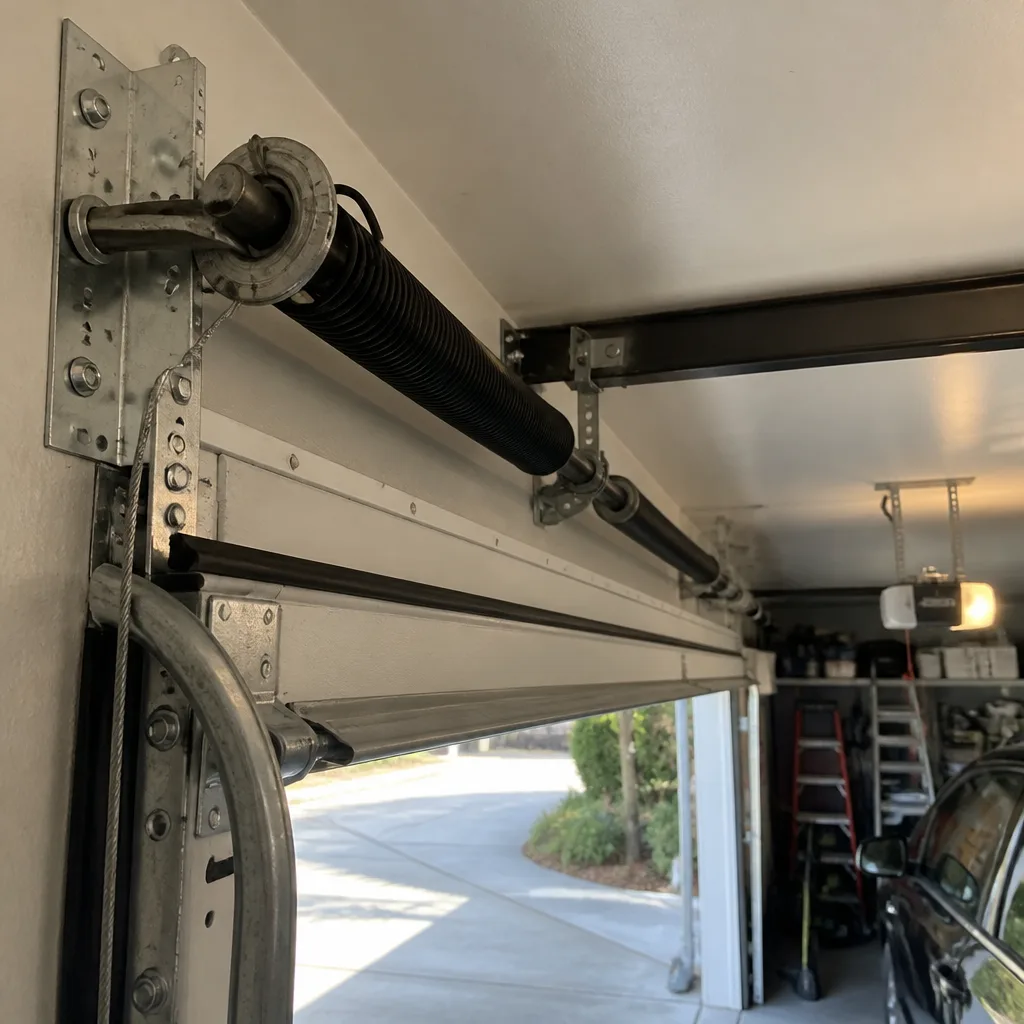
Before you make any other garage door decision, understand this component: the torsion spring is the horizontal coil mounted above your door. It stores and releases the mechanical energy that lifts the door. When you press the opener button, the motor only nudges the door; the spring does the actual lifting. When the spring breaks, your door becomes dead weight, and your opener will strip its own gears trying to move it.
Most residential Austin doors use one or two torsion springs, rated by wire diameter, inside diameter, and length. These ratings must match the door’s weight and size. A spring rated for a 120-pound door will not balance a 180-pound wood door. That is why spring replacement is not a one-size-fits-all job. The technician measures the broken spring, calculates the door weight, and selects a replacement with the correct cycle-life rating. Get this wrong, and the door either slams down or refuses to stay up.
This component touches every other failure on the door. A broken spring stresses the cables. A worn spring makes the opener work harder, shortening its motor life. An unbalanced door wears rollers and hinges unevenly. When you hear a loud bang from the garage, that is almost always the spring snapping. It is the single most common repair call we handle at Garage Door Spring Repair in Austin, and it is always a same-day priority because a garage door with a broken spring is essentially immovable and, more importantly, unsafe to leave half-open.
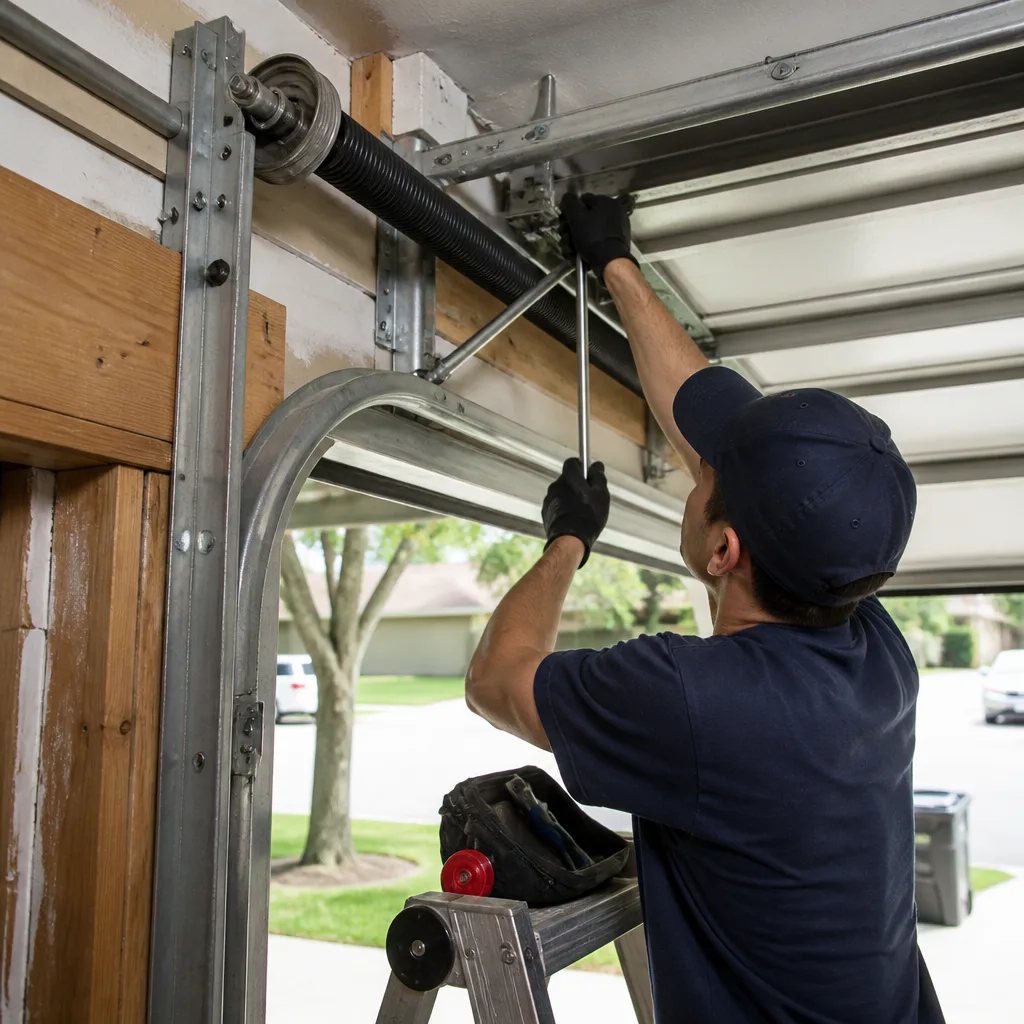
One caveat from experience: never attempt to replace a torsion spring yourself. The spring stores enough tension to break bones or worse if it releases unexpectedly. This is the one repair where even handy homeowners should step back and call someone who does this every week-read our DIY vs Professional Garage Door: The Austin Homeowner’s Decision Guide to see why. A trained professional with the right winding bars and a torque meter can finish the job safely in under an hour.
How to Read a Garage Door Service Quote Line-by-Line
Austin has a competitive garage door repair market, and some quotes are written to confuse. Here is a line-by-line walkthrough-plus our Garage Door Cost Breakdown: The Austin Homeowner’s Reference for 2026-of what you should see, what it means, and which items commonly get inflated.
- Service call or diagnostic fee. Some companies charge $29 to $75 to come look at your door, and some roll that fee into the repair cost. Ask which one applies before booking. At Marlow, the price you are quoted is the price you pay, with no separate diagnostic line hiding at the top of the invoice.
- Torsion spring replacement. In Austin, expect $150 to $290 per spring, including the part and labor, depending on wire gauge and cycle rating. If you see $400 or more per spring for a standard residential door, you are being overcharged, or the spring is very unusual. Ask for the cycle rating in writing. A 10,000-cycle spring and a 25,000-cycle spring are different products at different prices, and you should know which one you are paying for.
- Cable replacement. Garage Door Cable Repair in Austin typically runs $95 to $180 per cable. Cables should be replaced in pairs on a double door, because the unworn one has the same wear exposure and will fail soon after the first.
- Track realignment or replacement. Realignment runs $85 to $150 in Austin. Full track replacement is rare and should be $200 to $400. If someone quotes you $800 for “track work,” ask them to itemize exactly what is being replaced.
- Roller replacement. Expect $10 to $20 per roller for standard nylon rollers, and $15 to $30 per roller for high-cycle steel-bearing rollers. A 16-foot door has about 12 rollers. It is one of the cheapest, highest-value maintenance items you can do on an Austin garage door.
- Opener replacement. A new belt-drive opener from LiftMaster or Craftsman runs $350 to $650 installed in Austin, depending on horsepower and smart features. Chain drives run less. If you pay more than $700, you are buying features you probably do not need, like built-in cameras.
- Labor. Most Austin garage door repair labor is bundled into the line items above. If you see a separate, large “labor” charge that is not explained, ask for the breakdown. You should never agree to a quote where the final number is a mystery.
The rule that protects you on every line item: the written price is locked before work starts. You should see it before the technician picks up a wrench, and the invoice should match the quote at the end. If a provider will not put the number in writing, find one who will.
Austin Neighborhood Service Windows: Real Expectations
“Same-day service” means different things depending on where you live. Austin traffic is legendary, and the difference between a 25-minute drive and a 75-minute drive across town changes when a technician can actually reach your door. Here is what realistic service windows look like in Austin, based on where we dispatch.
- Central Austin (78701, 78703, 78705, 78751, 78756): Hyde Park, North Loop, Clarksville, and Tarrytown. Dense, older housing stock with narrow alleys and single-car garages. Expect dispatch within 2 to 3 hours in normal conditions. Parking at the curb is usually workable. Wood doors are common here, so spring and cable jobs take slightly longer on average.
- North Austin (78757, 78758, 78759): Crestview, Brentwood, and the North Burnet corridor. Mix of 1950s and 1960s ranches plus heavy apartment density near the Domain. Service windows are typically 1.5 to 2.5 hours because our dispatch routes cluster in this corridor. Aluminum and original wood doors are both common.
- Northwest Austin (78750, 78759, 78731): Northwest Hills, Spicewood, and the Jester neighborhood. Hill Country terrain, longer driveways, and larger three-car garages. Expect 2 to 3 hours from call to arrival. Larger doors mean more spring tension and sometimes two-spring configurations.
- East Austin (78702, 78721, 78723, 78724): Mueller, Govalle, and MLK Jr. Boulevard corridor. Newer construction is concentrated here, so doors are often five to ten years old and seeing their first component failures. Glass and aluminum doors appear more than anywhere else in the city. Service window is typically 2 hours with good I-35 access.
- South Austin (78704, 78745, 78748, 78749): Barton Hills, South Congress, and the Menchaca corridor. Original 1960s and 1970s homes with detached garages, many of which have doors that have been in service for thirty-plus years. These are our most common spring-replacement zip codes. Expect dispatch in 1.5 to 2.5 hours via South Lamar or Mopac.
- Far Suburbs (Round Rock, Cedar Park, Leander, Buda, Kyle, Manor): These are not Austin city limits, but many providers, including ours, service them. Expect 2.5 to 4 hours. The homes are newer, garage doors are almost universally steel, and parts are easier to stock on the truck because the door inventory is so uniform.
Every Marlow dispatch includes the Relay Visibility Guarantee: a live arrival time you can track on your phone, so you are not waiting on a four-hour window and hoping. You see the technician moving toward your house, the same way you track a rideshare.
DIY vs. Professional Repair: Where the Line Is
There are garage door maintenance tasks you can safely do yourself, and then there are repairs that cross into dangerous territory. Knowing the line keeps you safe and keeps your door from getting worse.
Safe to DIY: Lubricating rollers, hinges, and springs with a silicone-based garage door lubricant twice a year. Replacing the opener remote battery. Clearing debris from the track. Tightening visible bolts on non-tension hardware. Replacing weatherstripping along the bottom of the door. These tasks take minutes, cost under $20 in parts, and require no special tools.
Do NOT DIY: Anything involving the torsion spring. The spring holds enough stored energy to break bones, amputate fingers, or kill if it releases wrong. Garage door cables are also under high tension and can snap with lethal force when mishandled. Track repair sounds simple, but a track that is off by half an inch makes the door bind unpredictably, and a heavy door coming off its track can fall on a person or a car. Opener replacement involves electrical wiring and ceiling-mounted motor weight; if the opener drops during installation, it can cause serious injury.
The rough rule: if the repair involves a part under tension or a door off its track, call a professional. If it involves a can of lubricant and a rag, do it yourself. Garage Door Repair in Austin covers the full spectrum, and our technicians are background-checked and uniformed, so you know exactly who is walking up your driveway.
Signs Your Garage Door Needs Attention This Week
Garage doors rarely fail without warning. They telegraph their problems for weeks or months before the big failure. Here are the warning signs we tell Austin homeowners to watch for, ranked by urgency.
- The door is louder than it was last month. A grinding, popping, or rattling sound usually means a roller is failing, an opener gear is stripping, or the door is out of balance. It will not fix itself. It will get louder and more expensive.
- The door opens slower than it used to. This is often the opener motor struggling against a spring that has lost tension. By the time the door is visibly slow, the spring is usually near the end of its cycle life.
- The door sits unevenly when closed. Look at the gap between the bottom of the door and the concrete. If one side is lower, the cables may be wearing, or the tracks may have shifted due to soil movement. This is a common Austin-specific issue after a dry summer followed by fall rain.
- The door reverses randomly while closing. The safety sensors at the bottom of the track are misaligned, dirty, or failing. Wipe them with a dry cloth and make sure nothing is blocking the beam. If it keeps happening, the sensors need replacement.
- The door sags when you pull the manual release. Pull the red emergency cord with the door closed. If the door drops several inches on its own, the springs are not balanced. That is a same-week service item, not a next-month item.
- You see fraying on the cables. The cables along the sides of the door will start to unravel hair-like strands before they snap. If you see fraying, the cable is days or weeks from failure. Do not wait.
Any one of these is a reason to get a professional look. Several of them together means your door is headed for a full failure soon. The cost of catching a problem early is a fraction of the cost of a full repair after a catastrophic failure.
Common Mistakes to Avoid
- Spraying WD-40 on the torsion spring and calling it maintenance. WD-40 is a solvent, not a lubricant. It strips the protective coating and accelerates rust. Use a silicone-based garage door lubricant instead, applied in a thin coat, twice a year in Austin’s dry climate.
- Ignoring a broken spring and using the door manually for weeks. A door with a broken spring weighs 150 to 250 pounds. Manual operation strains the opener, the cables, and your back. The longer you wait, the more components fail, and the repair cost multiplies.
- Accepting a quote that is not in writing. In Austin’s competitive market, some providers quote low over the phone and high at the door. A written price before work starts is the only thing that protects you. If the technician will not write it down, send them away.
- Choosing a door based on looks alone. That wood door looks great in a listing photo, but in Austin’s UV and humidity it will warp, crack, and require refinishing every two years. Steel with an insulation core is the practical long-term choice for most Travis County homes.
- Replacing the opener before checking the spring. When the door stops working, homeowners often assume the opener is the problem. In our experience, the spring is the failure point far more often than the opener. A technician who replaces the opener without inspecting the spring is selling you a part you may not have needed.
- Forgetting the garage door is part of the house’s security. A broken door in Austin’s urban core is an invitation to opportunistic theft. A door left half-open because the spring snapped is a visible gap in your home’s perimeter. Get it fixed fast, not just for convenience but for basic property security.
- Hiring purely on price. Austin has a wide range of garage door service pricing, and the bottom of the range often means uncertified, unbonded, or rushed work. If the quote is dramatically lower than everyone else’s, ask why. The answer usually involves shortcuts or upselling later.
When to Call a Professional
Call a professional when the repair involves any component under tension: torsion springs, extension springs, or cables. Call a professional when the door is off its track, when the opener is being replaced, or when you have already tried a DIY fix and the problem returned. Call a professional when you hear something that sounds violent, like a bang or a snap, because that noise is almost always a spring letting go, and the door is now unsafe to operate. Call a professional when you can see visible damage to any hardware you cannot identify. None of these situations are worth risking a serious injury. Marlow Garage Door Repair Austin offers free estimates in Austin. Call (361) 320-8872 and a live person will answer, day or night.
Frequently Asked Questions
Most garage door repairs in Austin run between $125 and $350, with spring replacement at $150 to $290 per spring, cable replacement at $95 to $180 per cable, and track realignment at $85 to $150. The exact price depends on your door’s weight, size, and the specific parts involved, and at Marlow you get a written price before any work starts. Call (361) 320-8872 for an exact quote, and the estimate is free.
Yes, in most Austin zip codes we can dispatch a technician within 2 to 3 hours of your call, and same-day repair is the standard for spring, cable, and track jobs. Our live tracking shows you exactly when the technician will arrive, so you are not waiting on a vague window. Call (361) 320-8872 and a person answers immediately, even at 3 a.m.
No. At Marlow, the written price you approve is locked before any work begins, and the final invoice matches it. If the technician discovers something unexpected, you get a new written price and the choice to approve or decline before that additional work happens. You are never billed for something you did not agree to.
Our trucks are stocked with the most common torsion springs, cables, rollers, and hinges for the eight major brands we service, including LiftMaster, Genie, and Chamberlain. In most cases the repair is completed in a single visit. If your door needs an unusual part, we source it locally in Austin and finish the job quickly.
Austin’s combination of shallow, reactive limestone soil and extreme summer heat accelerates spring fatigue. Garage interiors routinely exceed 130 degrees in July and August, and that heat, combined with the seasonal soil shift that stresses tracks and door balance, shortens spring life. A spring rated for 10,000 cycles will often fail a year or two earlier in Austin than in Dallas or Houston.
A well-maintained steel door lasts 15 to 20 years in Austin, while wooden doors require more frequent hardware adjustments and typically need replacement sooner due to warping and finish deterioration. Torsion springs last 5 to 8 years, cables 8 to 12 years, and openers 10 to 15 years. Regular lubrication and prompt repair of minor issues extends every one of those timelines.
The Bottom Line
Your garage door is a mechanical system, not a magic box. Understanding the torsion spring, the cables, the tracks, and the opener in plain language makes you a smarter buyer and a safer homeowner. Austin’s specific mix of limestone soil, brutal heat, and varied housing stock means your door’s failure pattern is not random, and it is not the same as someone else’s in another city. Get a written price before work starts, choose a provider who stocks parts for your specific brand, and never attempt a spring or cable repair yourself. When the door speaks, listen early, because the cheapest repair is always the one you catch before the big failure. Marlow Garage Door Repair Austin makes the whole process visible: live arrival tracking, a written price up front, background-checked technicians, and a 365-Day Done Right Promise on every repair. Call (361) 320-8872 and talk to a real person, any hour, any day.
Written by Jaylen Ross, Owner at Marlow Garage Door Repair Austin, serving Austin since 2002.
See the difference
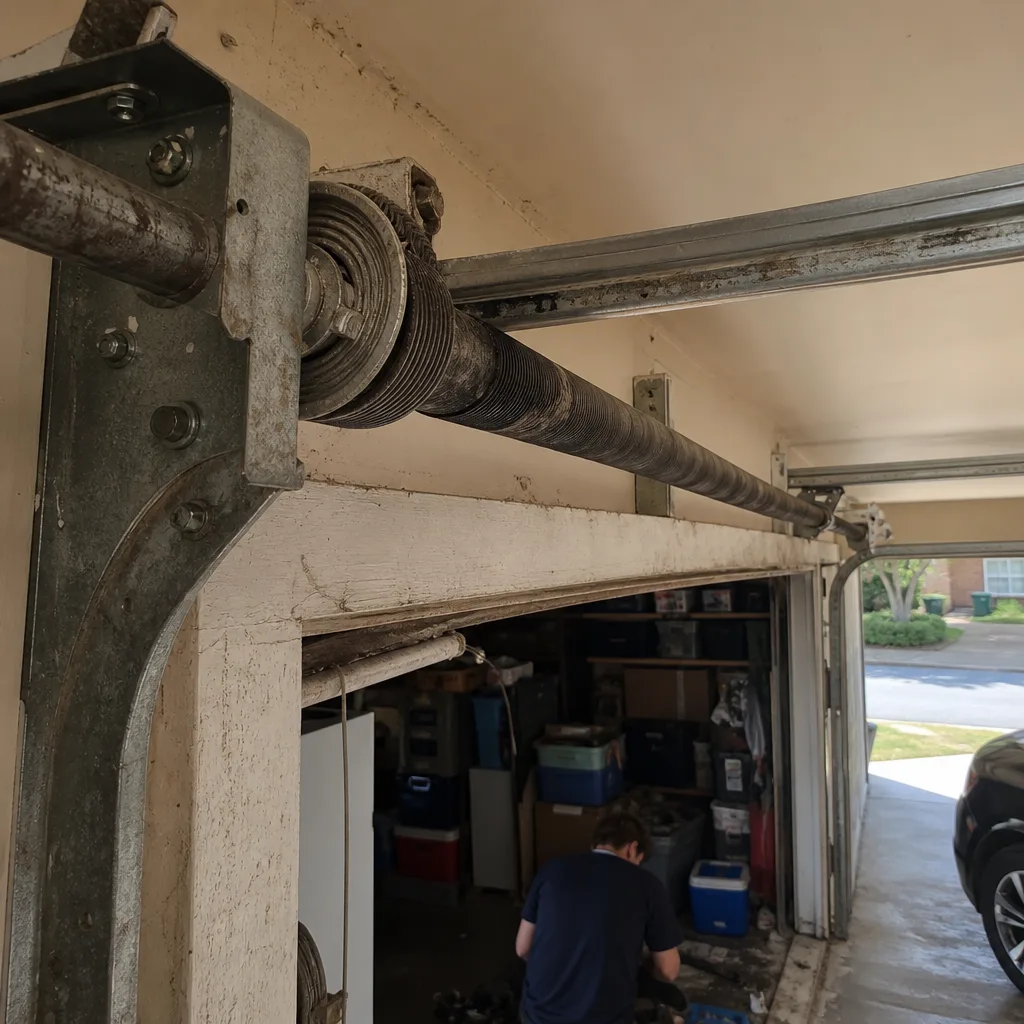 Before
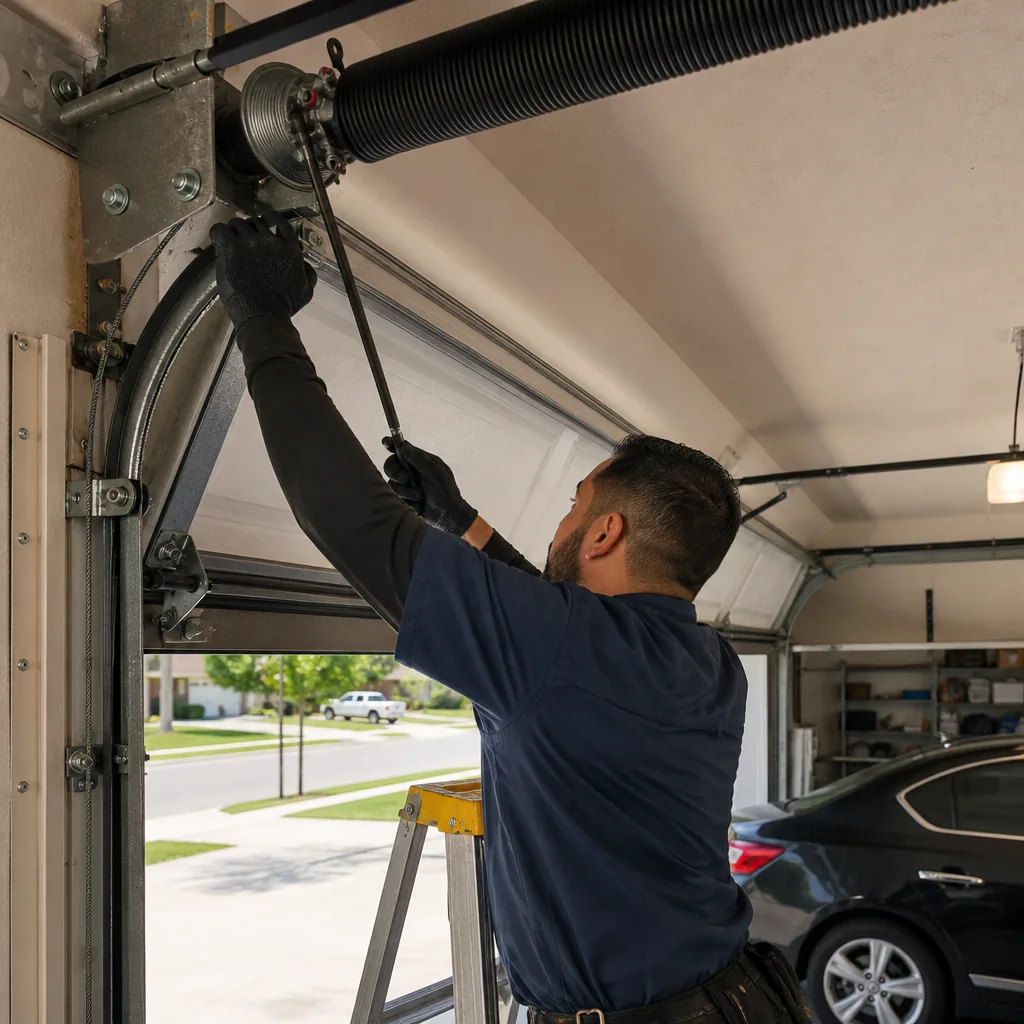 After
After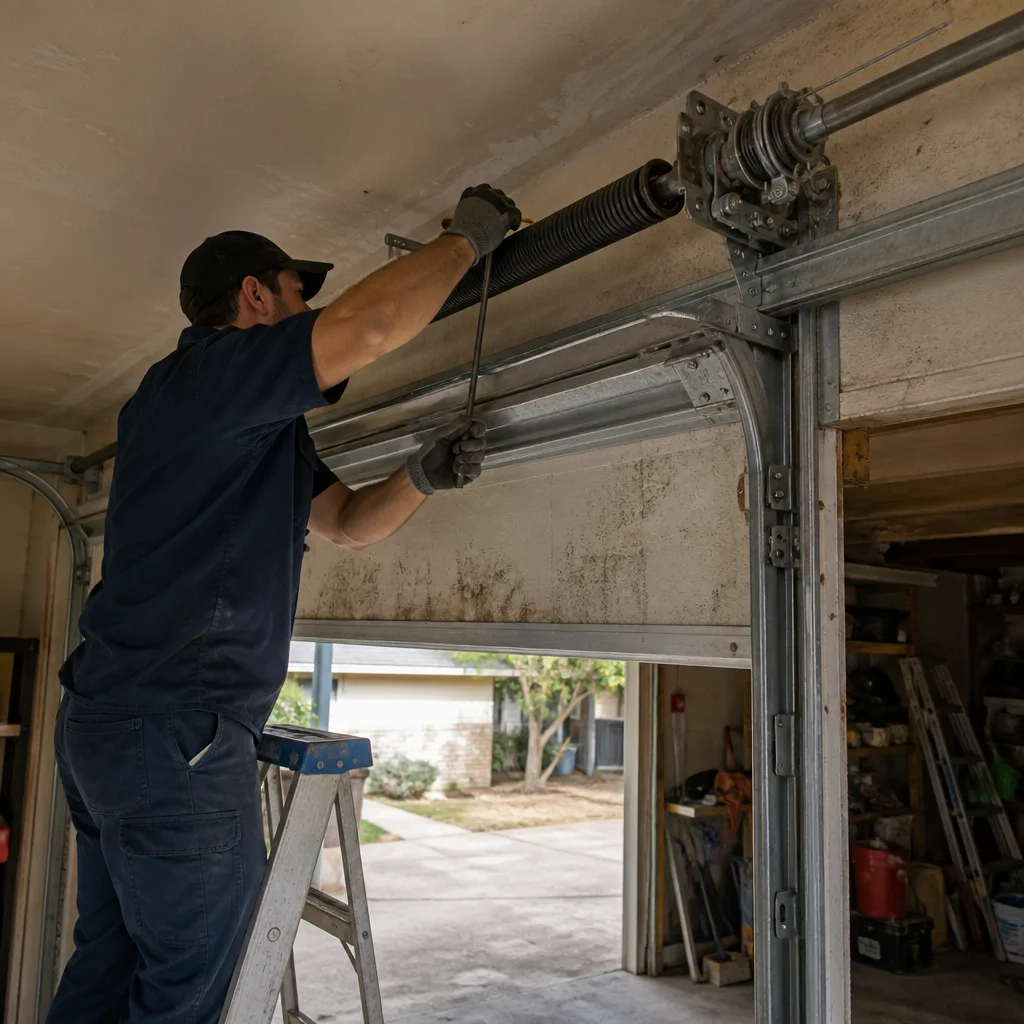 Before
 After
After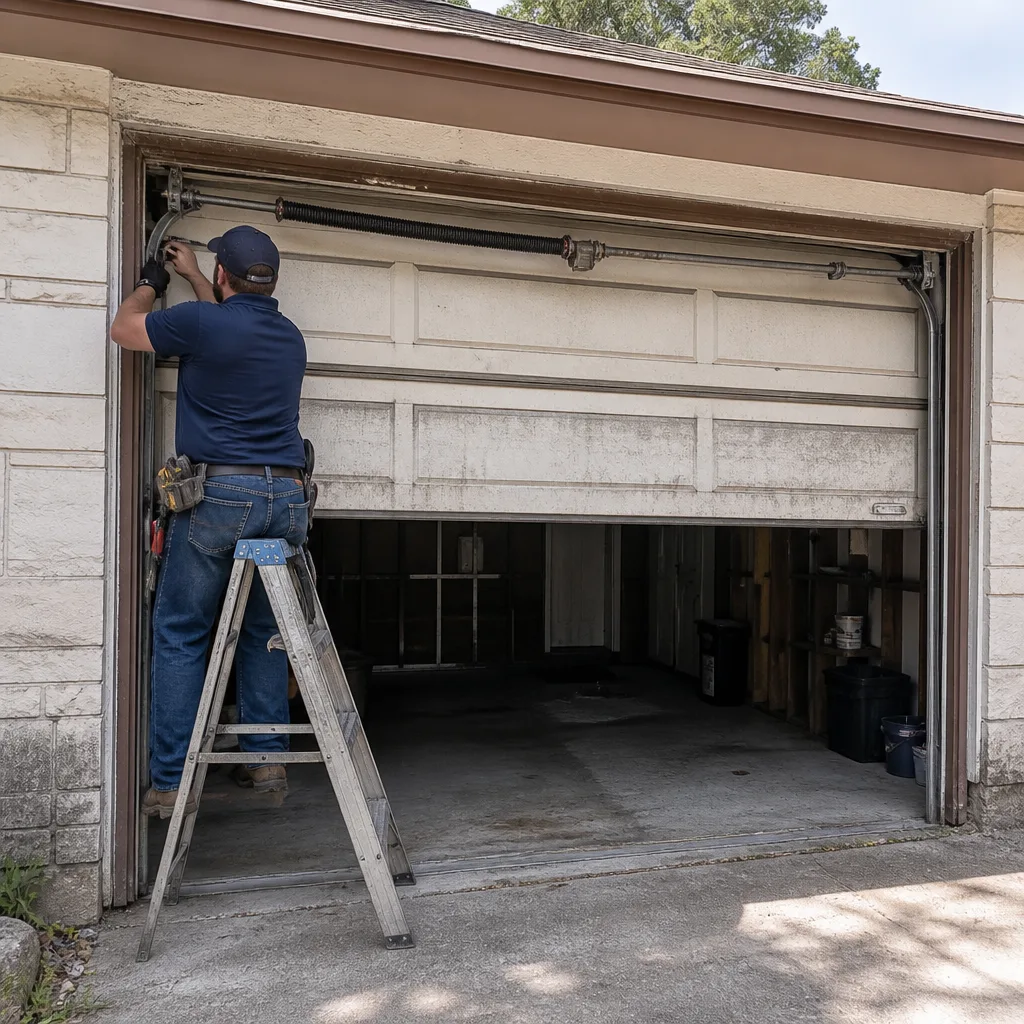 Before
 After
After