
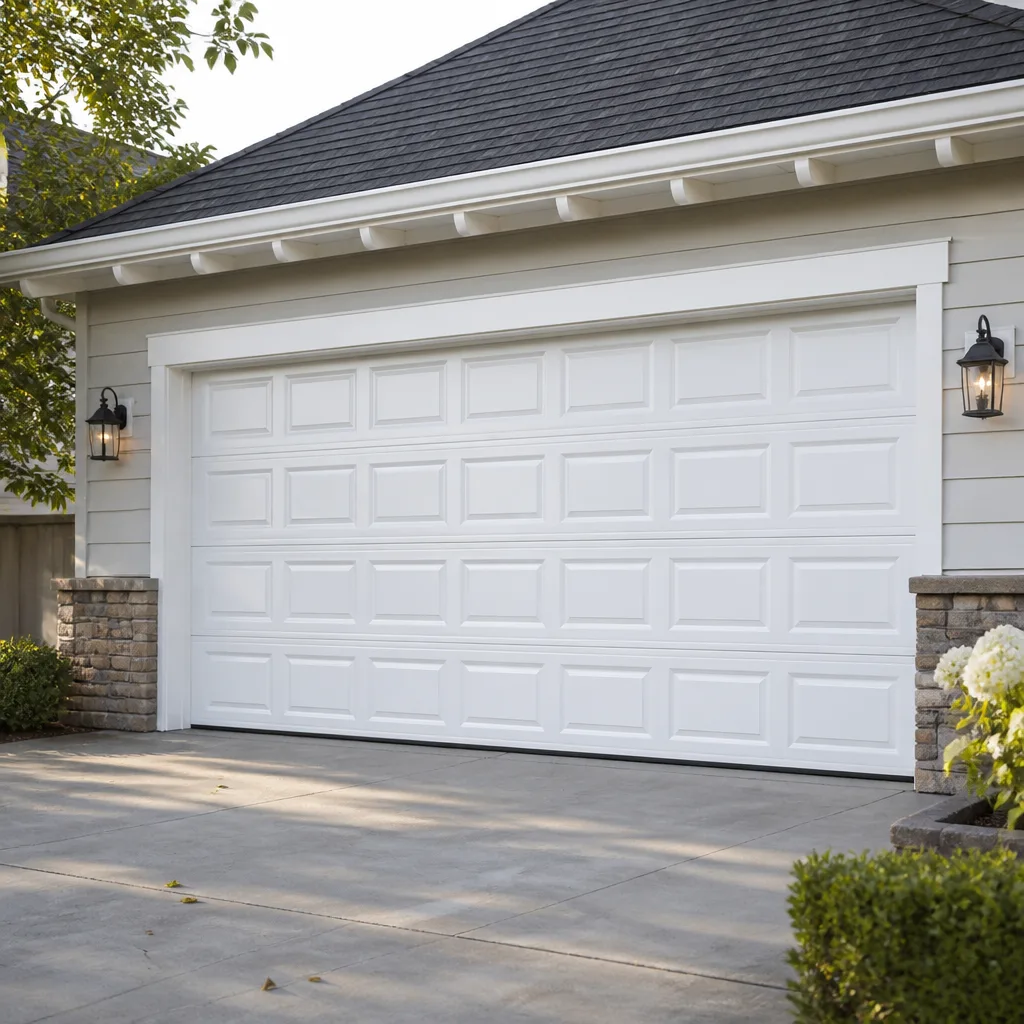
 Raised-panel steel
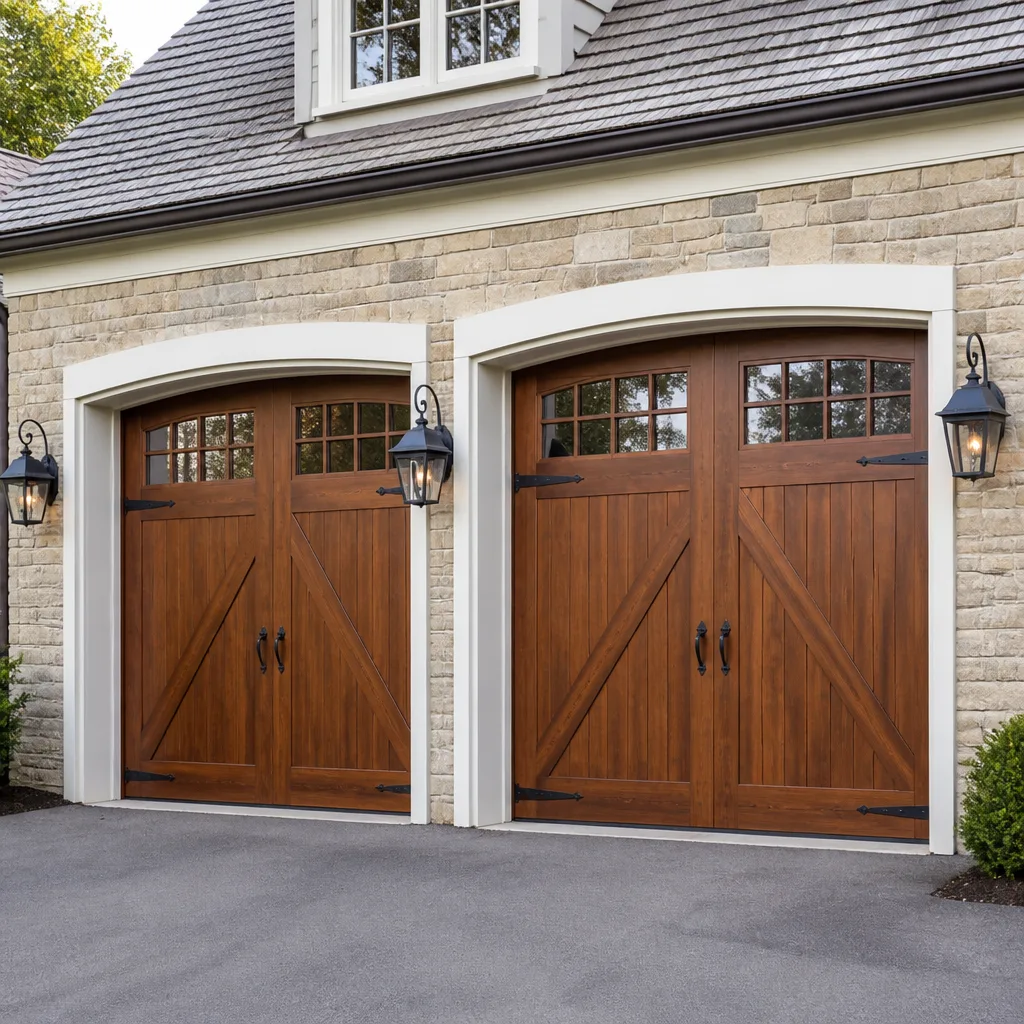 Carriage house
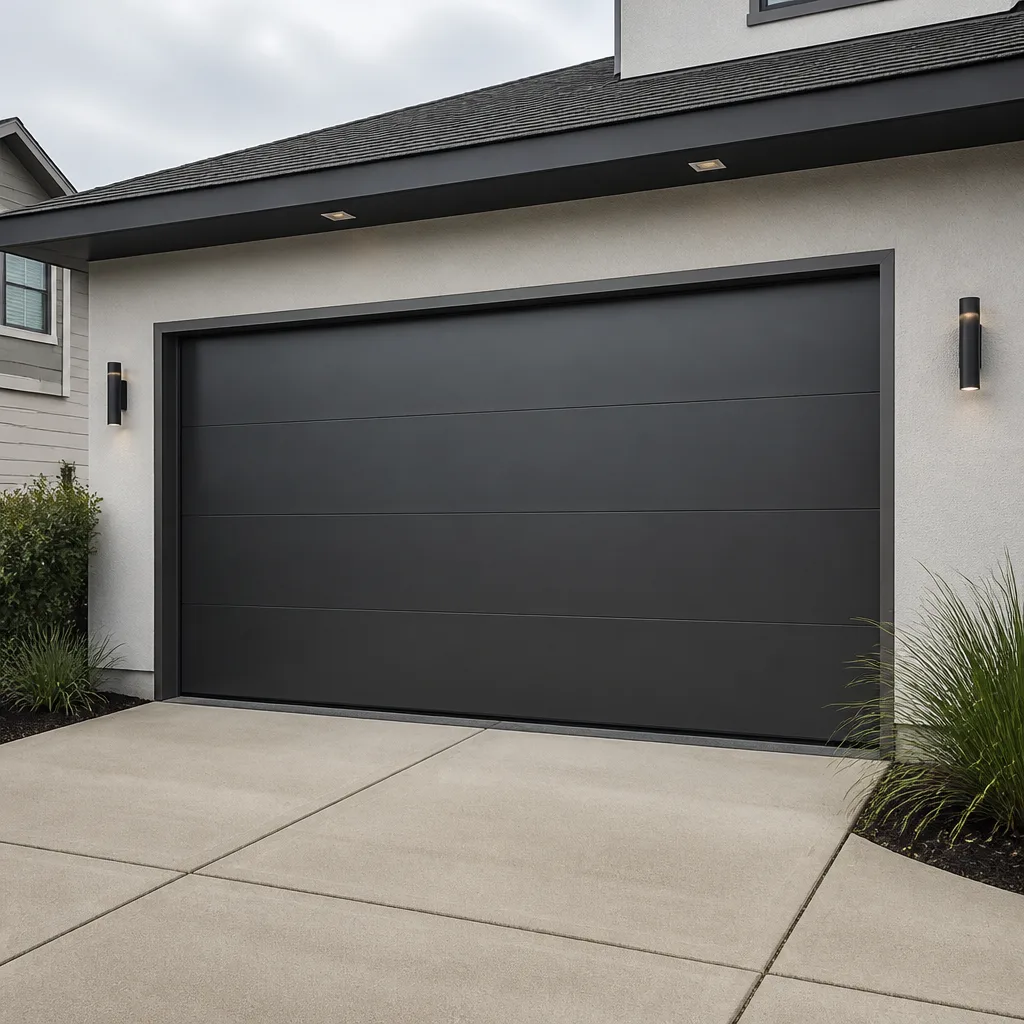 Modern flush
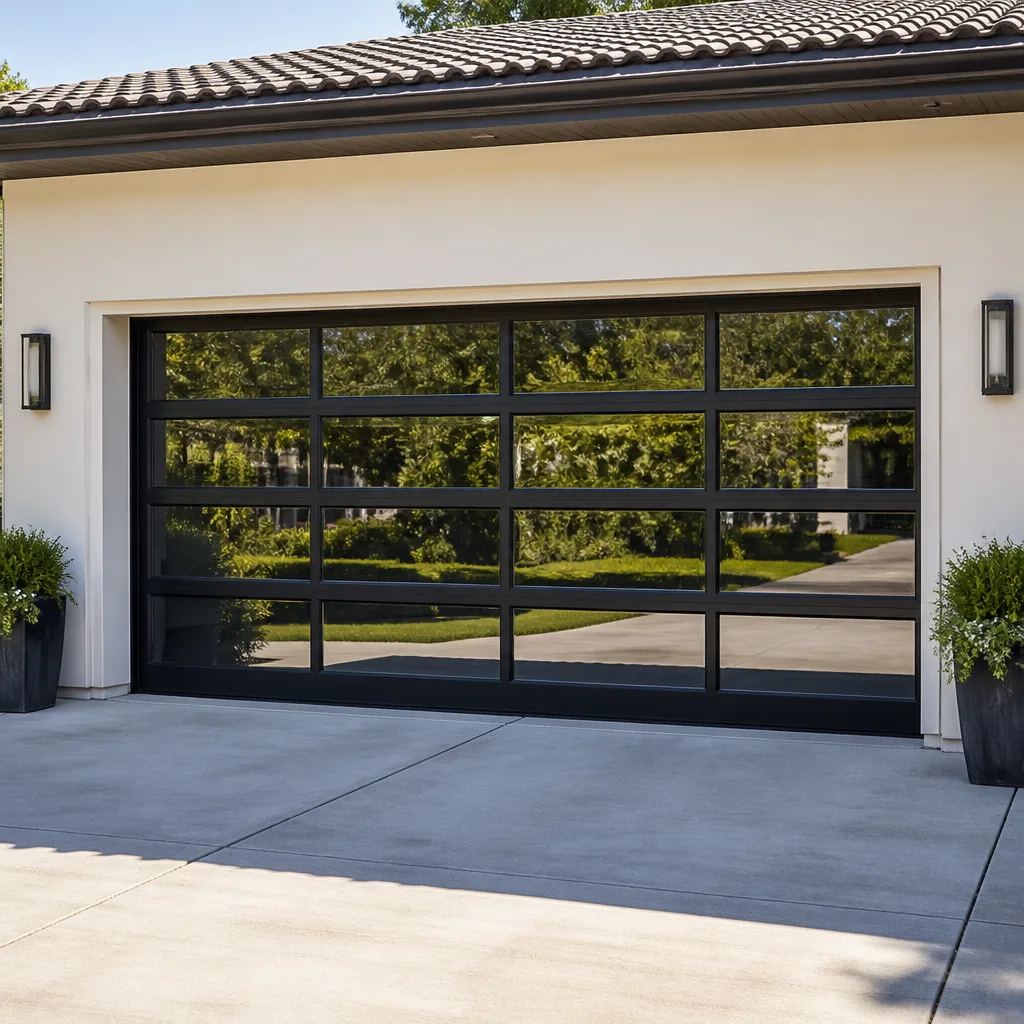 Full-view glass
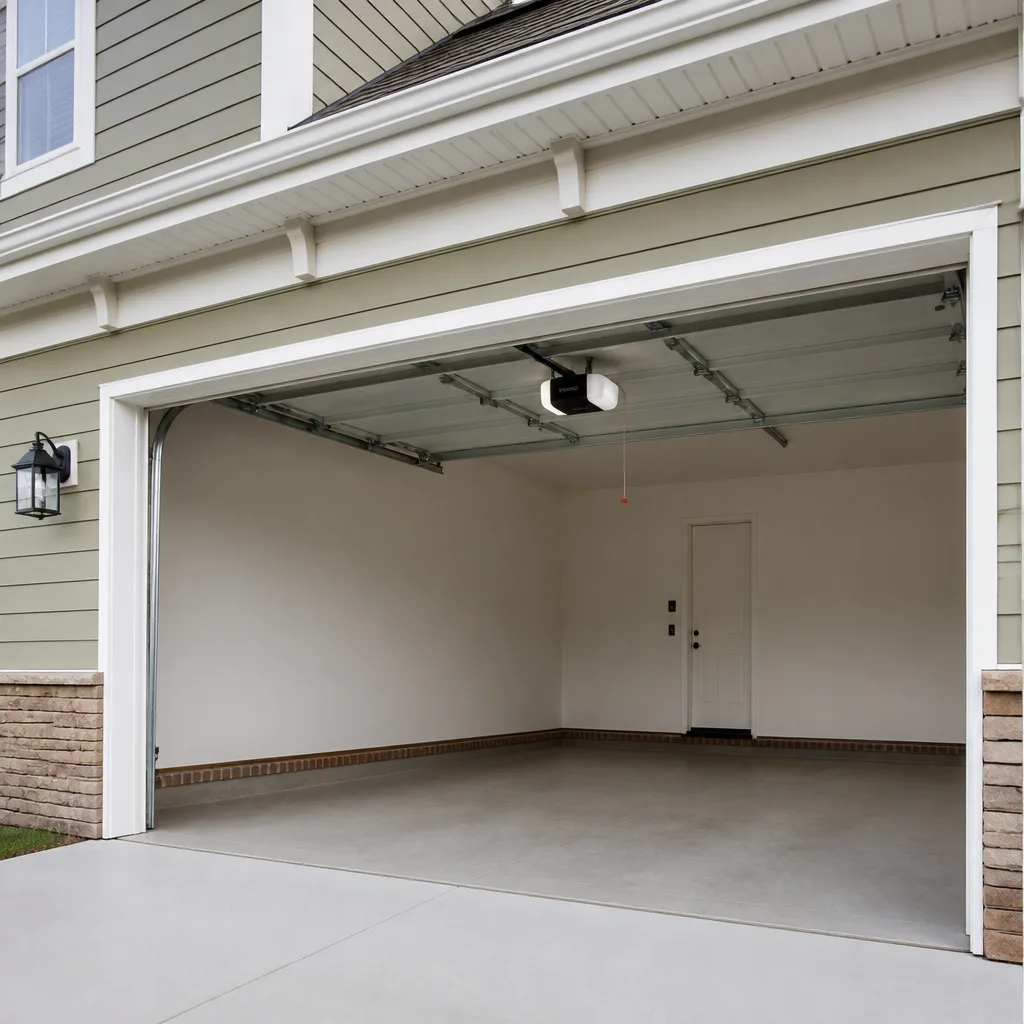 LiftMaster openers
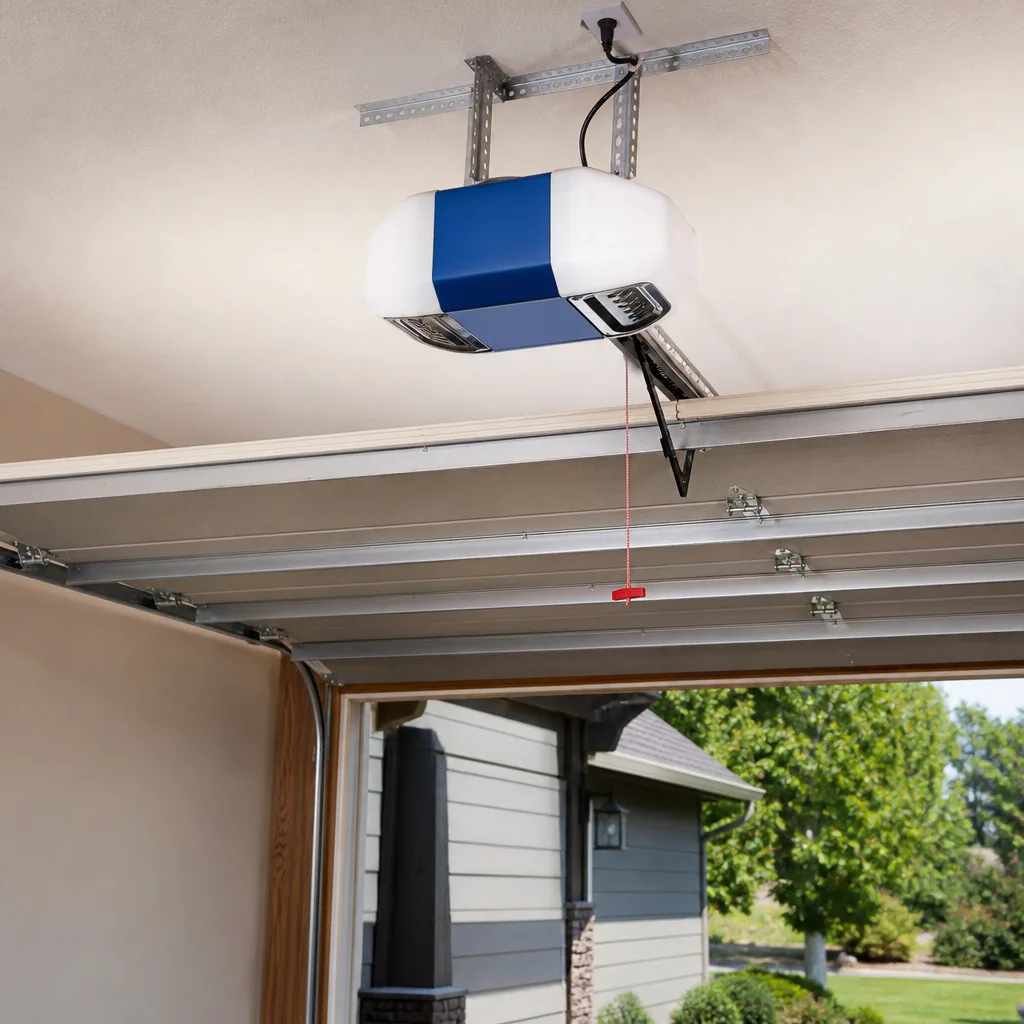 Chamberlain openers
Full 25-point door and opener safety check with every visit - springs, cables, rollers, tracks, and your LiftMaster or Chamberlain opener included
You get a price before we start. It does not change when the truck arrives.
Get your free estimateRaynor Roller Replacement: The Austin Owner’s Guide
Raynor roller replacement in Austin typically runs $110 – $220 installed, and we stock Raynor-compatible rollers on our trucks so most swaps happen the same day. Rollers are the wheels attached to the sides of your door that ride inside the vertical and horizontal tracks. When one fails, you usually hear it before you see it: a screech, a grind, or a door that shudders and jerks as it opens. Left alone, a bad roller can chew up the track, strain the opener motor, and eventually pull the door out of alignment entirely, which turns a $150 fix into a $600 one. We’ll match your Raynor door to the right roller spec, show you the dead part, and hand you a written price before anything comes off the door.
Raynor has been making garage doors since 1944, and a lot of their residential lines use nylon rollers with sealed ball bearings that hold up better than the steel-only wheels you’ll find on cheaper doors. But in Austin, the combination of summer heat and limestone dust from driveways and construction sites does a number on those bearings. The grease inside thins out, dust works its way past the seal, and you get the classic metal-on-metal grind. The roller itself rarely “breaks” in a dramatic way; it seizes or slops, and that’s what tears everything else up.
One thing worth knowing before we get into specs: Marlow Garage Door Repair Austin is an independent service provider. We’re not affiliated with Raynor. What that means for you is we don’t have a dealer agreement pushing us to sell only Raynor-branded parts, so we can tell you straight when the OEM roller is worth the money and when a quality aftermarket equivalent from the same spec does the job for less.
Which Raynor Models This Applies To
Most Raynor residential doors built since the mid-1990s use standard 2-inch rollers, which is the industry norm across brands like Clopay, Amarr, and Wayne Dalton. Where Raynor gets specific is in their commercial and heavier insulated lines. The Raynor EnergySave and Centura series doors, for instance, spec a 2-inch nylon roller with a 7/16-inch stem, but the thicker door sections mean you want the 10-ball-bearing version, not the budget 6-ball. The difference is heat and weight. An EnergySave door with a polyurethane core is heavy, and that extra rotational load on a cheap roller will kill it in two or three Austin summers.
If you want to identify what you have before we arrive, look for the model label on the inside of the top panel, usually on the right side. It’ll show a series name and a build date. Alternatively, measure the roller wheel itself. Most residential Raynor doors use a 2-inch wheel. Some of the older builder-grade lines from the 1980s used 1-3/4-inch wheels, and if someone slaps a 2-inch into one of those, the wheel binds in the track at the curve and the door grinds to a stop halfway up.
On the OEM-vs-aftermarket question, here’s the honest version. A genuine Raynor roller for a standard residential door is a fine part, but you’re paying a meaningful markup for the packaging. A quality aftermarket nylon roller with sealed bearings from a spec-matched supplier does the same job for less on most doors. The exception is high-cycle commercial or heavy double-wide residential doors, where the Raynor-spec bearing tolerance is tighter and the extra cost actually buys you measurable lifespan.
Styles & brands we work with
Signs Your Raynor Roller Replacement Is Failing
- The door sounds like it’s dragging a metal chair across concrete. This is the bearing dried out, and you’re hearing steel race against steel. In Austin’s heat, the factory grease in the bearing has a hard time staying put once the door is a few years old.
- The door shudders or stutters on the way up, especially in the middle third of travel. A roller that’s flattened on one side or has a shattered bearing will momentarily hang at the same spot every cycle. Watch the roller as it passes through the curve in the track; a flat spot is visible if you look closely.
- One side of the door sits slightly lower than the other. A seized roller will force the panel it’s attached to out of level. The gap under the door won’t be even, and light will leak through on one side at dusk.
- You can see tiny metal shavings or gray dust on the inner edge of the track. That’s the bearing eating itself. The dust collects at the bottom of the vertical track or on the floor just inside the door. It’s an early warning sign, and it’s the cheapest time to act.
- The door gets louder every month, even after someone greases the rollers. Here’s the thing most people don’t realize: nylon rollers with sealed bearings should never be greased. Once the seal is compromised, adding lubricant just attracts more fine dust and turns the inside of the bearing into grinding paste. Noise that keeps worsening means replacement, not lubrication.
See the difference
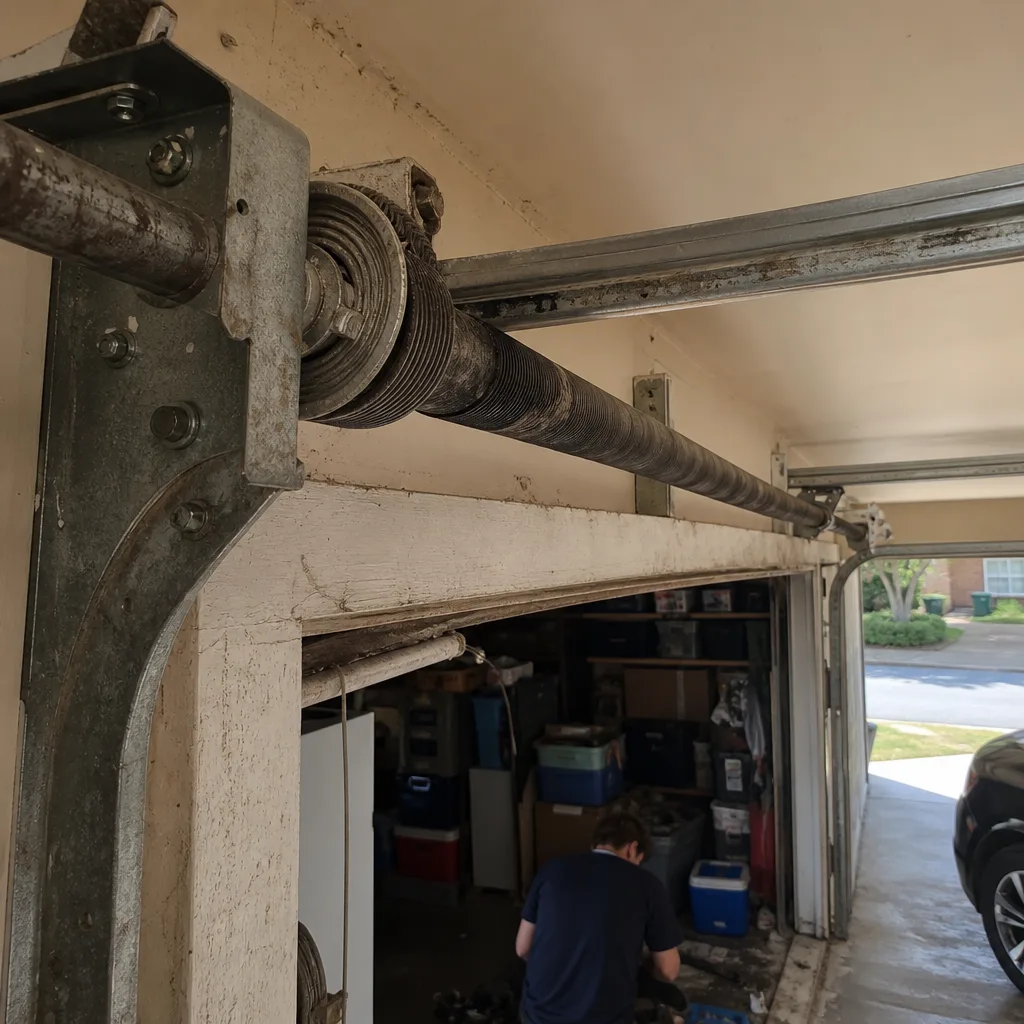 Before
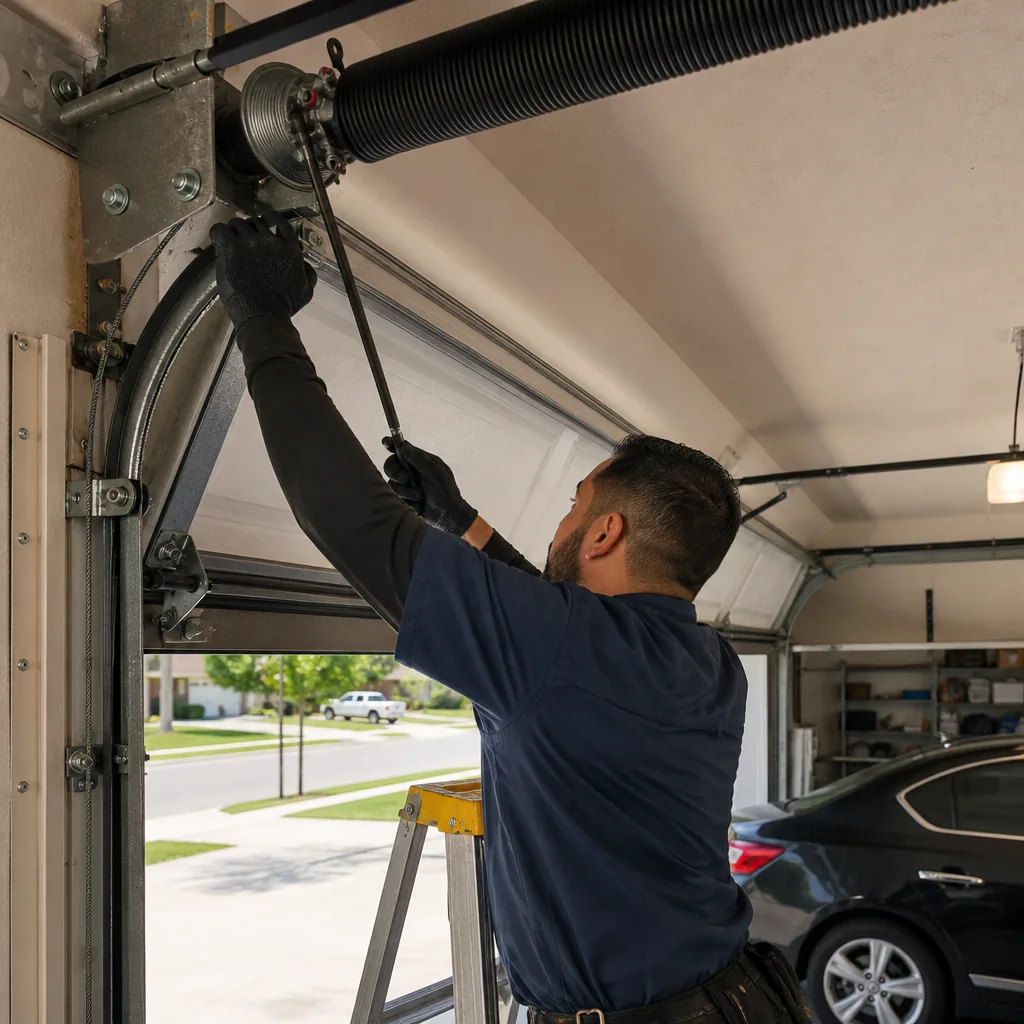 After
After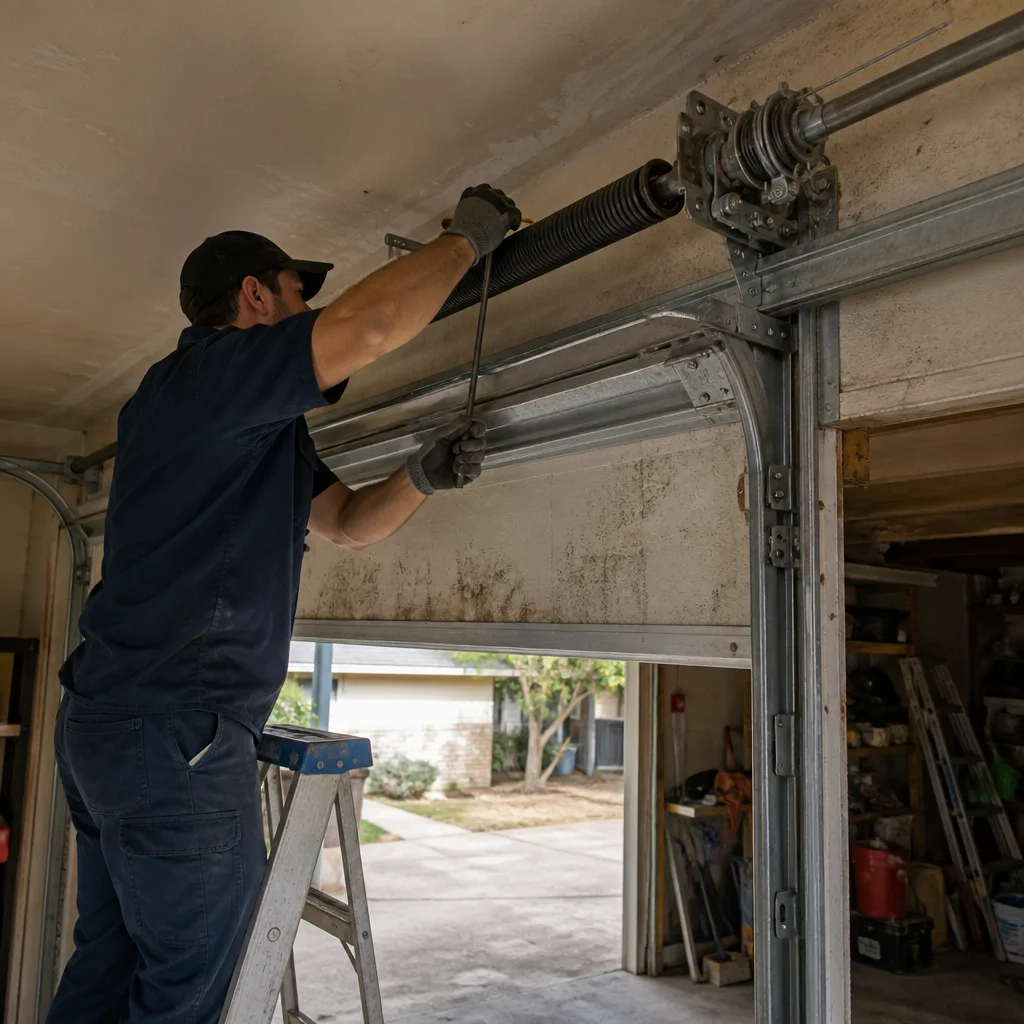 Before
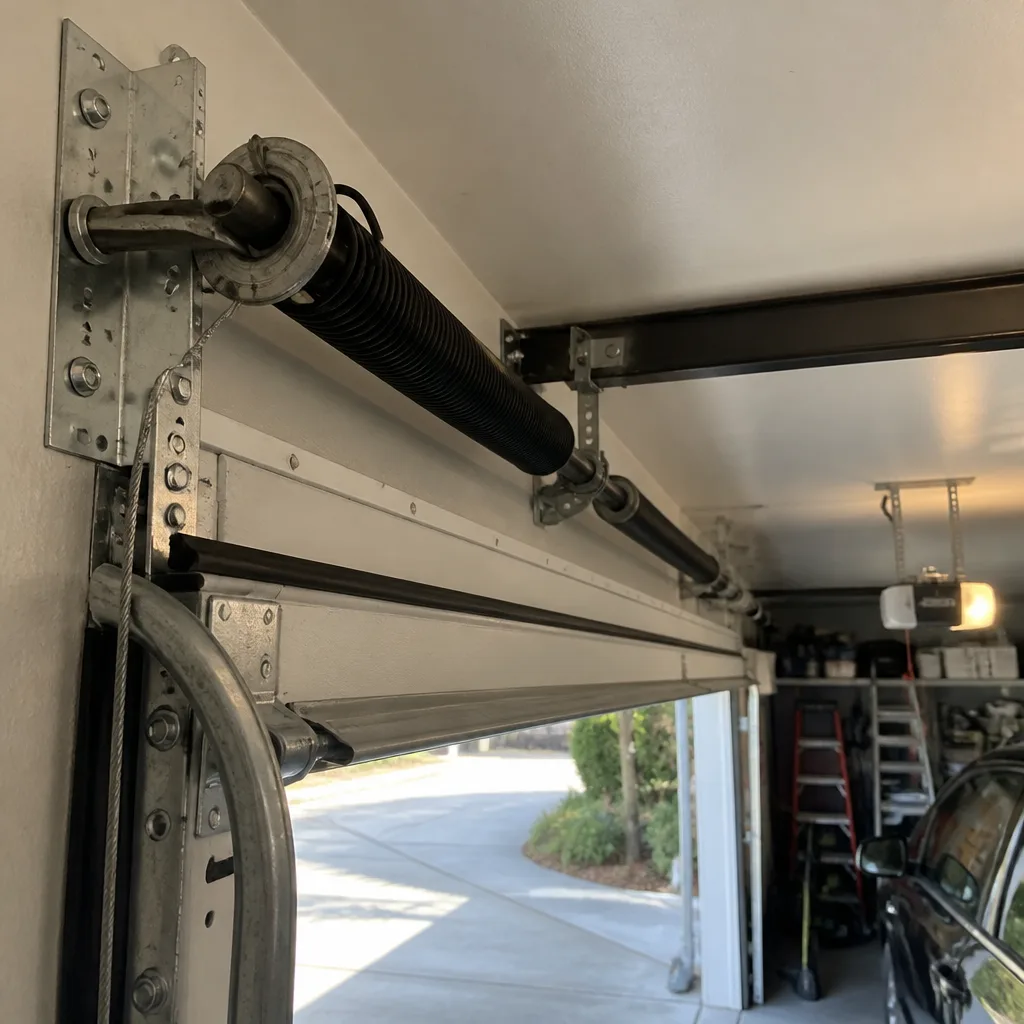 After
After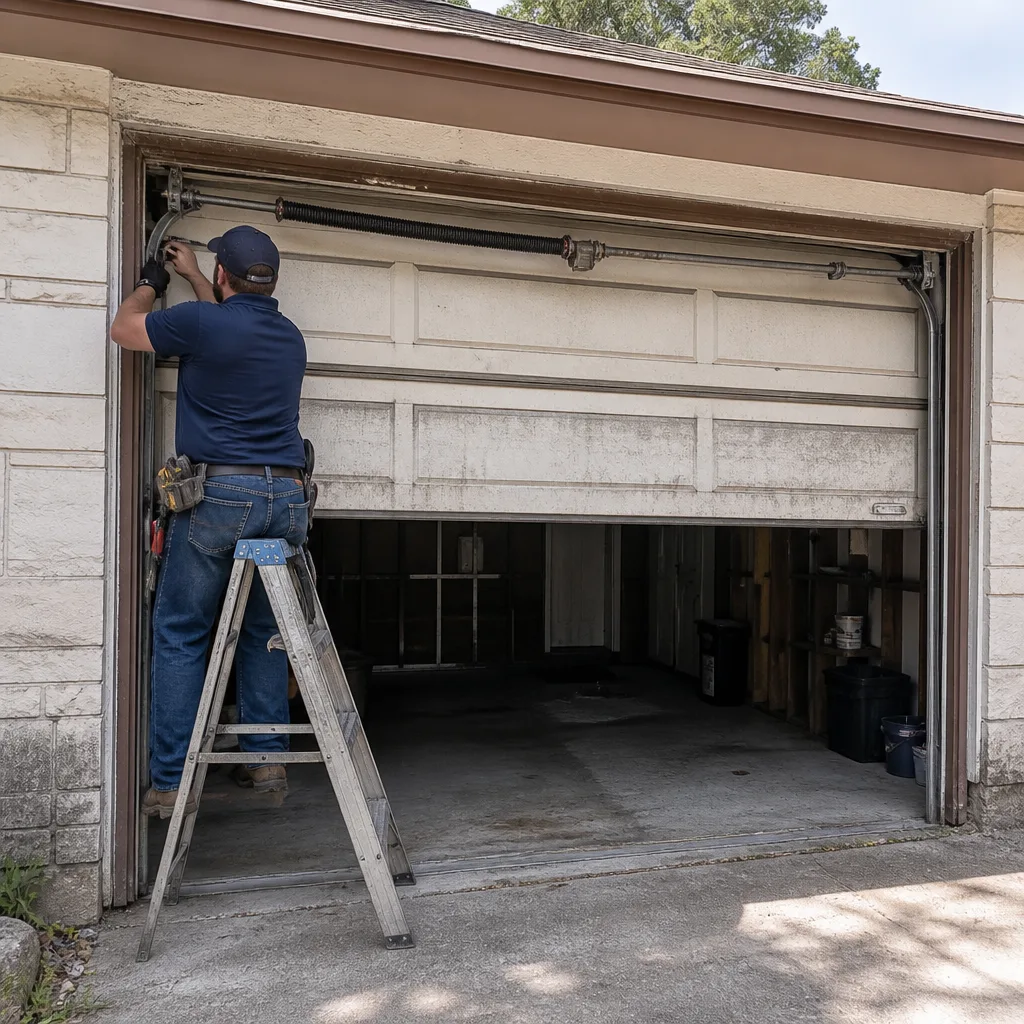 Before
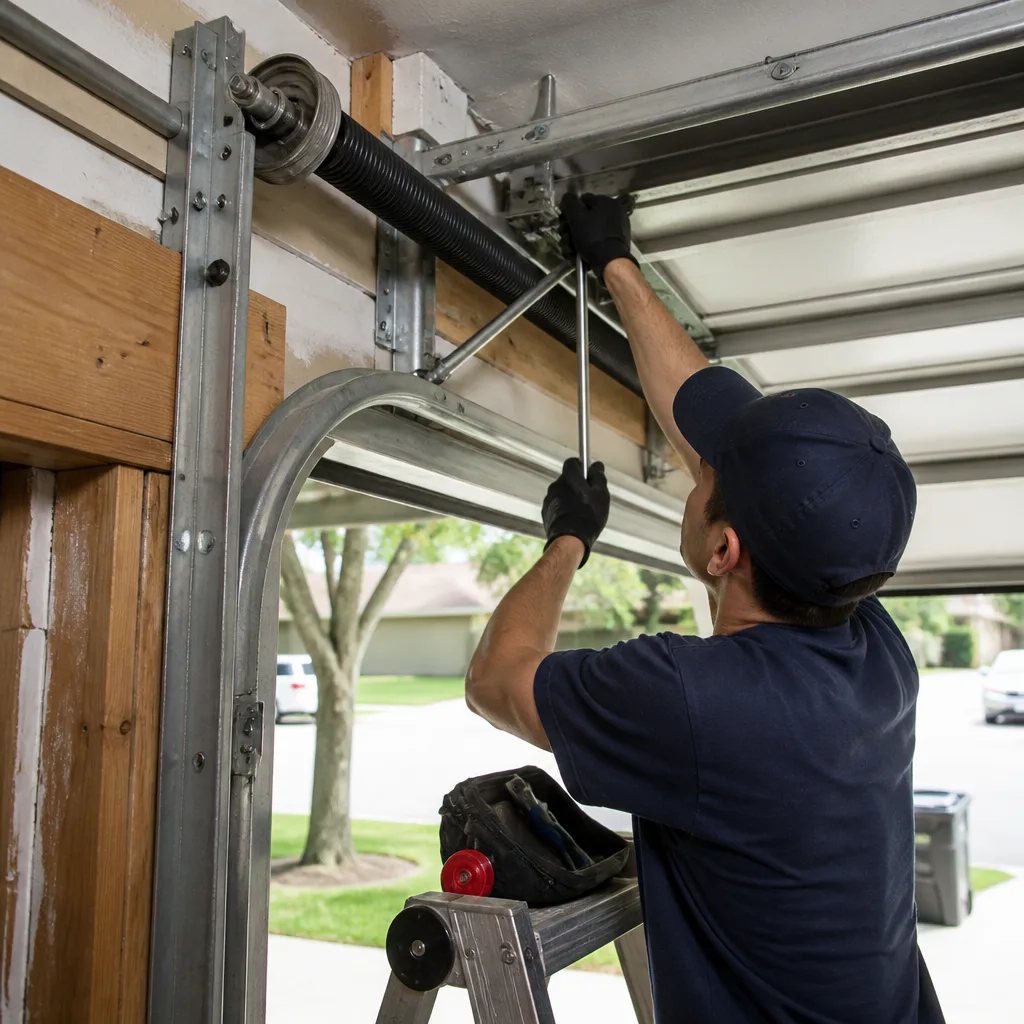 After
AfterReplacement Cost & What’s Included
In Austin, a full Raynor roller replacement across all hinges on a standard two-car door runs $110 – $220 installed, and that range is for the entire set, not per roller. The spread comes down to three things: how many rollers your door has (a single-car door runs 8-10 rollers, a double 10-12, and some doors have extra rollers on the bottom bracket), whether we’re installing standard 6-ball nylon or upgraded 10-ball bearings for heavier doors, and whether the old rollers have damaged the track enough to need attention while we’re in there.
Every roller replacement includes the rollers themselves, removal of the old hardware, and a tension check on the door after the swap. You’ll see the written price before we start, and that number doesn’t change after we open everything up unless you approve additional work first. The parts carry a 6-month warranty, and the labor falls under the 365-Day Done Right Promise. If one of those rollers fails inside a year, we come back and make it right on our dime.
DIY or Call Us?
You can diagnose a failing roller yourself without touching a tool: run the door, watch the rollers, listen for the grind, check for metal dust in the track. That intel is genuinely helpful when you call us, because it confirms the problem before we’ve even parked the truck.
Where DIY goes wrong is the swap itself, and the reason isn’t skill, it’s spring tension. The rollers are what let the door move, but the torsion spring, that horizontal coil above the door, is what holds the door’s entire weight under load. To remove most rollers, you have to unbolt the roller bracket from the track or hinge, and the moment you do that on a door under tension, that panel can drop hard. People have lost fingers and worse because the door was mid-cycle when a bracket came loose. The bottom bracket roller is the worst of all: that bracket is bolted directly to the cable that runs to the spring system, and loosening it without releasing tension first is how you eat an emergency room bill instead of a service fee. This is a job we do in about an hour with the right tools and a healthy respect for stored energy. If you’ve narrowed it down to a bad roller, call us at (361) 320-8872, and we’ll get you on the schedule while the fix is still cheap.
FAQs
A set of Raynor nylon rollers will typically last 6-10 years on an Austin home, though doors that face west and soak up full afternoon sun tend to go through bearings faster as the heat accelerates grease breakdown. If your door is over a decade old and still on original rollers, you’re on borrowed time. Call (361) 320-8872 for an exact replacement quote, estimates are free.
No, and honest shops don’t try. Once the bearing seal is compromised, there’s no practical way to repack it, and any “repair” is a temporary grease job that fails again within weeks. Rollers are replace-on-failure parts, and we always replace the full set so the door moves evenly. For a precise price in Austin, call us at (361) 320-8872.
Most roller replacements on a standard Raynor door take 45 to 75 minutes from start to finish, including a door balance test at the end. The work is fast once the door is safely clamped, and we do it the same day in almost every case. Call (361) 320-8872 to see when we can get to your part of Austin.
Yes, our trucks carry Raynor-compatible rollers in the common 2-inch nylon and steel sizes, along with upgraded 10-ball-bearing versions for heavier insulated doors. We also stock parts for LiftMaster, Chamberlain, and Genie openers, since a roller failure often accompanies opener strain. If your Raynor door uses a less common spec, we’ll source it and return within the same week.
Written by Jaylen Ross, Owner, Marlow Garage Door Repair Austin at Marlow Garage Door Repair Austin, serving Austin and nearby areas.