
Last updated October 16, 2026
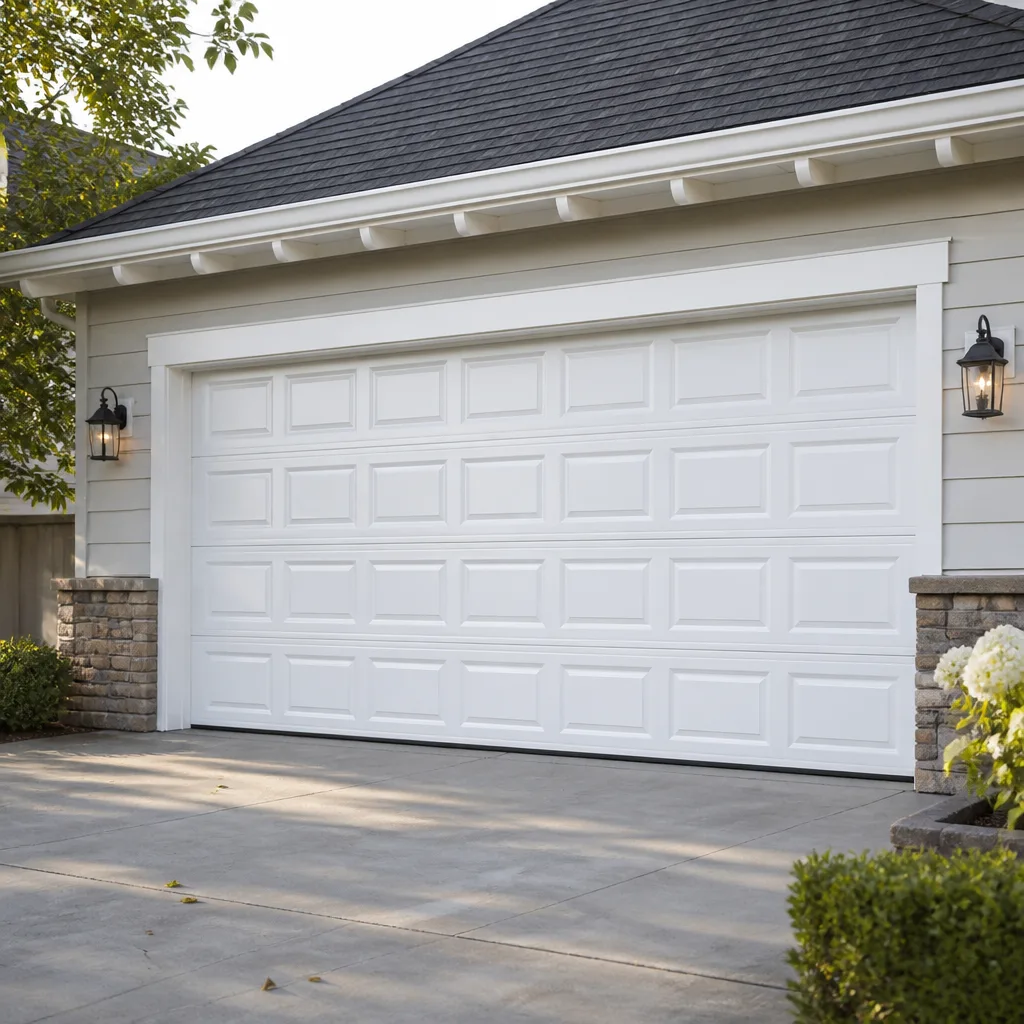 Raised-panel steel
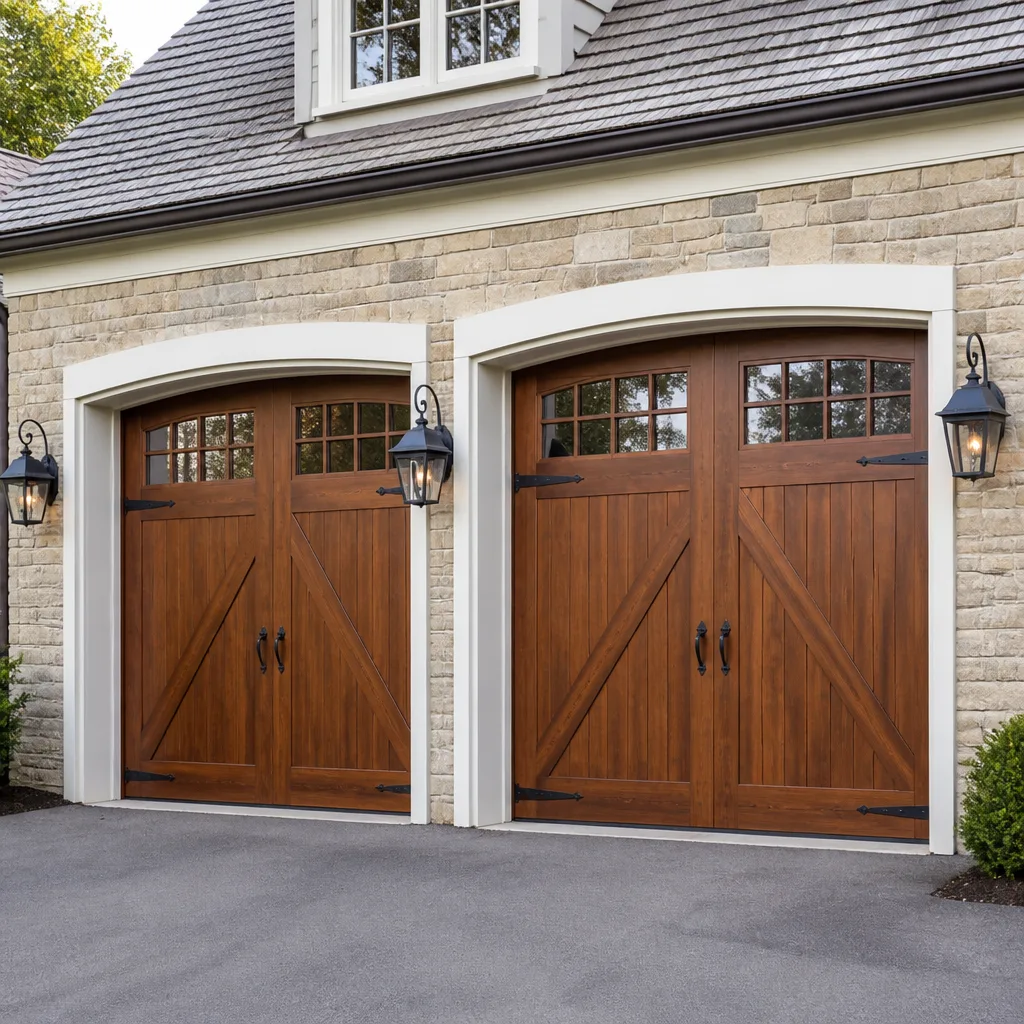 Carriage house
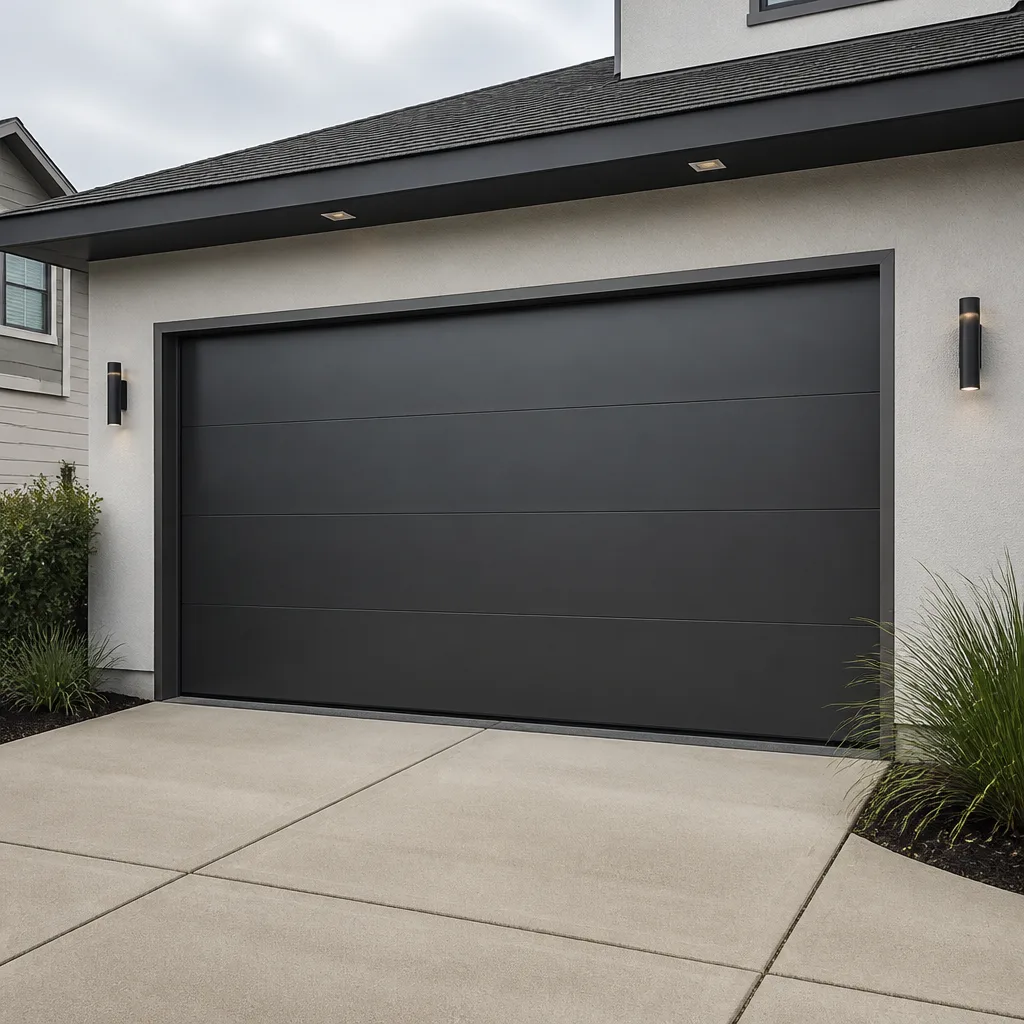 Modern flush
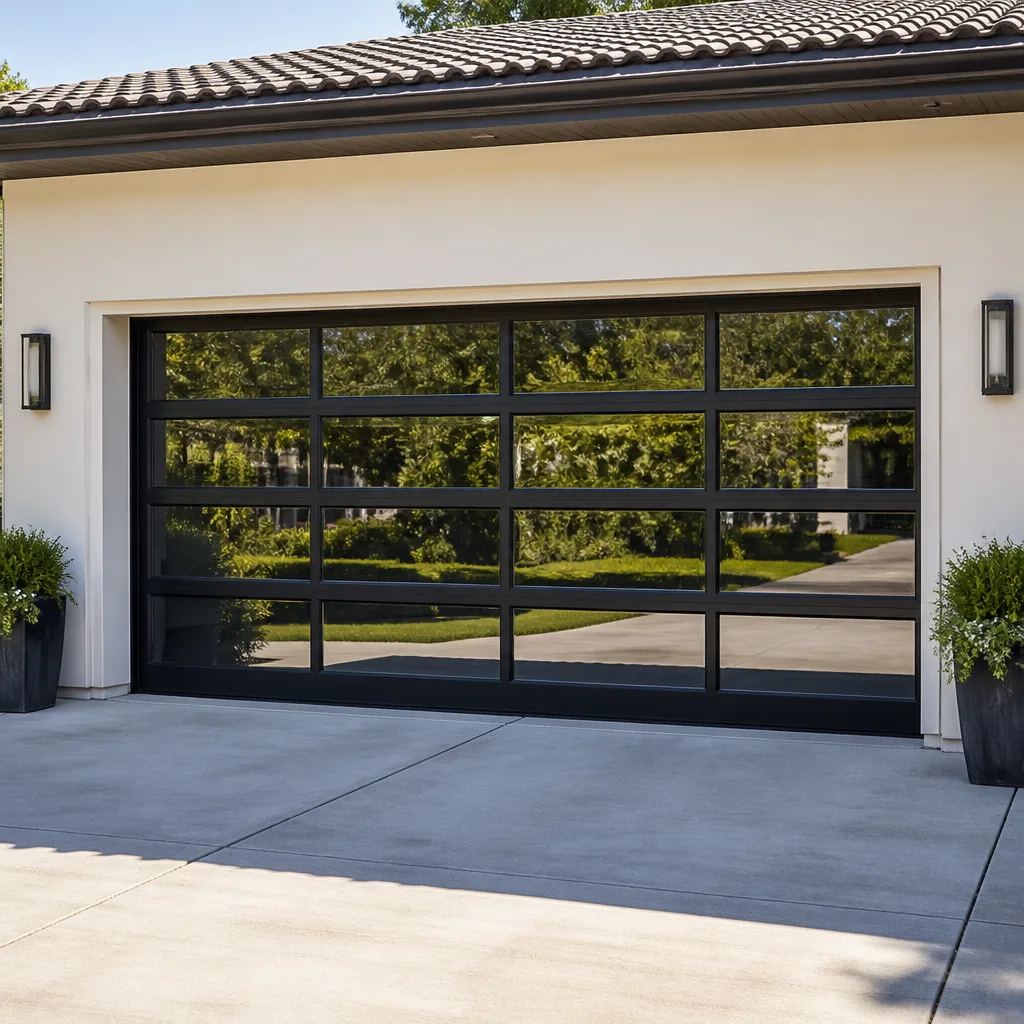 Full-view glass
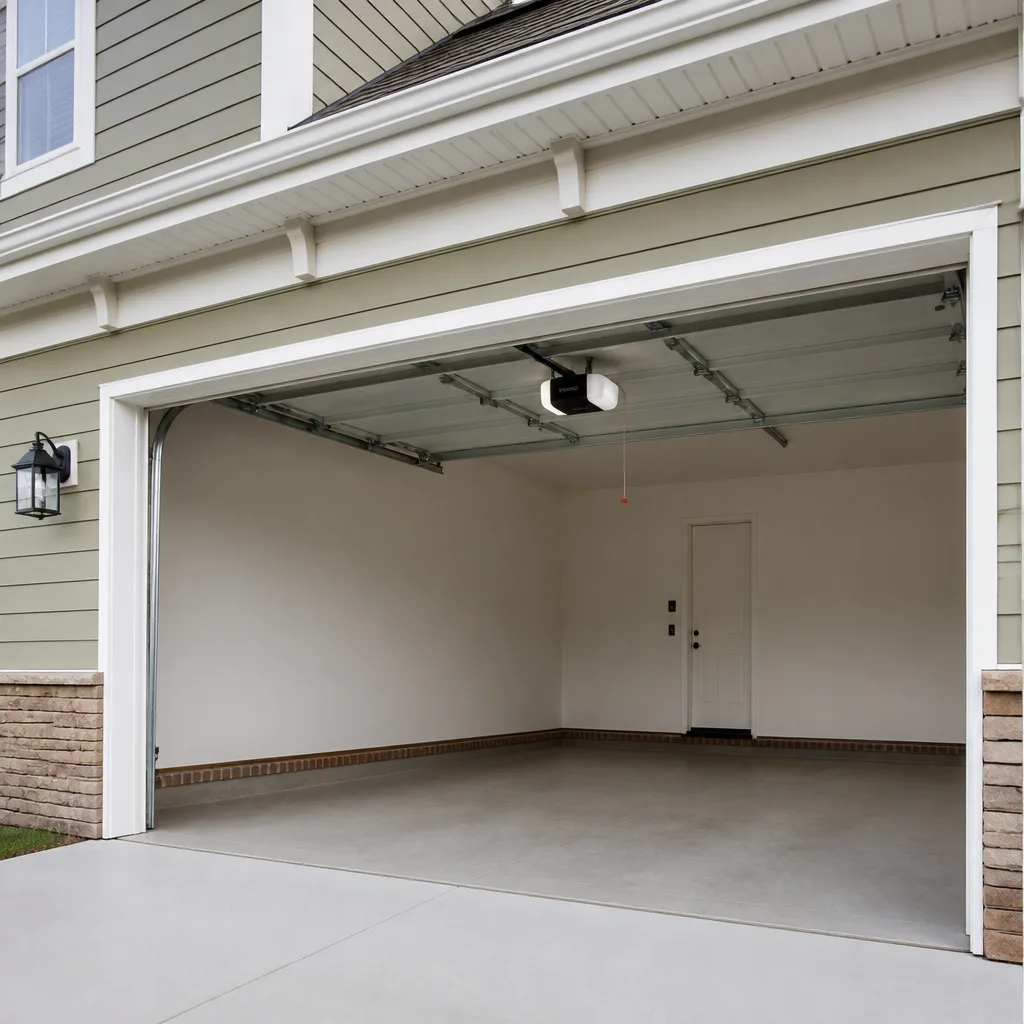 LiftMaster openers
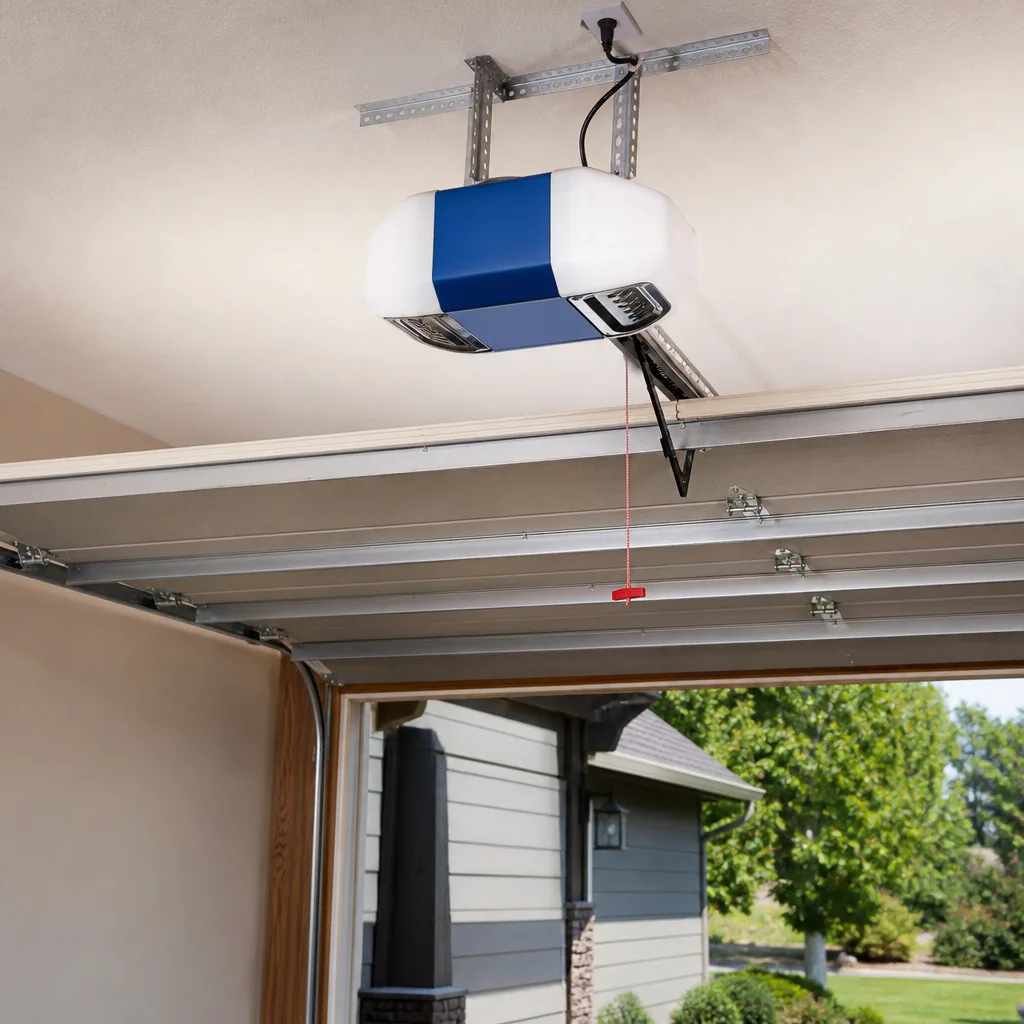 Chamberlain openers
Full 25-point door and opener safety check with every visit - springs, cables, rollers, tracks, and your LiftMaster or Chamberlain opener included
You get a price before we start. It does not change when the truck arrives.
Get your free estimateGarage Door Repair Maintenance Checklist for Austin Homeowners
Most garage door maintenance checklists floating around the internet were written for Ohio winters and Florida humidity. They tell you to check your weatherstripping for ice damage and lubricate hinges against road salt. In Austin, the enemy isn’t snow or salt. It’s cedar pollen so thick it turns your tracks into sandpaper. It’s UV exposure that cracks rollers and dries out cables. It’s 80-degree January days followed by 35-degree nights that make metal components expand and contract until something snaps. This checklist is built from the actual failure patterns we see in Austin Garage Door Repair service calls, not a generic template. You’ll learn the three maintenance tasks that prevent most emergency repairs, how to spot a failing spring thirty days before it breaks, and why the lubricant you’re using might be making things worse.
Quick Answer
A garage door maintenance checklist for Austin homeowners should focus on four things: clearing cedar pollen and limestone dust from tracks quarterly, lubricating moving parts with the right product for Central Texas heat, testing spring tension visually every six weeks, and listening for wear in rollers and hinges during the 80-degree temperature swings that hit between January and March. Most Austin emergency repair calls trace back to skipped lubrication, track debris buildup, or ignored Garage Door Warning Signs: A Austin Homeowner’s Reference Guide spring fatigue. Fifteen minutes of targeted maintenance every six weeks prevents the majority of breakdowns we see in Austin.
Styles & brands we work with
Table of Contents
- The Austin Month-by-Month Maintenance Checklist
- How to Test Spring Tension Safely Without Touching the Springs
- Why Austin’s Limestone Dust and Cedar Pollen Destroy Tracks
- The Exact Lubricant for Every Component in Central Texas
- What Every Squeak, Rattle, and Grind Actually Means
- The Phone Camera Roll Checklist (Not a Forgotten PDF)
- Common Mistakes to Avoid
- When to Call a Professional
- Frequently Asked Questions
The Austin Month-by-Month Maintenance Checklist
Austin doesn’t have a “garage door season” the way colder climates do. The door cycles year-round, and the threats shift with the local calendar. Here’s what we recommend, month by month, based on what we see in garage door repair in Austin service calls.
January through March: The Temperature Swing Months
This is Austin’s real garage door killing season, and it has nothing to do with extreme cold. The pattern is 75-degree afternoons followed by 40-degree nights, repeated for weeks. Metal expands when it warms and contracts when it cools. Your torsion springs, cables, and track brackets do this constantly. The stress concentrates at connection points: cable crimps, spring anchor brackets, and hinge screws.
- Inspect cable connections twice a month. Look at where the lift cables attach to the bottom corners of the door. You’re checking for fraying, not just breaks. Frayed cables look fuzzy or have individual wire strands poking out.
- Watch the door during a full open-close cycle. It should not pause, jerk, or wobble side to side. Any hiccup in the middle of travel means something is resisting, and that something is usually a track alignment issue or a failing roller.
- Listen at the halfway point. The loudest noises happen mid-cycle when the door shifts from vertical to horizontal travel. A clean door in good condition should be nearly silent. Grinding, popping, or rattling at the transition point is the earliest symptom of a $400 problem.
April through June: Oak Pollen and Rising Heat
Oak pollen season in Austin peaks from late March through May, and the stuff gets everywhere. It drifts into garages, settles on tracks, and mixes with the existing lubricant to form a gritty paste. The paste acts as an abrasive every time the door moves. Think of it as lapping compound for your rollers.
- Wipe the vertical tracks down monthly. Use a dry cloth, not a wet one. You’re trying to remove pollen from the track surfaces where the rollers ride, not push it into the crevices.
- Check the roller bearings. Nylon rollers with sealed bearings should spin quietly. If you hear any grinding when you spin one by hand (with the door in the down position), the bearing is contaminated and the roller needs replacement. Replacement rollers are inexpensive insurance because a seized roller carves grooves into the track.
- Inspect weatherstripping at the bottom of the door. Austin’s dry heat causes rubber to crack and shrink. Gaps in the seal let in pollen, dust, and mice.
July through September: Heat Peak
Garage interiors in Austin easily exceed 110 degrees in summer. That heat does two things. It thins out the lubricant you applied in spring, causing it to run off the parts it was protecting. And it makes rubber components brittle, especially the weatherstripping and any rubber seals in the chain or belt drive system inside the opener.
- Re-lubricate the torsion springs in July. Even if you lubricated them in spring, the July heat has likely burned off most of the product. The springs need a fresh coat to prevent the friction that leads to micro-fractures and eventually a snapped spring.
- Check the opener belt or chain tension. Extreme heat can cause a chain to stretch or a belt to slacken. A loose drive system makes the opener work harder, which shortens its lifespan.
- Verify the auto-reverse sensor. The safety eye sensors near the floor can be knocked out of alignment by temperature shifts in the concrete slab. Place an object in the door’s path and confirm the door reverses before touching it. This should be a monthly check in summer.
October through December: Humidity Drop and Cooler Nights
Fall in Austin brings lower humidity and the return of cooler nights. The garage door’s moving parts contract, and during the driest weeks, the wood in any wooden door panels shrinks. That shrinkage loosens hinge screws and can throw panel alignment off slightly.
- Tighten every hinge screw and track bolt with a socket wrench or screwdriver. Do not overtighten and strip the metal. This prevents the wobble that turns into a roller popping out of the track.
- Reapply silicone lubricant to all metal-on-plastic contact points. The rollers, hinges, and the lock mechanism. Silicone lasts longer in cold, dry air and doesn’t attract the fall dust the way lithium grease does.
- Schedule a professional garage door spring repair in Austin if your spring is showing any signs of wear. The fall temperature drop is when weakened springs finally give out. Better to catch it before the door refuses to open on a cold morning.
How to Test Spring Tension Safely Without Touching the Springs
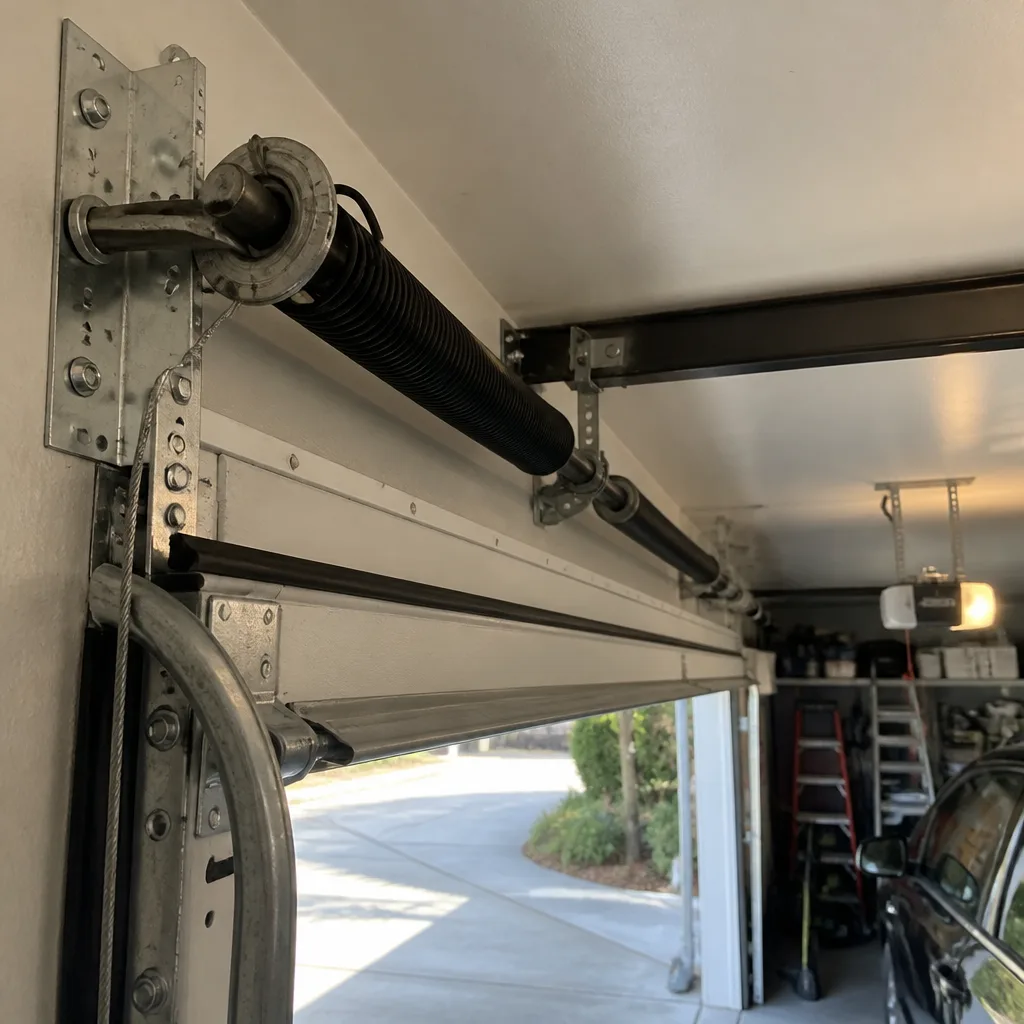
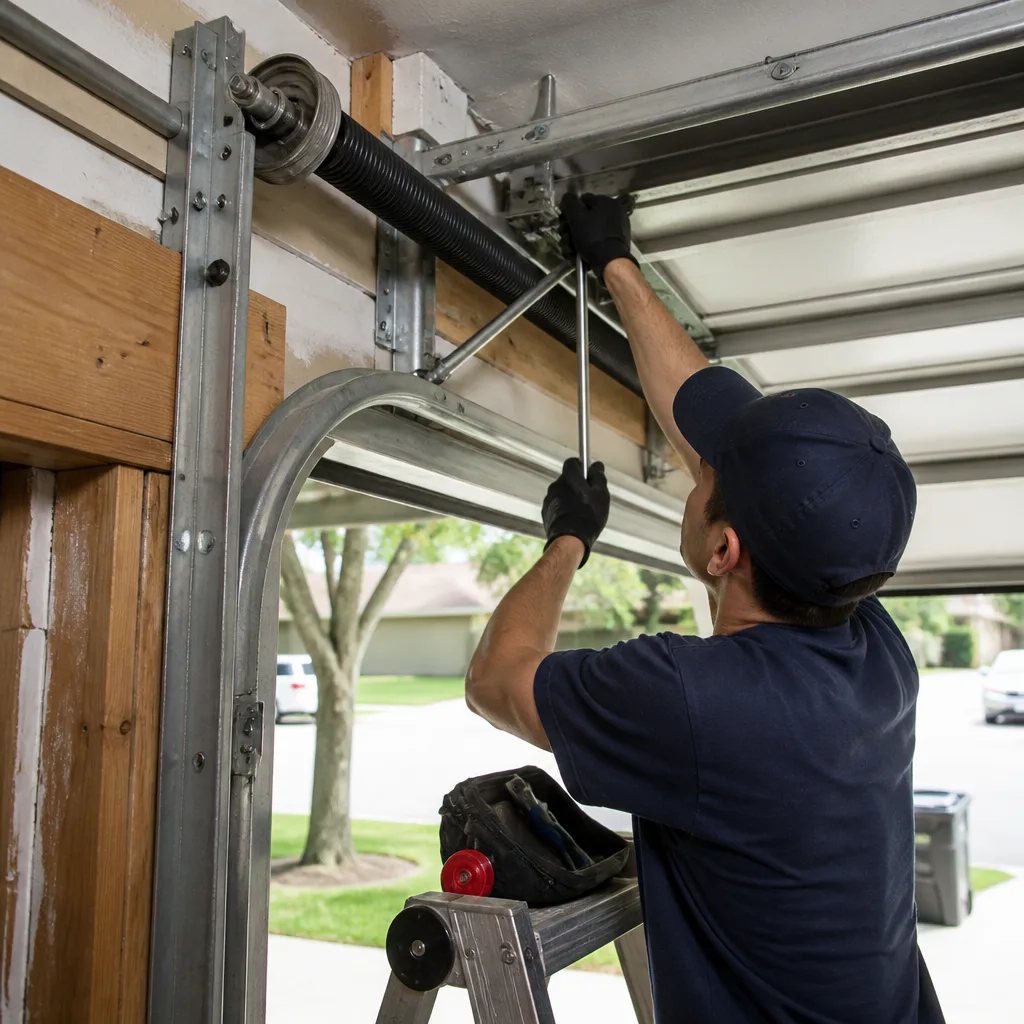
Torsion springs, the horizontal coils mounted above your door opening, are under enough tension to cause serious injury or death if they break while you’re nearby. You should never attempt to adjust them yourself. But you can and should perform a simple visual and behavioral test that tells you whether a spring is nearing the end of its life. This test takes five minutes and can flag a failure thirty days before it leaves you with a door that won’t open.
The Disconnect Test
- Close the garage door completely.
- Pull the red emergency release handle. This disconnects the door from the opener carriage. The door is now manually operated.
- Lift the door by the handle until it’s about halfway up. Then release it.
- Observe what the door does.
A door with healthy springs will stay at the halfway point on its own, or drift down very slowly. It will not fall. It will not shoot upward. It will not slam shut. Those are the three failure patterns, and each one tells you something specific:
- Door falls quickly: The springs have lost tension or are close to snapping. The spring is no longer doing the work of holding the door, which means the opener motor has been compensating and wearing itself out. Call for a spring repair in Austin before the door fails completely.
- Door shoots upward: The springs are overtensioned or incorrectly sized. This is less common but equally dangerous because an unbalanced door slams against the opener rail and can buckle panels over time.
- Door creaks heavily during manual operation: The springs are dry and rubbing against themselves internally. This is fixable with proper lubrication, but if the creak is accompanied by visible rust or distortion of the coil shape, the spring is fatiguing.
The Visual Wear Check
With the door closed, stand a few feet back and look at the torsion springs. Look for these three signs:
- Gap in the coil: A healthy spring is a tight, continuous coil. If you see a visible gap between two adjacent coils near the center of the spring, that spring has begun to deform and will snap sooner rather than later.
- Rust or discoloration: Austin’s humidity swings can cause surface rust. A light dusting of rust is cosmetic. Pitting or scaling means the metal has weakened.
- Uneven spacing: The coils should be evenly spaced along the length of the spring. If one side looks stretched out compared to the other, the spring is failing unevenly.
If your door passes the disconnect test and the springs look tight and clean, you’ve confirmed the tension system is stable. Perform this test every six weeks. It’s the single highest-value maintenance check a homeowner can do because it catches the failure that causes the most expensive and disruptive breakdowns: the snapped torsion spring.
Why Austin’s Limestone Dust and Cedar Pollen Destroy Tracks
In Central Texas, two environmental factors combine to create a unique garage door problem. The first is limestone. Much of Austin sits on and around limestone formations, and the soil is alkaline and dusty. That dust is extremely fine and abrasive. The second is cedar pollen, which arrives every winter in waves, peaking from late December through February. Cedar pollen is sticky when slightly humid and gritty when dry. When limestone dust and cedar pollen mix with the grease in your garage door tracks, they form an abrasive slurry that grinds away metal and nylon surfaces.
The WD-40 Problem
WD-40 is a solvent, not a lubricant. It’s designed to displace water and break down rust. If you spray it into your garage door tracks, it will temporarily make the rollers move more freely by dissolving the old grease and grime. But it also strips away the protective lubricant, and the residual film it leaves behind evaporates quickly. Then the tracks are dry, the dust sticks to dry metal more readily than it sticks to a properly lubricated surface, and the grinding accelerates. We see this constantly in Austin garages: homeowners who diligently spray WD-40 into their tracks every month, then wonder why their rollers are wearing out twice as fast as their neighbors’. You’re not lubricating the track. You’re degreasing it.
The Right Way to Handle Austin Track Debris
The tracks themselves should not be lubricated at all on the surface where the rollers ride. That surface should be clean and dry, because a clean dry track gives the roller a smooth, predictable path. The lubrication belongs inside the roller bearings and on the hinge pins.
- Clean the tracks with a dry microfiber cloth. Wipe the inside surface of both vertical tracks from top to bottom. Remove all visible dust and pollen buildup.
- If the buildup is thick and pasty, use a degreaser like Simple Green or Purple Power on a cloth, then wipe dry. Do not spray any liquid directly into the track while the door is connected to power. You don’t want liquid running into the sensor brackets at the bottom.
- After cleaning, leave the track surface dry. Do not apply any product to the track surface itself.
- Apply silicone lubricant to the roller bearings only. If your rollers have exposed bearings, a quick shot of silicone into each bearing is correct. If your rollers are sealed units, skip this step entirely.
This approach keeps the track surface clean and the lubrication where it belongs. The result is a door that moves quietly and a roller lifespan measured in decades rather than years.
The Exact Lubricant for Every Component in Central Texas
Central Texas heat changes the game for garage door lubricants. Products that work fine in temperate climates thin out and run off when the garage interior hits 110 degrees. Others attract dust and turn into the abrasive paste we described above. Here’s a component-by-component guide matched to Austin’s temperature range.
Torsion Springs: White Lithium Grease
White lithium grease holds onto the spring coils through the hottest months and provides the heavy-duty friction reduction that metal-on-metal components require. Apply it to the spring while the door is closed, spraying along the top of the coil so it drips down into the gaps between coils. Do this twice a year: once in April and once in July.
Roller Bearings: Silicone Spray Lubricant
Silicone lubricant is lighter than lithium grease and stays cleaner in dusty conditions. It doesn’t attract pollen the way grease does. If your rollers have exposed bearings, a short burst of silicone into each bearing is the right call. Do this quarterly.
Hinge Pins: Silicone Spray or Light Machine Oil
The hinges connecting each panel are metal-on-metal pivot points with tight clearances. Silicone or a light machine oil like 3-in-1 works here. Apply one drop to each hinge pin and work the door up and down once to distribute it. Do this quarterly.
Garage Door Opener Chain or Belt: Specific Opener Lubricant
Chamberlain and LiftMaster both sell a specific lubricant for their drive systems. If you have a belt drive opener from one of these brands, the belt itself typically needs no lubrication, but the rail it rides on may need a small amount of the manufacturer-recommended product. Check your opener model’s manual. Never use WD-40 on the drive system. If you have a chain drive opener from Craftsman or Genie, use a light coating of white lithium grease on the chain, wiped down to a thin film.
Weatherstripping and Rubber Seals: Silicone-Based Rubber Protectant
The rubber seal at the bottom of your door, and the vinyl trim around the frame, benefit from an annual treatment with a silicone-based rubber protectant. This slows the drying and cracking that Austin’s heat causes. Apply it in October to prepare for the dry winter months.
What Every Squeak, Rattle, and Grind Actually Means
Most of the garage doors we repair in Austin make noise for months before something actually breaks. The noise is the door telling you what’s wrong. here’s how to translate it.
Squeak or High-Pitched Chirp on Every Cycle
Dry metal-on-metal contact. Almost always a hinge pin or a roller bearing that needs lubrication. If lubrication doesn’t stop the squeak within a day or two, the bearing inside the roller is worn out and the roller needs replacement.
Popping or Snapping Sound When Opening
This is often the sound of a torsion spring settling into a new position or catching on itself internally. It can also indicate a track that is slightly misaligned, causing the roller to snap from one section of track to the next. If you hear a sharp pop followed by a loud bang and the door won’t open, the spring has snapped. Do not try to open the door manually after a spring snaps. The door is now extremely heavy and dangerous.
Grinding or Gritty Sound During Travel
Debris in the track or a roller bearing that has failed and is grinding metal against metal. This is the sound of damage being done. Stop using the door and inspect the rollers. A grinding roller left unchecked will carve a groove into the track, and then you’re replacing the track, not just the roller.
Rattling or Loose Vibration When the Opener Runs
Loose hardware. Hinge bolts, track brackets, or the opener mounting hardware have worked loose. Austin’s temperature swings are a common cause. Tighten everything with a socket wrench and the rattle should disappear. If the rattle remains, the opener’s internal gears may be wearing, which is a sign the door is unbalanced and the opener is working harder than it should.
Humming Sound, Door Doesn’t Move
The opener motor is running but the door isn’t engaging. This usually means the emergency release cord has been pulled and not reset, or the opener’s internal gear has stripped. Reconnect the emergency release by running the opener through a full cycle and locking the release back into place. If the door still doesn’t move, the gear has failed and the opener needs repair.
The Phone Camera Roll Checklist (Not a Forgotten PDF)
We built this checklist to live on your phone, because nobody keeps a printed PDF taped to the side of their garage refrigerator for more than three weeks. Screenshot this section and save it to your camera roll. Then set a reminder on your phone to look at it once every six weeks.
Screenshot This: The 6-Week Garage Door Check
- Disconnect test: Pull the red release, lift door to halfway, release. Door stays? Pass. Falls or shoots up? Call us.
- Spring visual: Any gaps between coils? Rust pitting? Uneven spacing? If yes, call us.
- Track wipe: Dry cloth down both vertical tracks. Clear all dust and pollen.
- Hinge and roller lube: One drop of silicone on each hinge pin. Quick shot into exposed roller bearings.
- Cable check: Look at both lift cables. Any fraying? Loose strands? Call us.
- Noise check: Run the door once and listen. New squeak, rattle, or grind? Diagnose with the noise guide above.
- Sensor test: Wave your foot in front of the safety sensor while the door is closing. It reverses? Pass.
That’s it. Seven steps, fifteen minutes. Do this every six weeks and you’ll catch 90% of the problems that lead to emergency repairs before they happen. The remaining 10% are the things only a technician can see: internal spring fatigue, gear wear inside the opener, and track misalignment measured with a level. For guidance on finding the right professional, see our How to Hire a Garage Door Contractor in Austin: A Step-by-Step Guide. For those, an annual professional inspection is the right call.
If you’d rather not keep a checklist in your phone at all, we’ve got a different approach. When you book a service with Marlow, you get a written price before any work starts, a live arrival window you can track on your phone, and a full-year guarantee on the repair. That’s the Marlow Garage Door Repair Austin home standard on every job, maintenance or emergency.
Common Mistakes to Avoid
- Using WD-40 as a track lubricant. This is the most common maintenance error we see in Austin garages. WD-40 is a solvent that strips away existing lubricant and leaves tracks dry and dust-sticky. Use silicone or lithium grease on the correct components instead.
- Ignoring the disconnect test. Most homeowners never test whether the door can hold its own weight. By the time they notice a problem, the opener has been doing all the lifting for months and the motor is worn out along with the spring.
- Waiting for the spring to snap before replacing it. Springs fatigue gradually. The visual wear check described above almost always shows signs thirty to sixty days before failure. Catching it early means a scheduled replacement instead of a 7pm emergency.
- Lubricating the track surface itself. The track where the roller rides should stay clean and dry. Lubricant on the track surface attracts dust and creates the abrasive paste that shortens roller and track life.
- Overlooking the weatherstripping. A cracked or brittle bottom seal in Austin means dust, pollen, leaves, and mice entering the garage. It also means your garage is fighting a losing battle against the summer heat. Replacing weatherstripping is a low-cost fix that pays for itself in reduced dust and better temperature control.
- Tightening garage door hardware too aggressively. Overtightened hinge bolts strip the metal and create a bigger problem than the loose screw they were fixing. Snug is enough.
- Skipping maintenance entirely because the door “works fine.” Every garage door works fine until it doesn’t. The door that fails on a Monday morning in July was showing warning signs in March. The maintenance you skip in Austin shows up as an invoice later.
When to Call a Professional
Some maintenance tasks are genuinely do-it-yourself. Wiping tracks, lubricating hinges, testing the disconnect, and checking weatherstripping are all homeowner-level work. But certain situations require a trained technician, and the line between the two is important. If your torsion spring has a visible gap, shows pitting rust, or the door fails the disconnect test, the spring is a candidate for replacement. Spring replacement involves working with stored mechanical energy under high tension, and a mistake can cause serious injury. The same goes for lift cables: a frayed cable under tension should be replaced by a professional with the right tools and training. Garage door cable repair in Austin is a technician-level job, not a weekend project. If your door makes a grinding noise that doesn’t stop after cleaning and lubrication, a roller or bearing has failed and may have damaged the track. If the opener hums but the door doesn’t move, the gear has likely stripped. Marlow Garage Door Repair Austin offers free estimates in Austin. Call (361) 320-8872 and you’ll get a written price before any work starts.
Frequently Asked Questions
Lubricate the torsion springs and all hinge pins every three months in Austin, and add a mid-summer application of lithium grease to the springs in July when the heat has thinned out the previous coat. The city’s dust and pollen levels mean quarterly lubrication is the minimum for quiet, smooth operation. Call (361) 320-8872 if you’re not sure which lubricant to use on a specific component and we’ll talk you through it.
Spring replacement in Austin typically runs $150 to $290 for a standard residential torsion spring, depending on spring type and door weight. The exact price is quoted in writing before any work begins, and that written price is locked. No surprises on the invoice. Call (361) 320-8872 for a free estimate.
Yes. We do full-service inspections that cover the springs, cables, rollers, hinges, tracks, opener, and weatherstripping. You get a written list of what needs attention, what can wait, and what the prices are. The inspection price is credited toward any repair you book. Call (361) 320-8872 to schedule.
Look for a visible gap between the coils of the torsion spring, rust that looks pitted rather than dusty, or a door that fails the disconnect test by falling or rising quickly when released at the halfway point. Any one of these three signs means the spring is near the end of its service life and should be replaced before it snaps. Call (361) 320-8872 for a spring inspection.
Yes, more than most people realize. The 35 to 40 degree temperature swings between Austin’s winter nights and afternoons cause constant expansion and contraction in metal parts. The limestone dust and cedar pollen create a unique abrasive environment that accelerates wear on tracks and rollers. And the summer heat burns off lubricants faster than in milder climates. This is why a maintenance schedule built for another city simply doesn’t translate to Austin.
The 365-Day Done Right Promise is our written guarantee that covers every repair we perform for a full year. If the repair isn’t right, we come back and fix it at no cost to you. It’s not a verbal commitment buried in fine print. It’s written, it’s specific, and it applies to every job. That’s the standard we’ve held since 2002.
The Bottom Line
Your garage door is the largest moving object in your home, and in Austin, it moves in an environment designed to wear it out: abrasive limestone dust, sticky cedar pollen, temperature swings that stress every metal component, and summer heat that burns off lubricant. The maintenance checklist that works in Austin is specific: quarterly cleaning and lubrication with the correct products, a six-week disconnect test and spring visual check, and attention to the noises the door makes. Fifteen minutes of the right maintenance every six weeks prevents most of the emergency repairs we see. And when a repair is needed, the standard in Austin is simple: a written price before any work starts, a technician you can track on the way, and a guarantee that covers the work for a full year. For more guides & resources, or if you’re unsure whether your door needs attention, call us at (361) 320-8872. The estimate is free, and you’ll know the exact price before you spend a dollar.
Written by Jaylen Ross, Owner at Marlow Garage Door Repair Austin, serving Austin since 2002.
See the difference
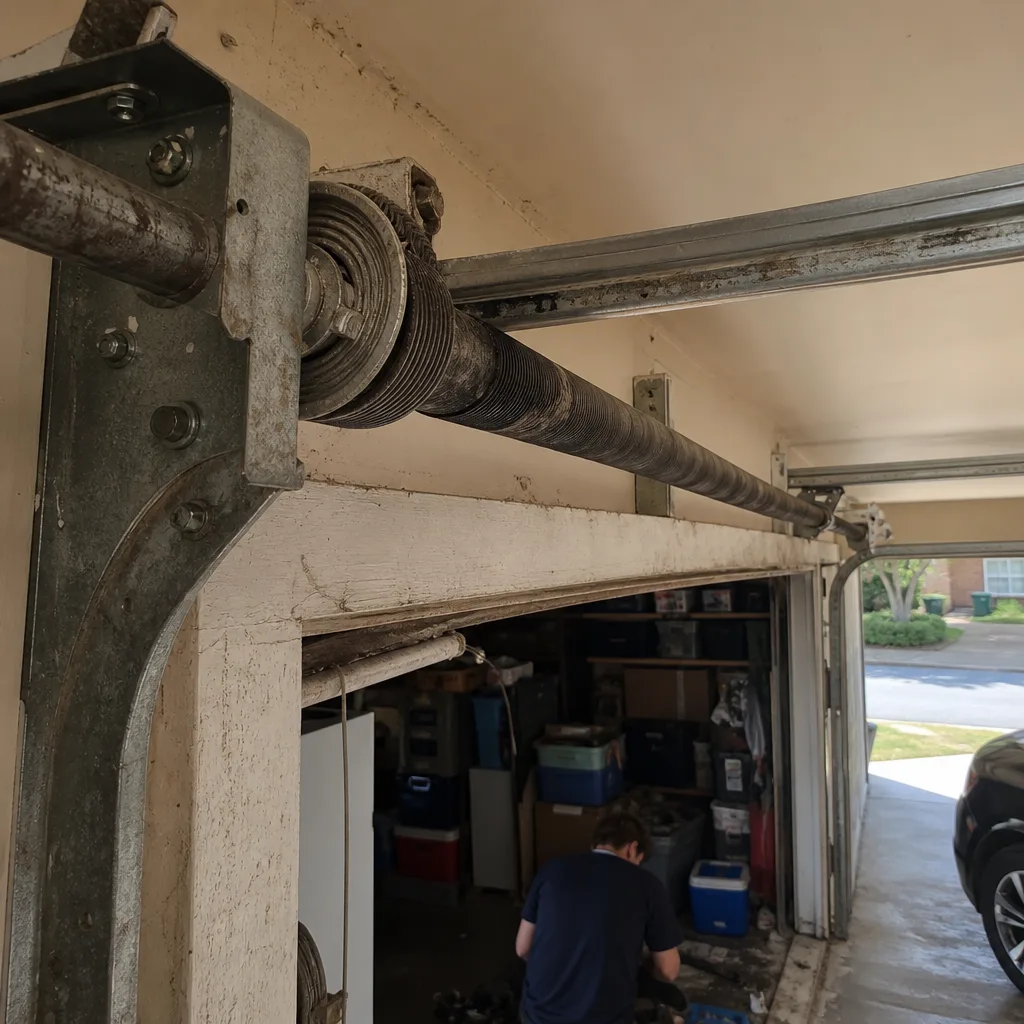 Before
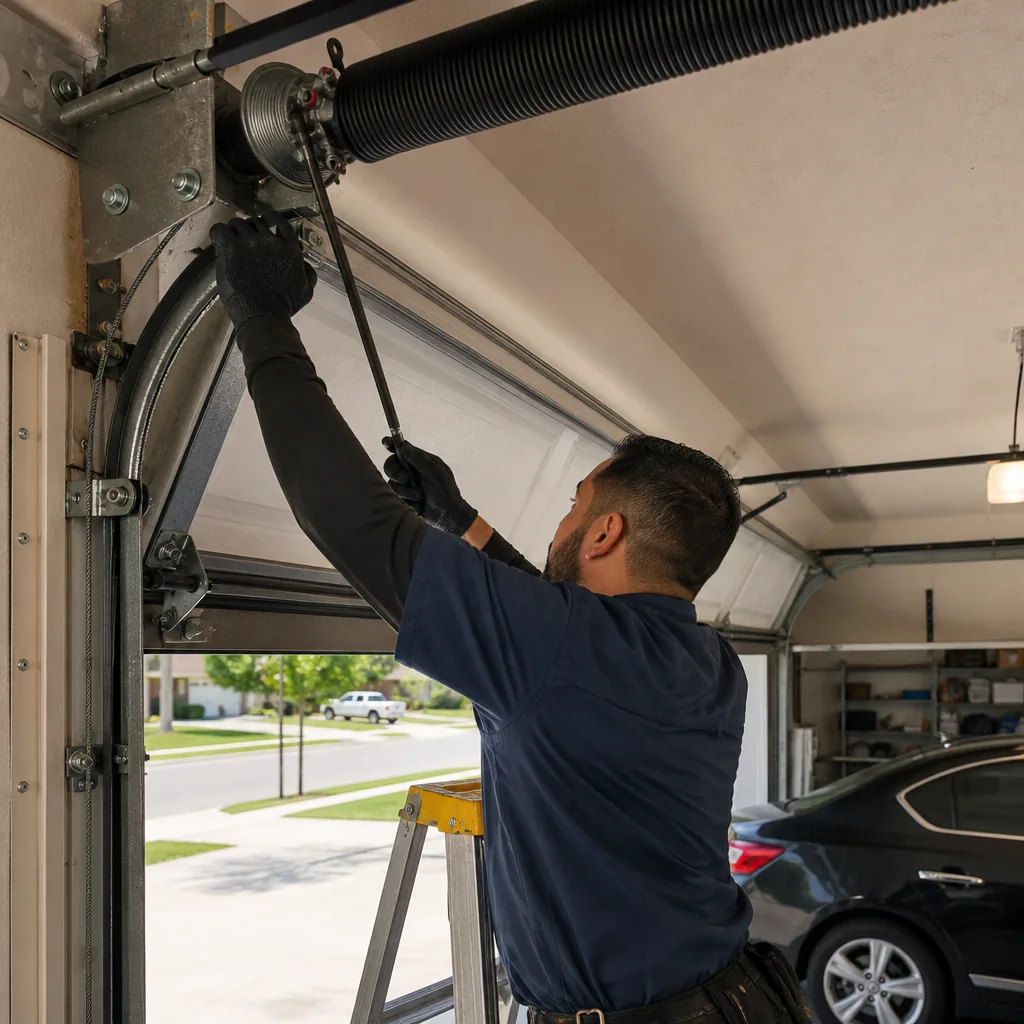 After
After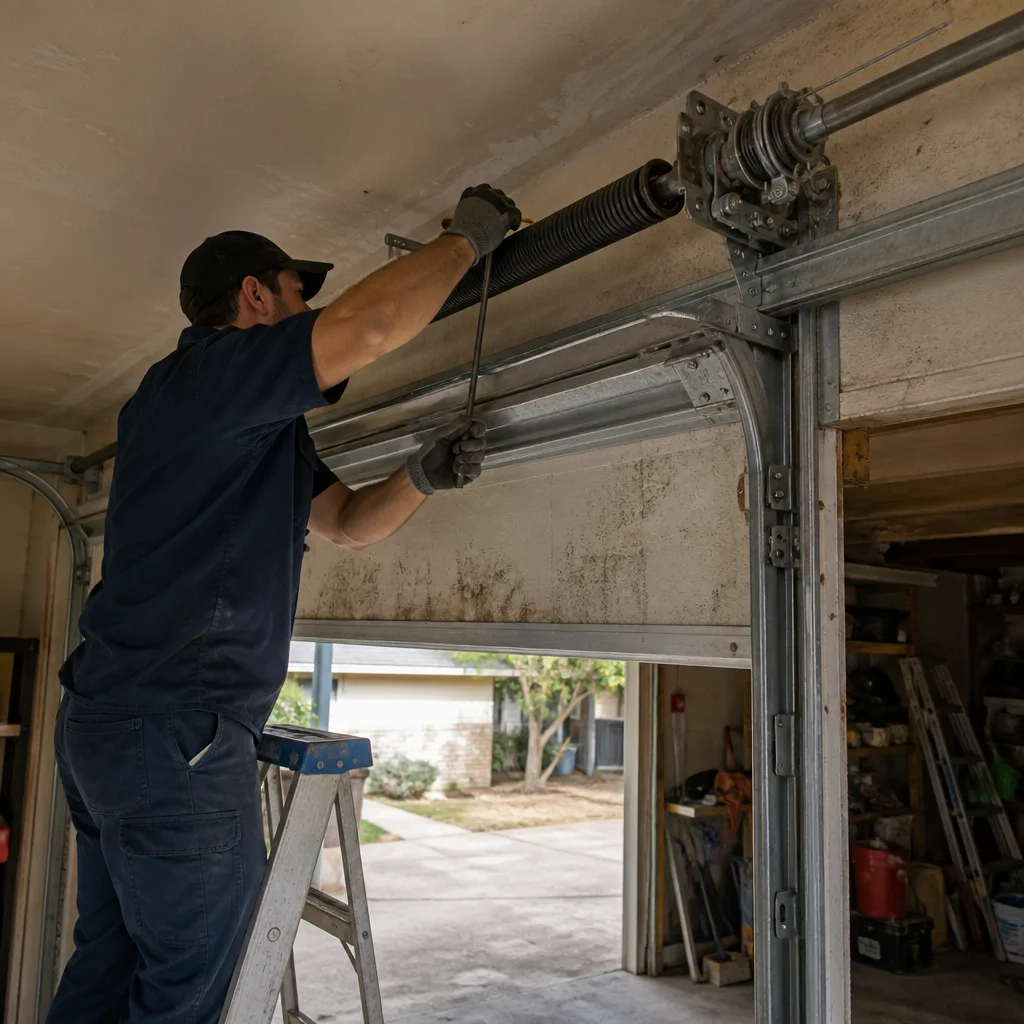 Before
 After
After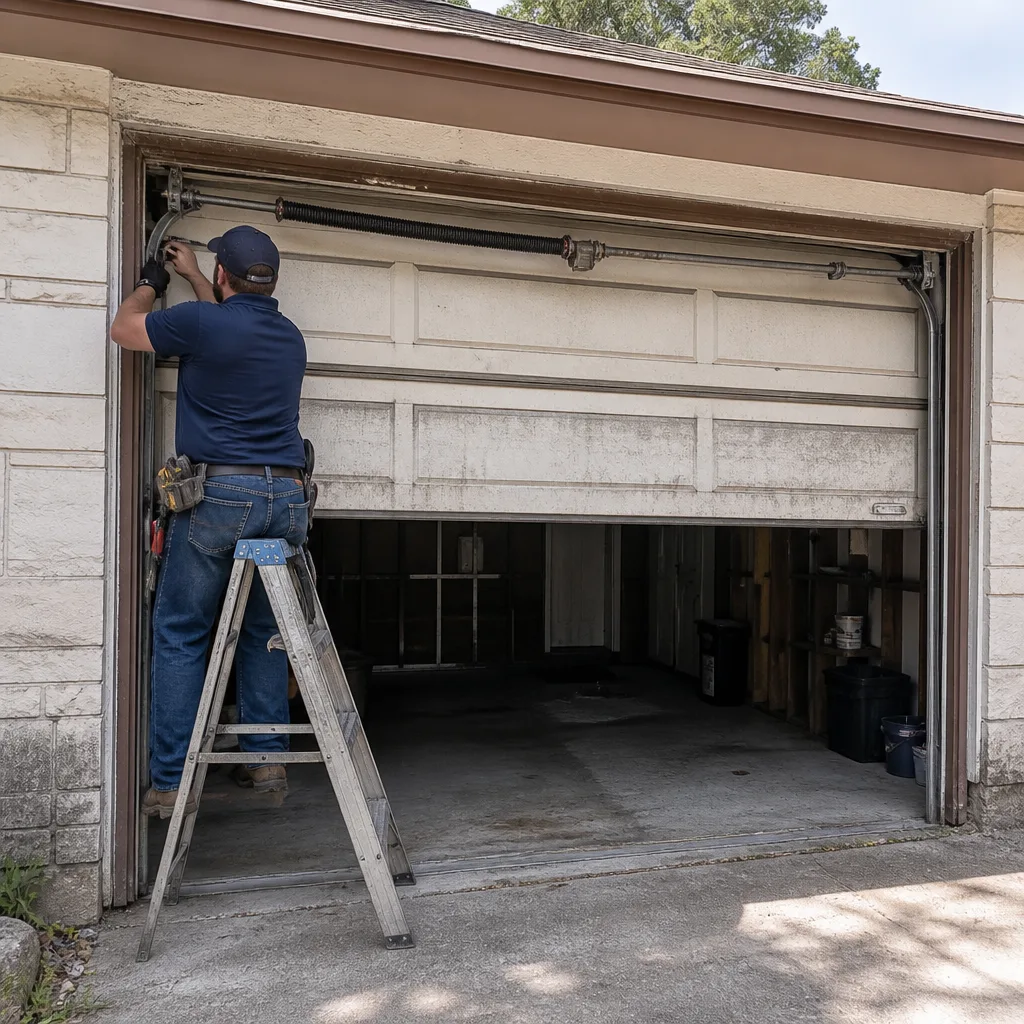 Before
 After
After