
Last updated October 16, 2026
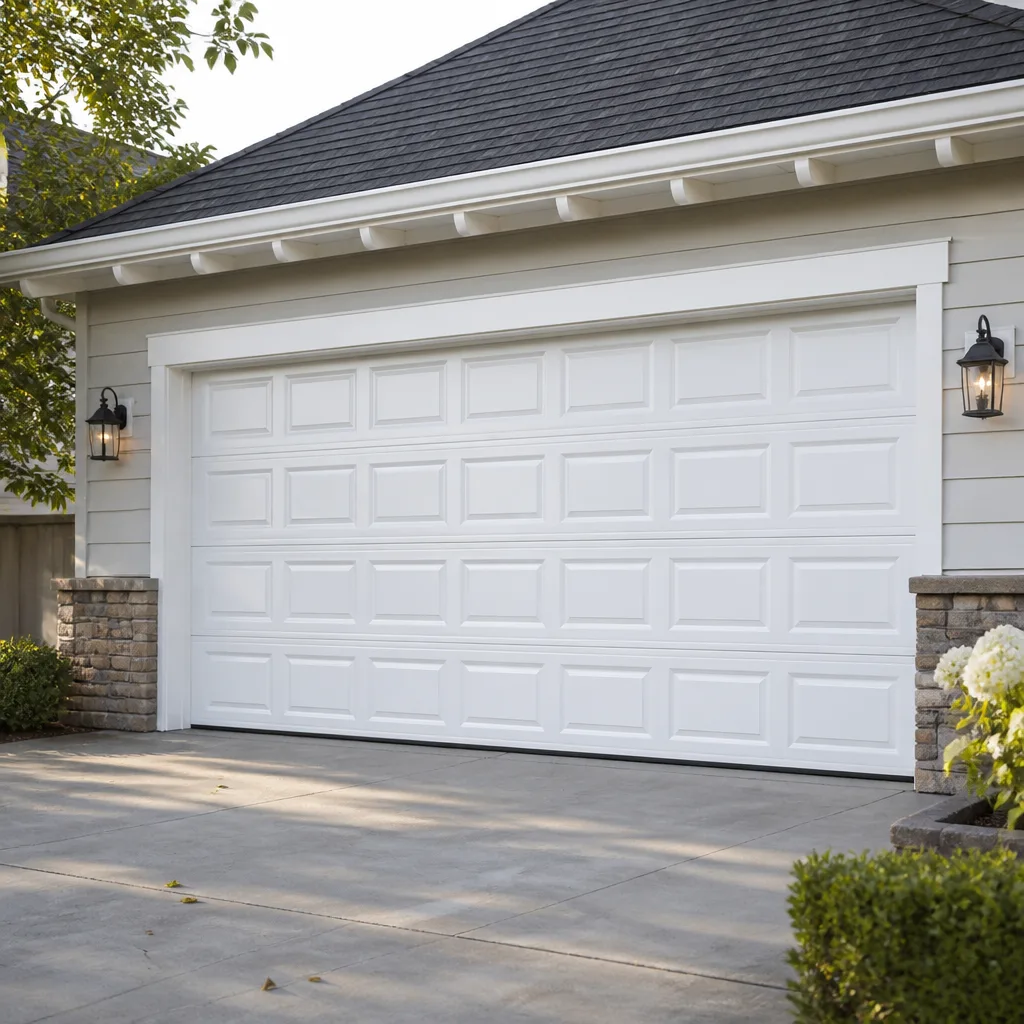 Raised-panel steel
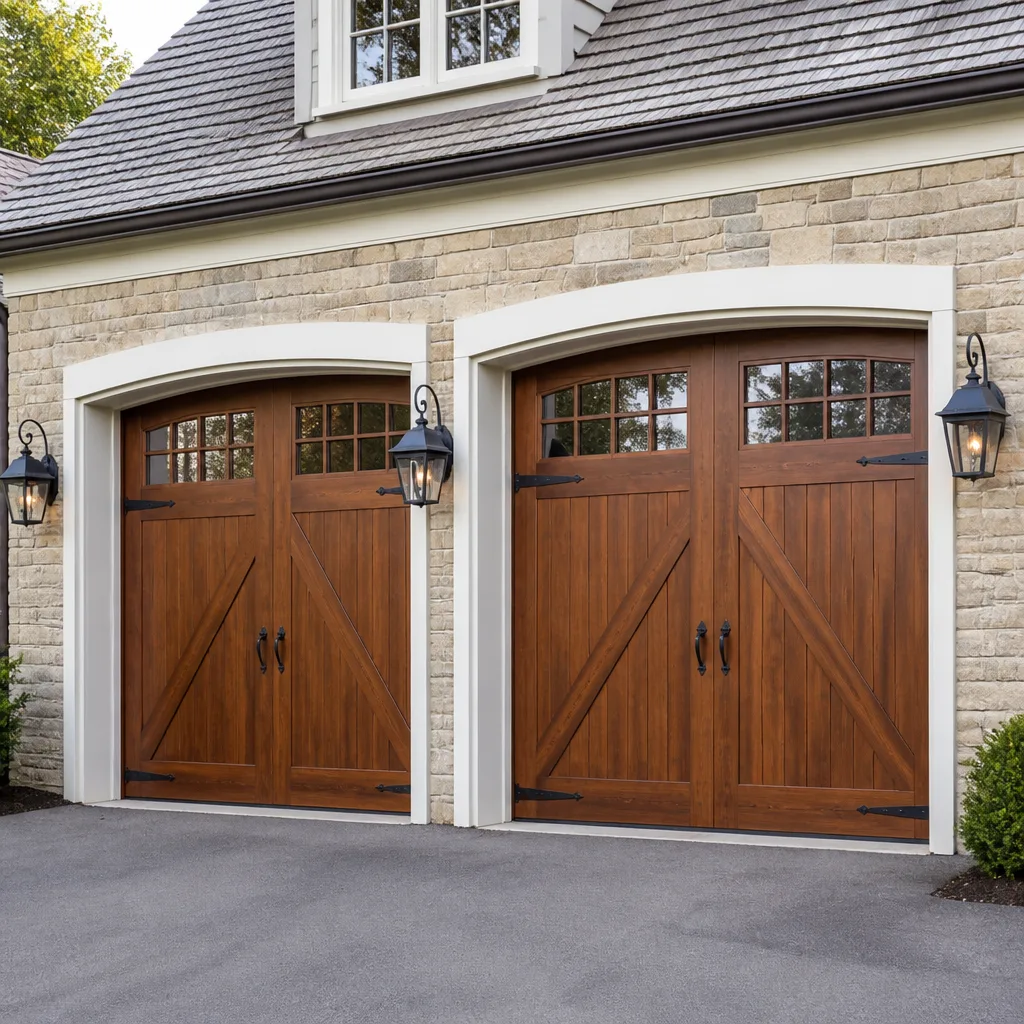 Carriage house
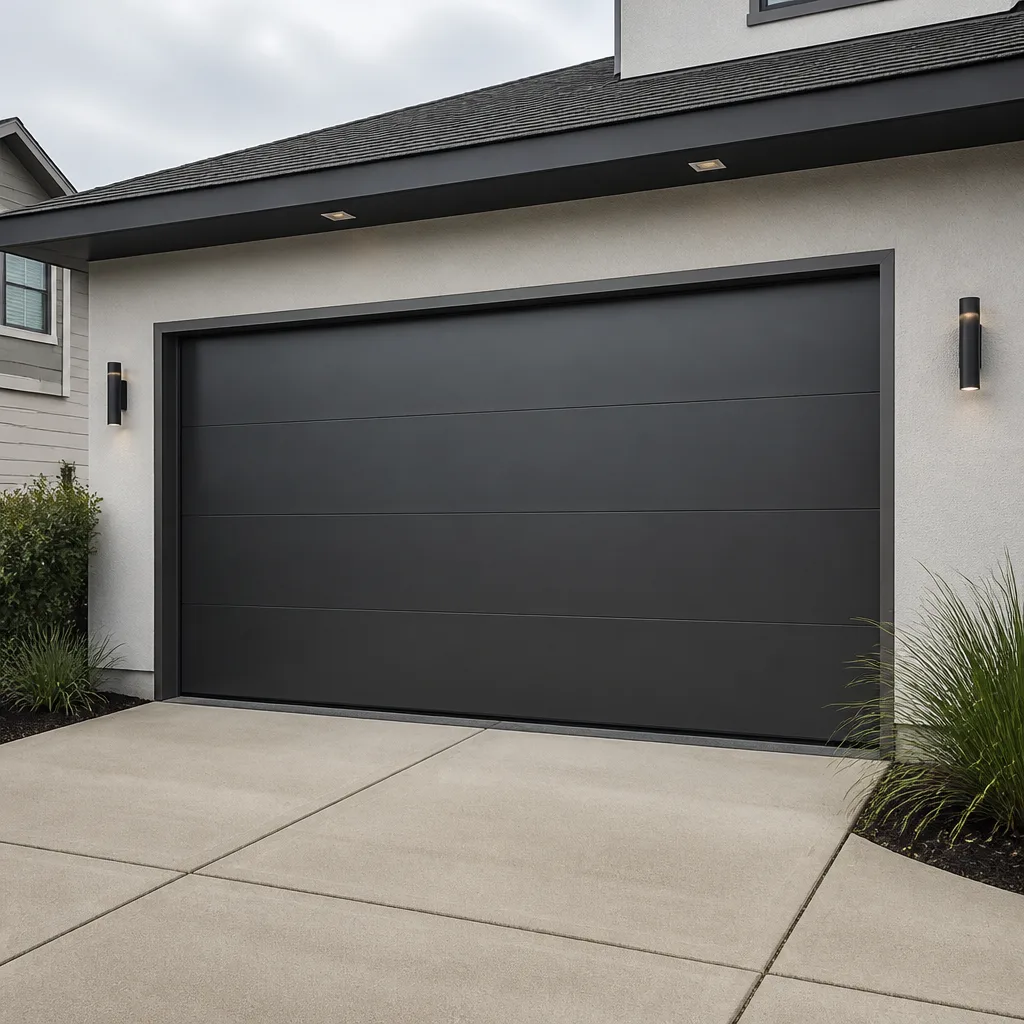 Modern flush
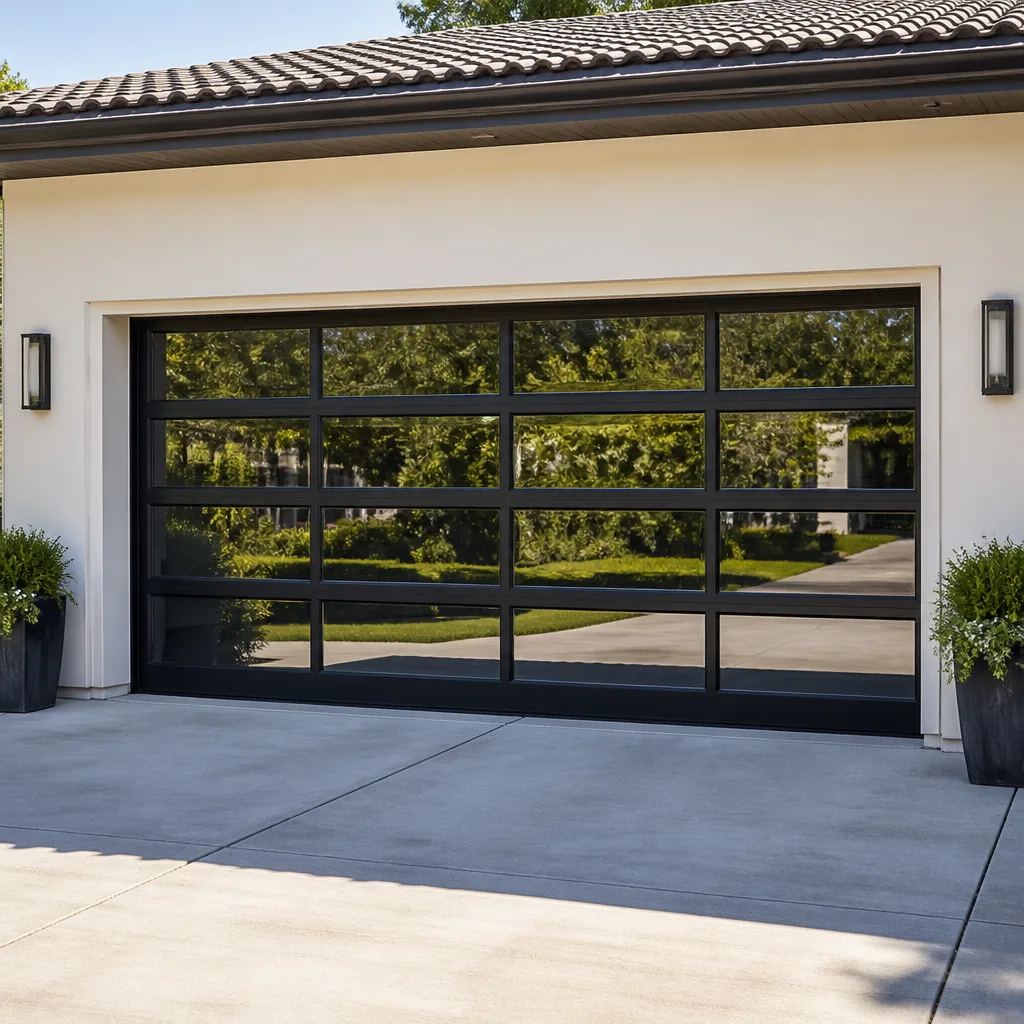 Full-view glass
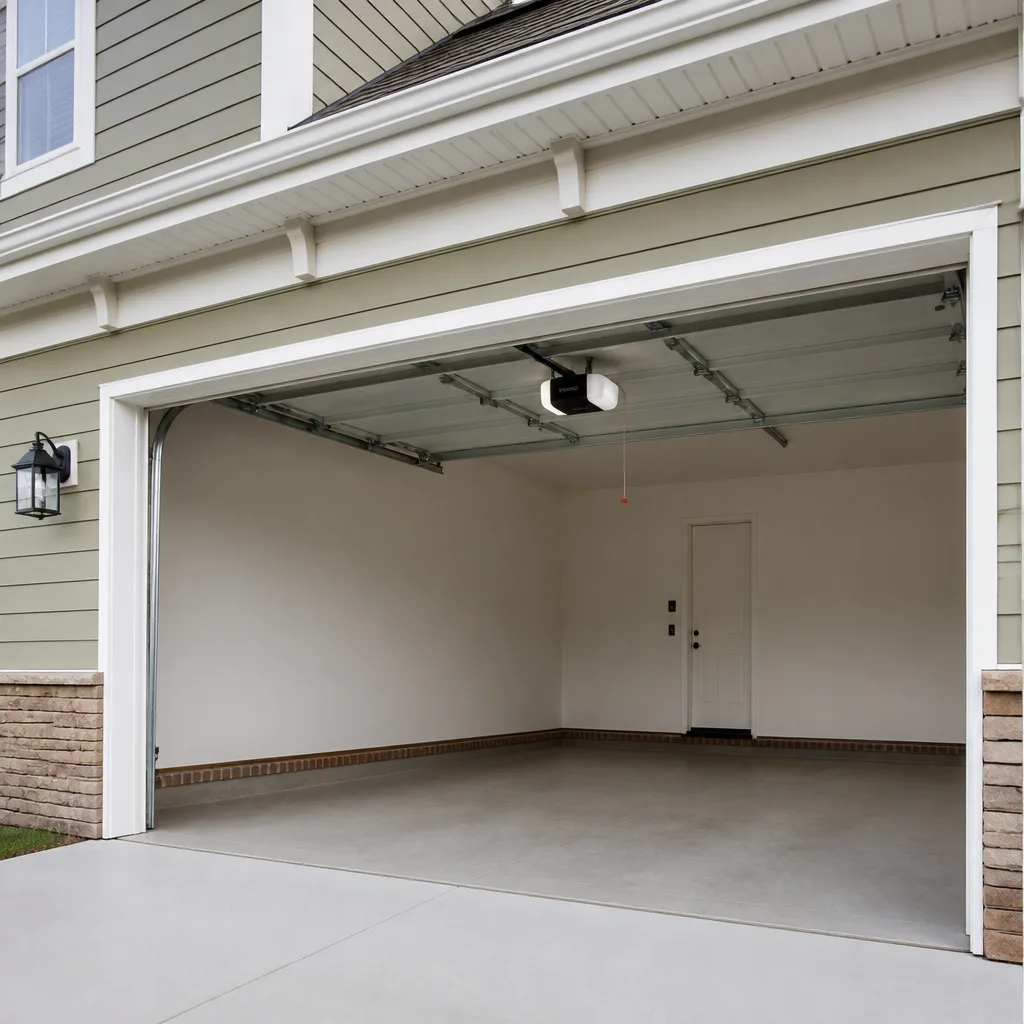 LiftMaster openers
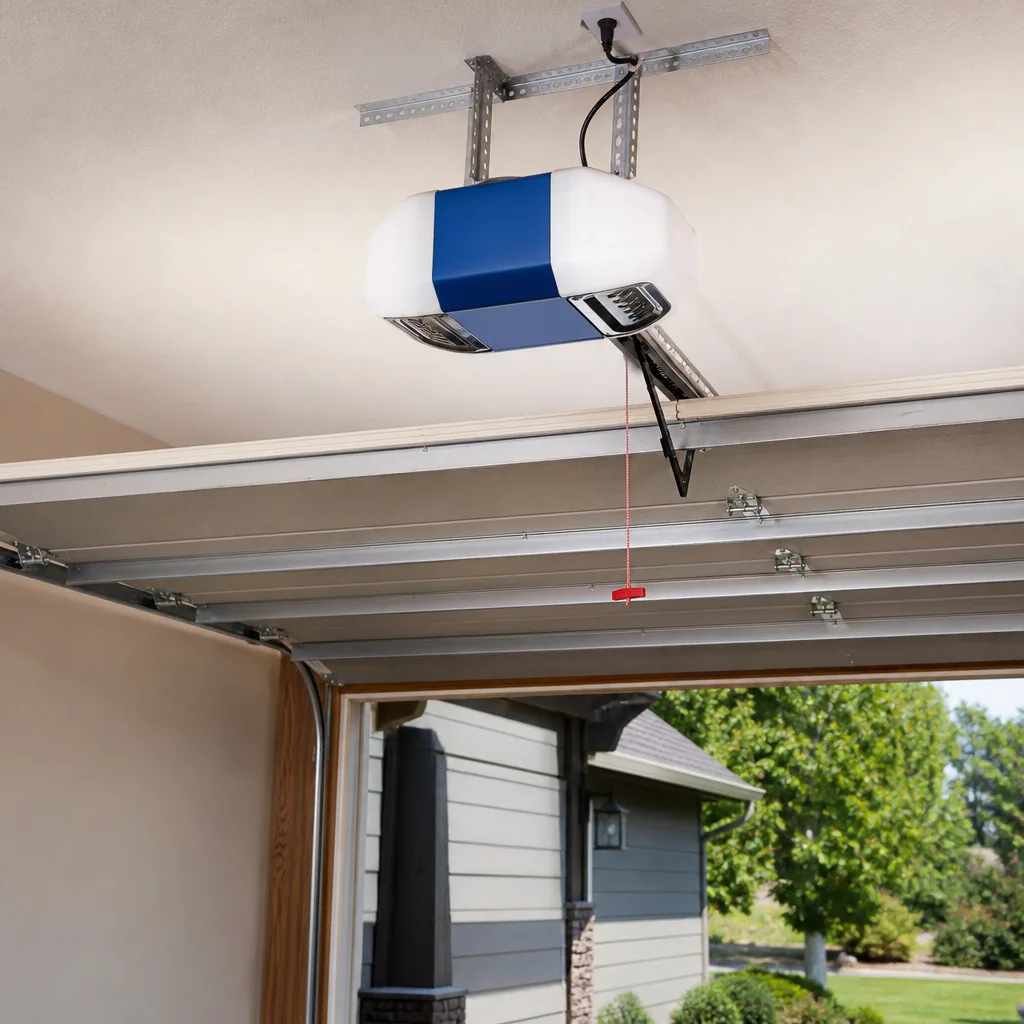 Chamberlain openers
Full 25-point door and opener safety check with every visit - springs, cables, rollers, tracks, and your LiftMaster or Chamberlain opener included
You get a price before we start. It does not change when the truck arrives.
Get your free estimateGarage Door Permits, Codes & Inspections in TX: What You Need to Know
If your home sits in Austin’s extraterritorial jurisdiction, which covers a surprising swath of addresses with Austin mailing codes, you’re under different permit rules than your neighbor two streets over. Most contractors won’t flag that for you, and the discovery usually happens at the worst possible moment: during a home sale, an insurance claim, or a code enforcement visit. This guide walks through the exact permit triggers for garage door work in Austin and Travis County, what the Austin Energy code says about insulated doors, how inspections actually go, and why an unpermitted door can quietly void a future insurance claim. For Garage Door Warning Signs: A Austin Homeowner’s Reference Guide, see our companion resource. Along the way, we name the specific form fields that trip up homeowners and the DIY shortcuts inspectors fail every week.
Styles & brands we work with
Quick Answer
In Austin, a full garage door replacement on a single-family home that involves structural modifications typically requires a residential permit through the city’s online portal, while a like-for-like swap of panels and tracks on the existing opening usually does not. Opener-only installs generally need no permit but may trigger Austin Energy code compliance if you’re adding insulation or altering the door’s thermal envelope. Always verify your jurisdiction first: Austin city limits, Travis County unincorporated areas, and the Austin ETJ each follow different rules.
Table of Contents
- The Three Austin Jurisdictions That Change Everything
- When a Permit Is Required: Replacement vs. Swap vs. Opener
- Austin Energy Code and Insulated Garage Doors
- How to Pull a Residential Permit Through Austin’s Portal in Under 20 Minutes
- What Happens at Inspection: Common Fail Points
- The Insurance Angle: Unpermitted Doors and Future Claims
- Common Mistakes to Avoid
- When to Call a Professional
- Frequently Asked Questions
- The Bottom Line
The Three Austin Jurisdictions That Change Everything
Texas does not have a statewide garage door permit. The rules come from the local authority having jurisdiction, and in the Austin area, that authority shifts depending on whether your address falls inside Austin city limits, inside Travis County’s unincorporated areas, or inside what’s called the extraterritorial jurisdiction, better known as the ETJ. Each of these three zones treats garage door work differently, and the zone boundaries don’t match intuitive landmarks.
The ETJ is the one that catches people. Austin’s ETJ extends beyond the official city limits into surrounding land that the city has flagged for potential future annexation. Those addresses often carry an Austin mailing code, which makes homeowners assume city rules apply. They don’t. In the ETJ, Travis County rules generally govern, not Austin city code. That distinction matters because Travis County’s permitting threshold for garage door work is looser in some respects and tighter in others. A full door replacement that Austin would flag for a structural permit might sail through in the ETJ, while certain electrical components tied to openers get different scrutiny.
We’ve walked into garages in Circle C where the homeowner assumed they were in the city because the address says Austin, but the property technically sits in the ETJ. Two streets over, a different set of rules applies. Before you touch anything, pull your property’s jurisdiction from the Travis Central Appraisal District map or call 311 and ask directly. It takes five minutes and changes every decision that follows. For most garage door repair in Austin, the work is minor enough that jurisdiction matters less, but for full replacements, it’s the first question worth asking.
When a Permit Is Required: Replacement vs. Swap vs. Opener
Here’s the decision tree in plain language, because the official code language is dense enough to make anyone’s eyes glaze over.
Full replacement with structural changes: If you’re pulling the entire door assembly, including changing the rough opening size, altering headers, or modifying load-bearing framing, Austin city limits require a residential building permit. This is not a gray area under the city’s current code. Any work that touches structural framing around the garage door opening falls under the permit requirement.
Like-for-like swap: If the new door fits the existing opening with the same track configuration and no framing changes, Austin generally does not require a permit. This is the most common replacement scenario: the old door comes out, a new door of the same dimensions goes in, tracks get reused or replaced in the same position. The city treats this as maintenance, not construction.
Opener-only install: Replacing a garage door opener by itself typically requires no permit in any Austin jurisdiction. The electrical circuit already exists. You’re swapping a plug-in appliance. What can trigger a review is adding a new circuit, moving the outlet, or hardwiring the opener in a way that changes the home’s electrical load.
Travis County specifics: In unincorporated Travis County, the threshold leans toward permits only when the work involves new construction or major structural alteration. A standard door replacement on an existing opening usually skips the permit desk entirely. But the county does care about fire-rated separation if your garage shares a wall or ceiling with living space. More on that in the code section below.
Here’s the quick reference table we give Austin homeowners:
- Full replacement, same opening, no framing change: No permit needed in Austin city limits or Travis County.
- Full replacement with header or rough opening changes: Permit required in Austin city limits; check with Travis County for ETJ and unincorporated areas.
- Opener-only replacement, existing outlet: No permit needed anywhere in the Austin metro.
- New electrical circuit for opener: Electrical permit likely required, especially in Austin city limits.
- Adding a garage door where none existed: Full building permit required everywhere in the Austin metro.
- Fire-rated door replacement between garage and living space: Permit and specific code compliance required in Austin city limits.
If you’re replacing springs rather than the whole door, that’s garage door spring repair in Austin territory, and no permit applies. Springs are a mechanical component swap, not a structural change.
Austin Energy Code and Insulated Garage Doors
Austin has one of the more aggressive energy codes in Texas, and it extends to garage doors in specific situations. If your garage is conditioned space, meaning it’s heated or cooled as part of the home’s thermal envelope, the door you install must meet a minimum insulation value under the Austin Energy code. For a typical attached garage that is not conditioned, the requirements relax significantly, but there’s a twist: Austin Energy offers rebates tied to door insulation upgrades, and those rebates come with their own compliance paperwork.
Here’s what we’ve seen on the ground. A homeowner in Mueller installs an R-18 insulated Clopay door on an unconditioned garage, files for the Austin Energy rebate, and gets a follow-up request for the door’s thermal certification. The rebate program wants documentation that the R-value is real, not just the manufacturer’s marketing number. If the door’s spec sheet doesn’t match what the rebate application claims, the rebate stalls. That’s not a permit issue, but it shares the same DNA: paperwork done wrong bites you later.
The practical takeaway for most Austin homeowners is simpler than the code manual suggests. If your garage is attached to the house and shares a wall with living space, the wall between garage and home needs a fire-rated separation, and the door from the garage into the home needs to meet fire-rating standards. That’s a building code matter, not an energy code matter, and inspectors in Austin look at it hard. If your garage is a separate structure with no living space attached, most of the energy code concern drops away unless you’re conditioning that space.
Amarr and Wayne Dalton both make Austin-appropriate insulated doors that clear the energy code thresholds without much effort, and any competent installer should have the spec sheets ready for inspection or rebate filing. If your installer can’t produce documentation for the door’s R-value and fire rating, that’s a red flag worth pausing over.
How to Pull a Residential Permit Through Austin’s Portal in Under 20 Minutes
The Austin Build + Connect portal is the city’s online permitting system, and it’s faster than most people expect once you know which fields actually matter. Here’s the step-by-step that we’ve walked dozens of Austin homeowners through.
- Create or log into your Austin Build + Connect account. If you’re a homeowner pulling a permit for your own primary residence, select “Homeowner” as the applicant type. This matters because homeowner permits in Austin skip some of the contractor licensing requirements that a company would need.
- Select the permit type. For garage door structural work, it’s typically “Residential Alteration” or “Residential Repair.” The exact label changes as the city updates the portal, but you’re looking for the residential building permit category, not a trade permit.
- Enter the property address exactly as it appears on your Travis Central Appraisal District record. Here’s the field that trips people up: the portal will try to autofill your address, and if you accept an autofill that includes a unit or formatting mismatch, the permit lands on the wrong parcel. Verify the address against your property tax statement before submitting.
- Describe the work scope. The “Description of Work” field matters more than most people think. Be specific: “Replace existing single-car garage door with new sectional door, same rough opening, no framing changes.” Vague descriptions trigger a review delay. The city’s plan reviewer needs to see at a glance that the work doesn’t require engineered drawings.
- Upload any required documents. For a simple door replacement, this is usually nothing beyond a site plan or a photo of the existing opening. For structural changes, you’ll need drawings. If the portal asks for a document you don’t have, don’t guess. Call the city’s permit desk at (361) 320-8872 and ask exactly what’s needed for your scope.
- Pay the fee. Residential alteration permits in Austin typically run between $50 and $200 depending on the valuation of the work. The portal accepts credit cards.
- Print or save the permit confirmation. The inspector will want to see it, and your insurance company might want to see it later.
The whole process for a straightforward replacement takes about 20 minutes once you have your account set up. The most common delay we hear about is the address mismatch we flagged in step 3, followed by vague work descriptions that trigger a human review. Get those two things right and the system mostly runs itself.
What Happens at Inspection: Common Fail Points
Inspection in Austin is not a formality. The inspector shows up with a checklist, and the checklist reflects the city’s current code adoption, not what your contractor’s grandpa used to do in the 1990s. Here’s what an inspector actually looks at during a garage door inspection.
Structural attachment points. The inspector checks how the door tracks and spring assembly are anchored. Lag bolts into the studs, not drywall anchors. In older Austin homes with 2×4 framing, the anchor points need to be solid. A common fail we see is a track bolted through the sheetrock and into nothing behind it.
Safety reverse mechanism. The automatic reverse on the opener, triggered by either the photoelectric sensors near the floor or the mechanical pressure sensor, must work. The inspector will test it with an obstruction, usually a 2×4 or a rolled towel. If the door doesn’t reverse within two seconds of contact, it fails. This is the single most common inspection fail in Austin, and it’s usually because the opener’s force setting is dialed too high.
Fire separation. If the garage attaches to living space, the inspector looks at the door between the garage and the house, plus any penetrations through the shared wall or ceiling. Garage-to-home doors in Austin need to be either solid wood, solid core, or rated steel, with a working self-closing mechanism. The spring-loaded hinges on that door are a frequent fail point because they wear out and stop closing the door properly.
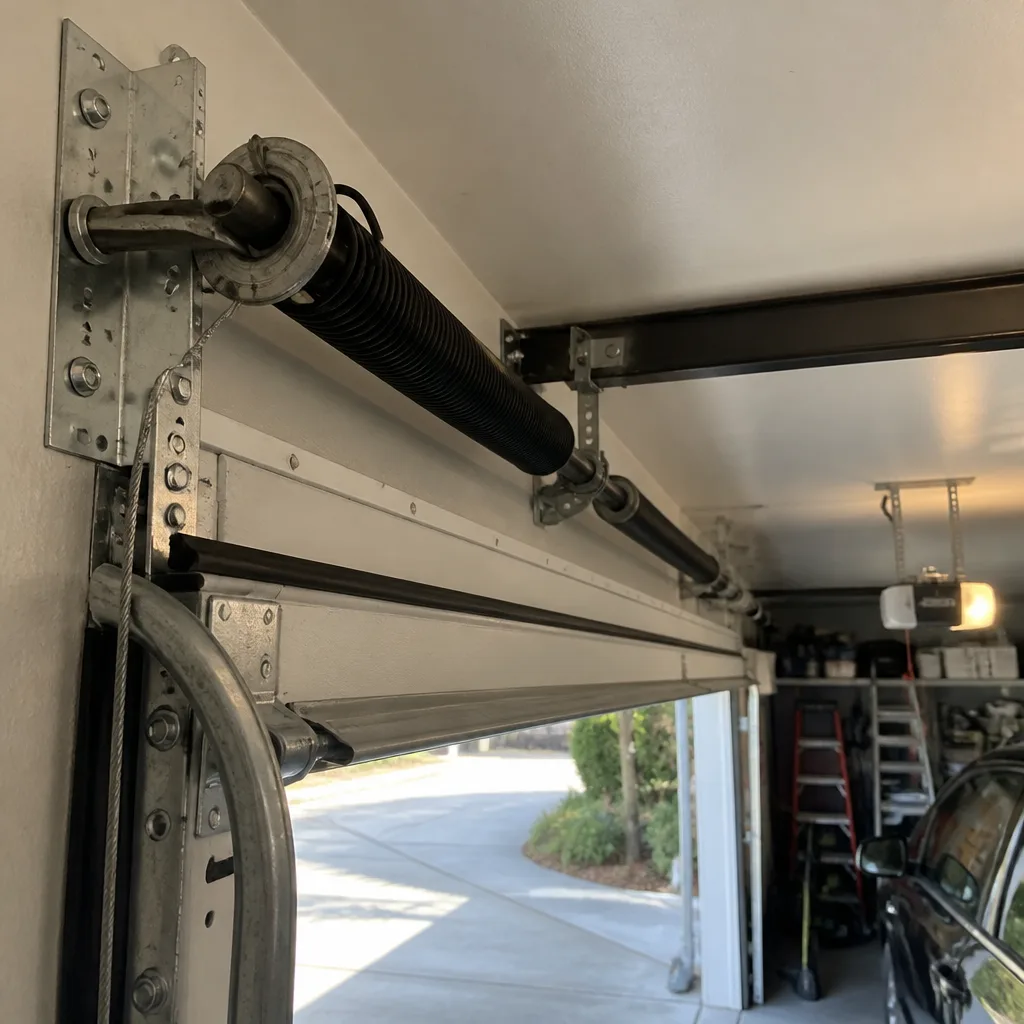
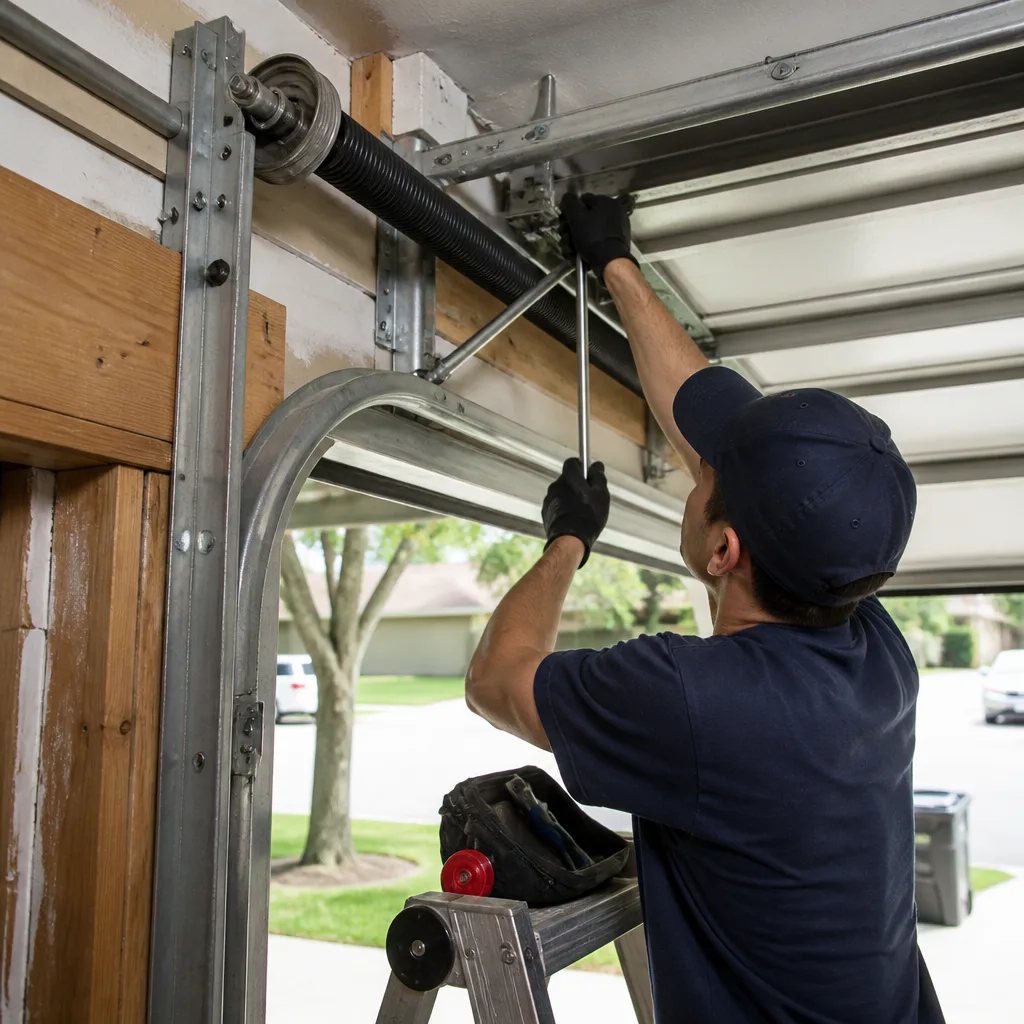
Cable and spring safety containment. On new installations, the inspector wants to see safety cables running through extension springs and proper containment on torsion springs. If you have extension springs without safety cables, expect a correction notice. If you’re repairing garage door cables in Austin as part of a larger job, make sure the safety cables are part of the scope.
Weather sealing and drainage. Austin’s code cares about water intrusion at the garage opening. The inspector will check the bottom weather seal and the side weatherstrip for gaps. In a city that gets flash floods and wind-driven rain, this isn’t cosmetic. A failed seal means water gets under the door and into the garage slab, which leads to bigger problems down the line.
Briefing your contractor on these five points before work starts-using our Garage Door Repair Maintenance Checklist for Austin Homeowners-is the easiest way to sail through inspection the first time. A contractor who can’t answer questions about safety reverse sensors or fire-rated separation is not the contractor you want pulling that permit.
The Insurance Angle: Unpermitted Doors and Future Claims
This is the section that most guides skip, and it’s the one that costs Austin homeowners real money. Here’s how the insurance gap works.
You replace your garage door without a permit in a jurisdiction that required one. The work is done well. The door works fine. Five years later, a windstorm tears the door off its tracks, or a fire starts in the garage and spreads. You file a claim. The adjuster asks a routine question: was the garage door replacement permitted? The answer is no. The insurance company now has grounds to reduce or deny the claim, not because the unpermitted work caused the damage, but because the policy’s “concealment or fraud” or “ordinance or law” provisions can be triggered when unpermitted modifications exist on the property.
This is not theoretical. We’ve heard from Austin homeowners who lost partial claims because an unpermitted door replacement from years earlier surfaced during the adjuster’s review. The insurance company doesn’t have to prove the door caused the problem. They just have to show that the policyholder failed to maintain the property in compliance with local code, and many standard Texas homeowners policies include language that allows coverage reduction for exactly that.
Even if the claim is paid, an unpermitted modification can complicate the sale of your home. The seller’s disclosure form in Texas asks about unpermitted work, and a savvy buyer’s inspector will flag a garage door that doesn’t match the county’s permit history. The fix at closing is usually a retroactive permit, which costs more than the original permit would have, plus whatever corrections the inspector requires to bring the old work up to current code.
The cheapest insurance against all of this is pulling the permit when the jurisdiction requires one. If you’re not sure whether your job triggers a permit, call the city or county and ask. A five-minute phone call now beats a five-figure coverage gap later.
Common Mistakes to Avoid
- Assuming your address being in Austin means Austin rules apply. The ETJ boundary is invisible, and a huge number of Austin mailing addresses fall outside city limits. Verify your jurisdiction before you decide whether to pull a permit.
- Letting a contractor tell you the permit isn’t needed without checking yourself. Some contractors prefer to skip permits because it’s faster for them. But the permit isn’t for their protection. It’s for yours, and it’s your insurance policy that takes the hit if the work was supposed to be permitted and wasn’t.
- Skipping the safety reverse test before closing out the job. Inspectors in Austin test this on every single garage door inspection, and it’s the easiest fix. Test it yourself with a 2×4 before the inspector arrives.
- Installing an uninsulated door on a conditioned garage. If your garage has a mini-split or ties into the home’s HVAC, the Austin Energy code likely requires minimum insulation values on the door. Doing the work twice is more expensive than doing it right once.
- Ignoring fire separation requirements between garage and living space. The door from your garage into your home isn’t just any old interior door. Austin code requires fire-rated construction and a working self-closing mechanism, and inspectors catch this constantly.
- Filing a vague permit description. “Fix garage door” gets bounced back for review. “Replace existing garage door with same-size sectional door, no structural changes” sails through. The description field is where homeowners lose the most time.
- Paying for work without checking permit status first. If the job required a permit and your contractor didn’t pull one, the money is still gone and you’re still exposed. Confirm the permit exists before the final payment clears.
When to Call a Professional
If any of the following sounds like your situation, handle it through a professional who does this work in Austin every day. See How to Hire a Garage Door Contractor in Austin: A Step-by-Step Guide for what to ask. You’re changing the rough opening size or touching structural framing. The permit requires drawings you don’t know how to produce. The inspector flagged fire separation issues between your garage and living space. You’re replacing a door on a conditioned garage and need Austin Energy code compliance documentation. Or simply: you don’t want to spend your weekend fighting a city portal and an inspector’s checklist.
Our team at Marlow Garage Door Repair Austin home handles garage door replacements in Austin on a regular basis, and part of the job is knowing which jurisdiction’s rules apply to your specific address. We write the scope description correctly the first time, we know what the inspectors are looking for, and we don’t guess on permit requirements. If you’ve got a door that needs replacing and you want a straight answer on permits before you commit to anything, call (361) 320-8872 for a free estimate. No pressure, no four-hour waiting windows, just a clear answer and a written price before any work starts.
Frequently Asked Questions
A permit is required in Austin city limits when the replacement involves structural modifications to the opening, framing, or header. A like-for-like swap on the existing opening with no structural changes typically does not require a permit. Verify your jurisdiction first, because the ETJ and Travis County unincorporated areas have different thresholds.
Residential alteration permits in Austin typically cost between $50 and $200 depending on the declared valuation of the work. Homeowners pulling permits for their own primary residence often pay less than contractors because some licensing fees don’t apply. Call (361) 320-8872 if you want help figuring out whether your specific job even needs one.
Yes, in the Austin metro area, replacing an existing garage door opener using the existing electrical outlet does not require a permit. Adding a new electrical circuit or hardwiring the opener may require an electrical permit, particularly in Austin city limits.
Austin inspectors check structural anchoring, the opener’s safety reverse mechanism, fire separation between garage and living space, spring and cable safety containment, and weather sealing at the door opening. The safety reverse test is the most common fail point, so test it yourself before the inspection.
An unpermitted door replacement can create a coverage gap during a future claim, even if the unpermitted work didn’t cause the damage. Texas homeowners policies often include language allowing coverage reduction for code noncompliance, and unpermitted modifications can also complicate selling your home.
The Austin ETJ generally falls under Travis County rules, not Austin city code, even though the address may carry an Austin mailing code. Check your property’s jurisdiction through the Travis Central Appraisal District map or by calling 311 before making permit decisions.
The Bottom Line
Garage door permitting in the Austin area is governed by three overlapping jurisdictions, and the rules aren’t the same across the street. A like-for-like replacement usually skips the permit desk. Structural changes trigger permits in Austin city limits. Opener replacements stay permit-free as long as the electrical work doesn’t change. The insurance and resale risks of skipping a required permit far outweigh the minor hassle of pulling one, and the online portal is navigable once you know which fields matter. If you’d rather have someone else handle the paperwork and the installation, our team at Marlow Garage Door Repair Austin handles Austin replacements with the right permits and the right paperwork, every time. Browse more guides & resources for Austin homeowners. Call (361) 320-8872 for a free estimate and a straight answer on your specific address.
Written by Jaylen Ross, Owner at Marlow Garage Door Repair Austin, serving Austin since 2002.
See the difference
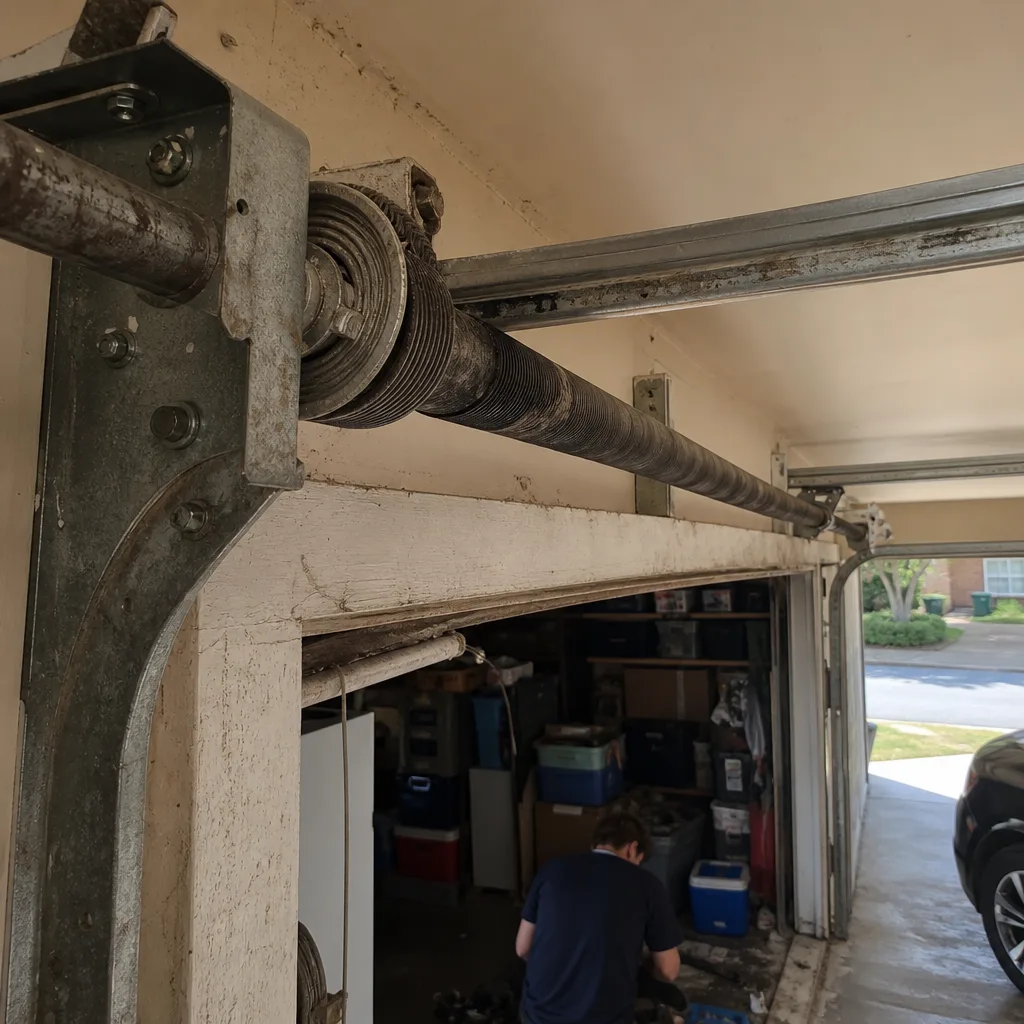 Before
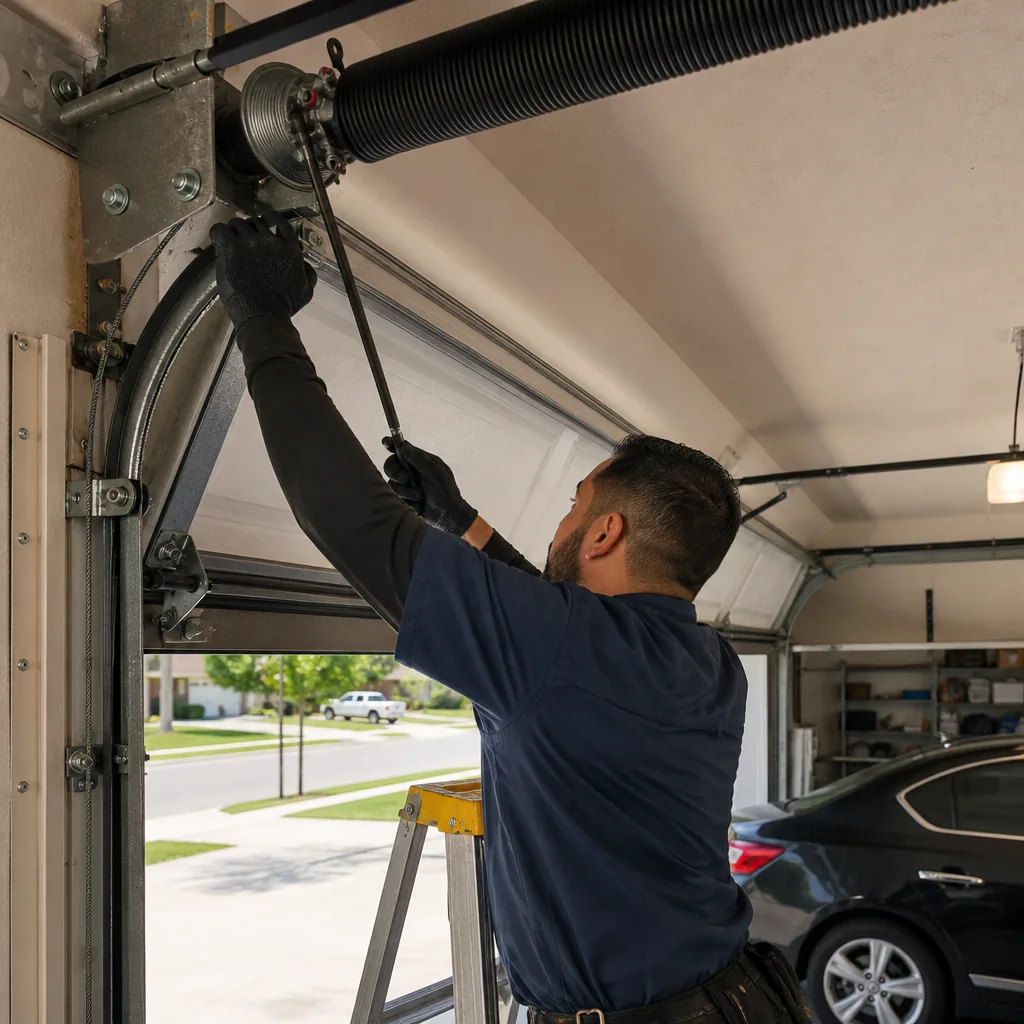 After
After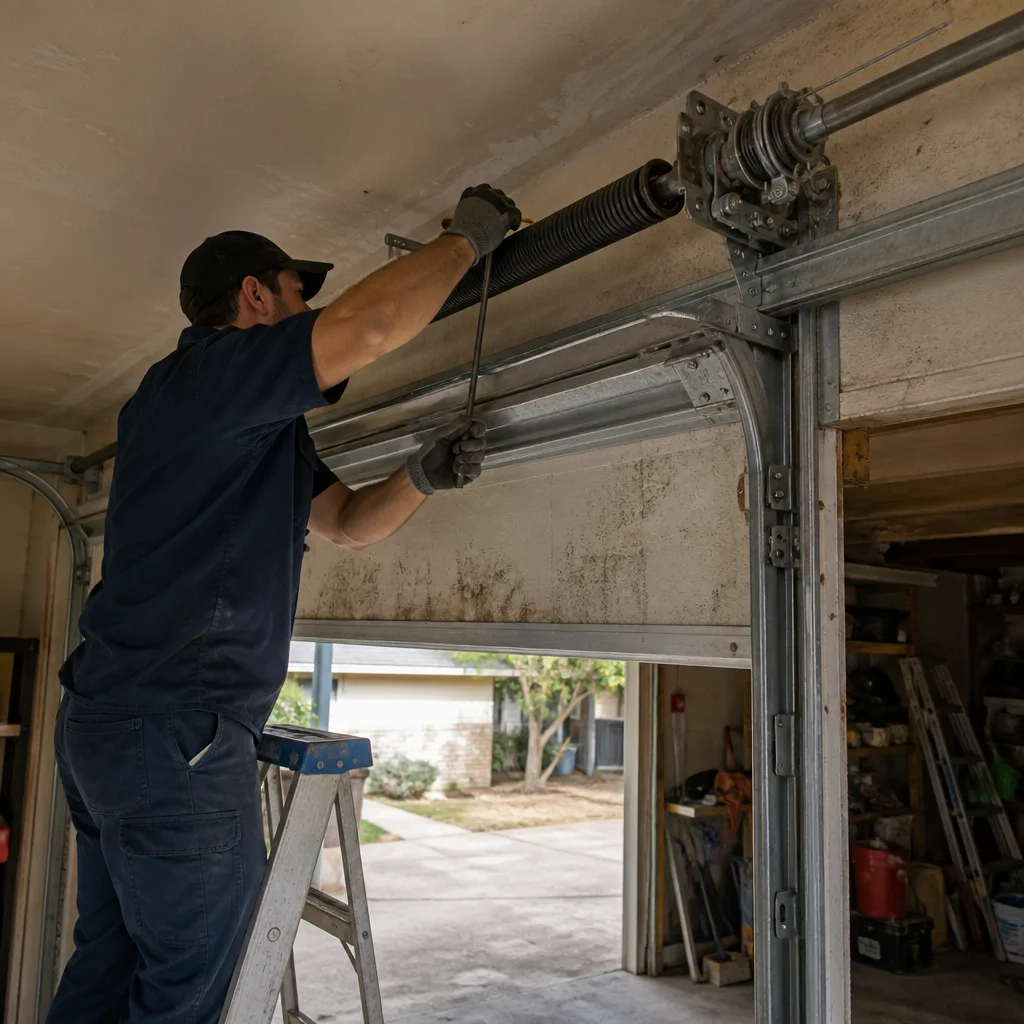 Before
 After
After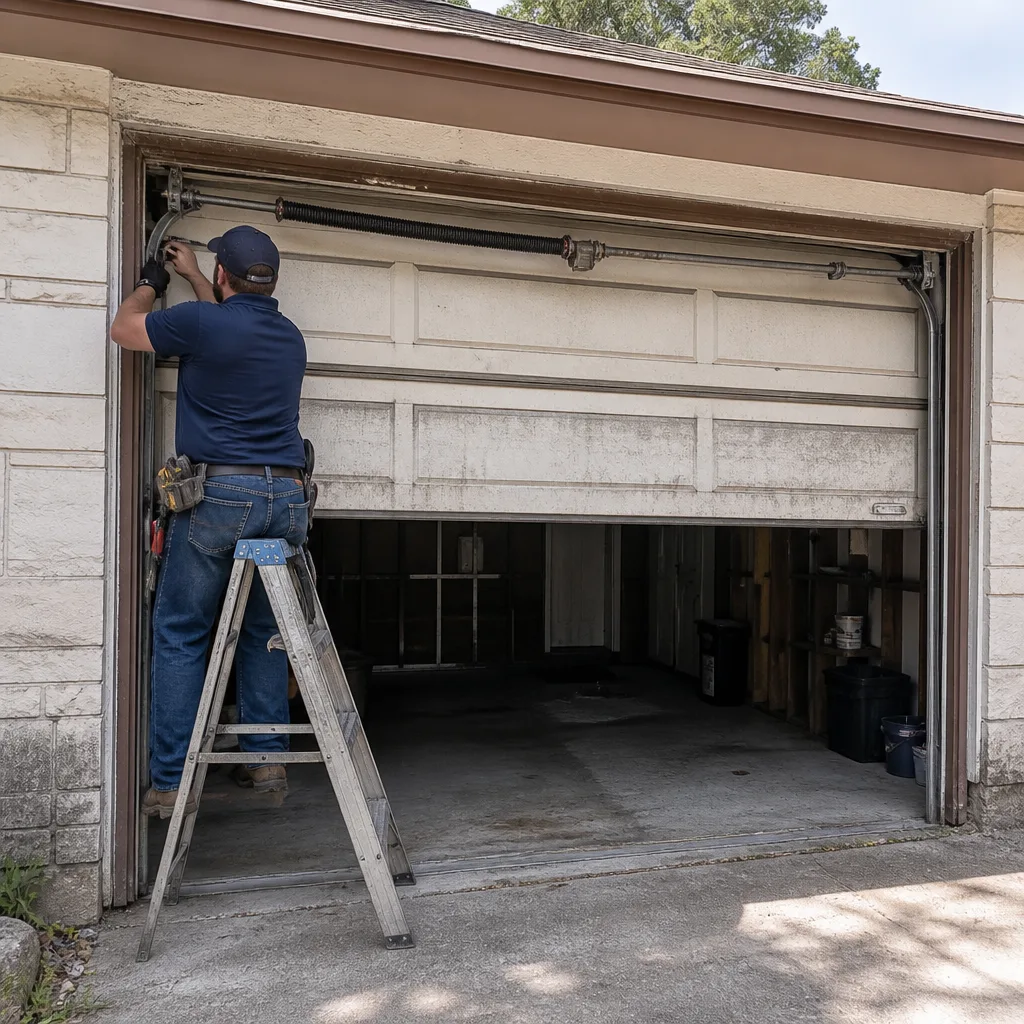 Before
 After
After